


Bacterial bloodstream infections in a tertiary infectious diseases hospital in Northern Vietnam: aetiology, drug resistance, and treatment outcome
- PMID: 28701159
- PMCID: PMC5508750
- DOI: 10.1186/s12879-017-2582-7
Bacterial bloodstream infections in a tertiary infectious diseases hospital in Northern Vietnam: aetiology, drug resistance, and treatment outcome
Abstract
Background: Bloodstream infections (BSIs) are associated with high morbidity and mortality worldwide. However their aetiology, antimicrobial susceptibilities and associated outcomes differ between developed and developing countries. Systematic data from Vietnam are scarce. Here we present aetiologic data on BSI in adults admitted to a large tertiary referral hospital for infectious diseases in Hanoi, Vietnam.
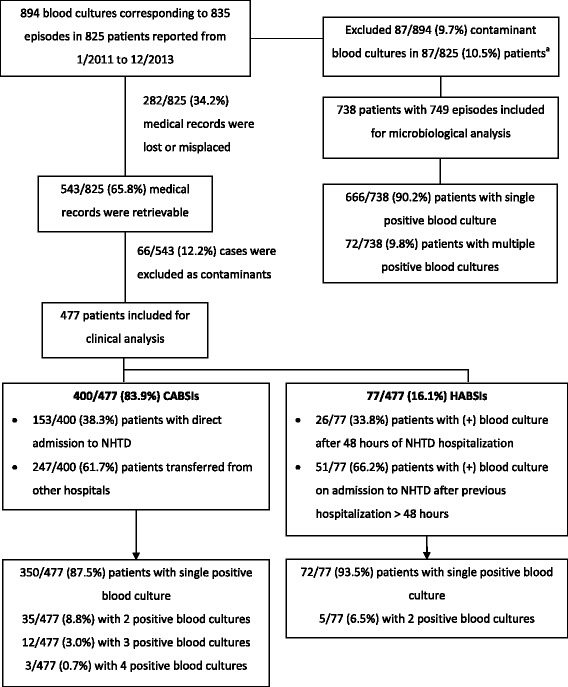
Methods: A retrospective study was conducted at the National Hospital for Tropical Diseases between January 2011 and December 2013. Cases of BSI were determined from records in the microbiology department. Case records were obtained where possible and clinical findings, treatment and outcome were recorded. BSI were classified as community acquired if the blood sample was drawn ≤48 h after hospitalization or hospital acquired if >48 h.
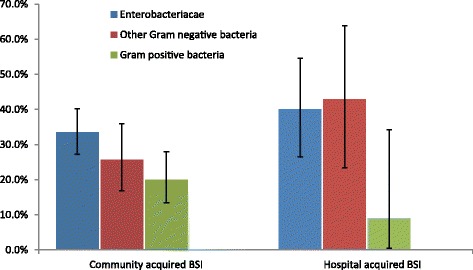
Results: A total of 738 patients with BSI were included for microbiological analysis. The predominant pathogens were: Klebsiella pneumoniae (17.5%), Escherichia coli (17.3%), Staphylococcus aureus (14.9%), Stenotrophomonas maltophilia (9.6%) and Streptococcus suis (7.6%). The overall proportion of extended spectrum beta-lactamase (ESBL) production among Enterobacteriaceae was 25.1% (67/267 isolates) and of methicillin-resistance in S. aureus (MRSA) 37% (40/108). Clinical data was retrieved for 477 (64.6%) patients; median age was 48 years (IQR 36-60) with 27.7% female. The overall case fatality rate was 28.9% and the highest case fatality was associated with Enterobacteriaceae BSI (34.7%) which accounted for 61.6% of all BSI fatalities.
Conclusions: Enterobacteriaceae (predominantly K. pneumoniae and E. coli) are the most common cause of both community and hospital acquired bloodstream infections in a tertiary referral clinic in northern Vietnam.
Keywords: Burkholderia pseudomallei; Gram-negative bacteria; Streptococcus suis; Vietnam; bacteremia; bloodstream infection; drug resistance, bacterial; sepsis.
Conflict of interest statement
Ethics approval and consent to participate
Ethical approval was granted from the Ethics committee and review board of the National Hospital for Tropical Diseases, Hanoi, Vietnam (Approval No: 69/HDDD-NDTU). The NHTD ethics committee also approved the waiver of informed consent to participate in this study due to its retrospective design. All patient data were anonymised prior to the analysis.
Consent for publication
Not applicable.
Competing interests
HRvD is a member of the editorial board (Associate Editor) of the BMC Infectious Diseases. The authors otherwise declare that they have no competing interests.
Publisher’s Note
Springer Nature remains neutral with regard to jurisdictional claims in published maps and institutional affiliations.
Figures
References
-
- Mortality GBD, Causes of Death C Global, regional, and national age-sex specific all-cause and cause-specific mortality for 240 causes of death, 1990–2013: a systematic analysis for the Global Burden of Disease Study 2013. Lancet. 2015;385:117–171. doi: 10.1016/S0140-6736(14)61682-2. - DOI - PMC - PubMed
-
- Nielsen SL. The incidence and prognosis of patients with bacteremia. Dan Med J. 2015;62. - PubMed
MeSH terms
Substances
Grants and funding
LinkOut - more resources
Full Text Sources
Other Literature Sources
Medical
