


Insights into a Novel blaKPC-2- Encoding IncP-6 Plasmid Reveal Carbapenem-Resistance Circulation in Several Enterobacteriaceae Species from Wastewater and a Hospital Source in Spain
- PMID: 28702005
- PMCID: PMC5487458
- DOI: 10.3389/fmicb.2017.01143
Insights into a Novel blaKPC-2- Encoding IncP-6 Plasmid Reveal Carbapenem-Resistance Circulation in Several Enterobacteriaceae Species from Wastewater and a Hospital Source in Spain
Abstract
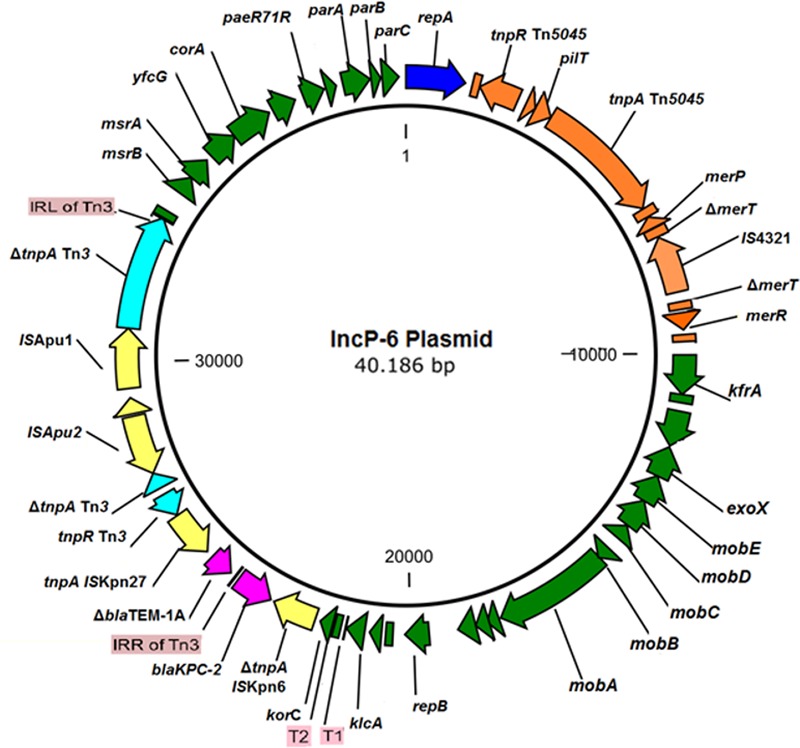
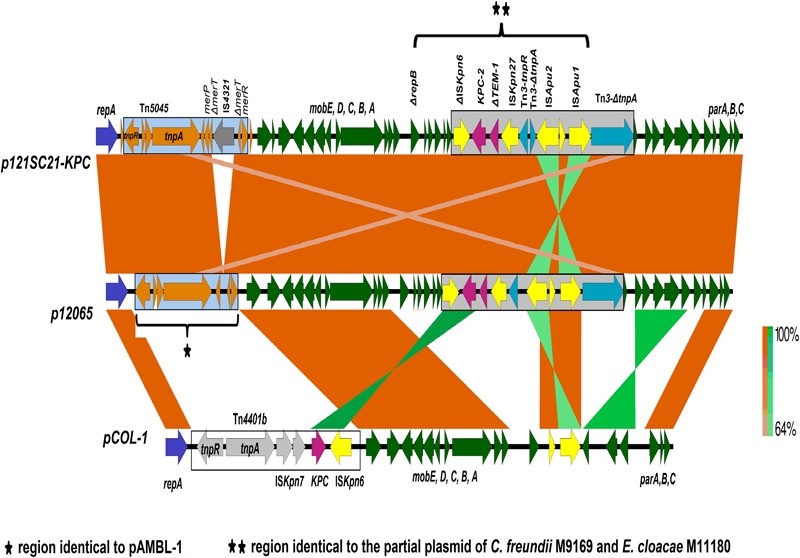
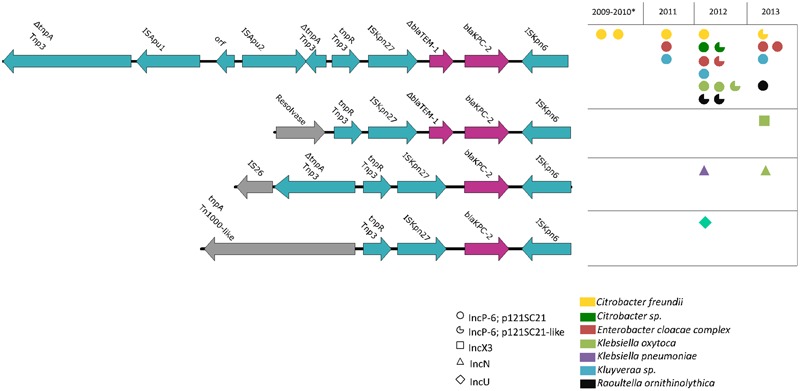
Untreated wastewater, particularly from hospitals and other healthcare facilities, is considered to be a reservoir for multidrug-resistant bacteria. However, its role in the spread of antibiotic resistances in the human population remains poorly investigated. We used whole genome sequencing to analyze 25 KPC-2-producing Enterobacteriaceae isolates from sewage water collected during a 3-year period and three clinical Citrobacter freundii isolates from a tertiary hospital in the same collection area in Spain. We detected a common, recently described, IncP-6 plasmid carrying the gene blaKPC-2 in 21 isolates from both sources. The plasmid was present in diverse environmental bacterial species of opportunistic pathogens such as C. freundii, Enterobacter cloacae, Klebsiella oxytoca, and Raoultella ornithinolytica. The 40,186 bp IncP-6 plasmid encoded 52 coding sequences and was composed of three uniquely combined regions that were derived from other plasmids recently reported in different countries of South America. The region harboring the carbapenem resistance gene (14 kb) contained a Tn3 transposon disrupted by an ISApu-flanked element and the core sequence composed by ISKpn6/blaKPC-2/ΔblaTEM-1/ISKpn27. We document here the presence of a novel promiscuous blaKPC-2 plasmid circulating in environmental bacteria in wastewater and human populations.
Keywords: Enterobacteriaceae; IncP-6 plasmid; KPC2 carbapenemase; Spain; wastewater and hospital source.
Figures
References
-
- Andrade L. N., Curiao T., Ferreira J. C., Longo J. M., Clímaco E. C., Martinez R., et al. (2011). Dissemination of blaKPC-2 by the spread of Klebsiella pneumoniae clonal complex 258 clones (ST258, ST11, ST437) and plasmids (IncFII, IncN, IncL/M) among Enterobacteriaceae species in Brazil. Antimicrob. Agents Chemother. 55 3579–3583. 10.1128/AAC.01783-10 - DOI - PMC - PubMed
-
- Boronin A. M. (1992). Diversity of Pseudomonas plasmids: to what extent? FEMS Microbiol. Lett. 100 461–467. - PubMed
LinkOut - more resources
Full Text Sources
Other Literature Sources
