


Chronic Diarrhea in Dogs - Retrospective Study in 136 Cases
- PMID: 28703447
- PMCID: PMC5508351
- DOI: 10.1111/jvim.14739
Chronic Diarrhea in Dogs - Retrospective Study in 136 Cases
Abstract
Background: Chronic diarrhea (CD) is common in dogs, and information on frequency and distribution of primary and secondary causes is lacking.
Objectives: To evaluate underlying causes and predictors of outcome in dogs with CD.
Animals: One hundred and thirty-six client-owned dogs with CD (≥3 weeks duration).
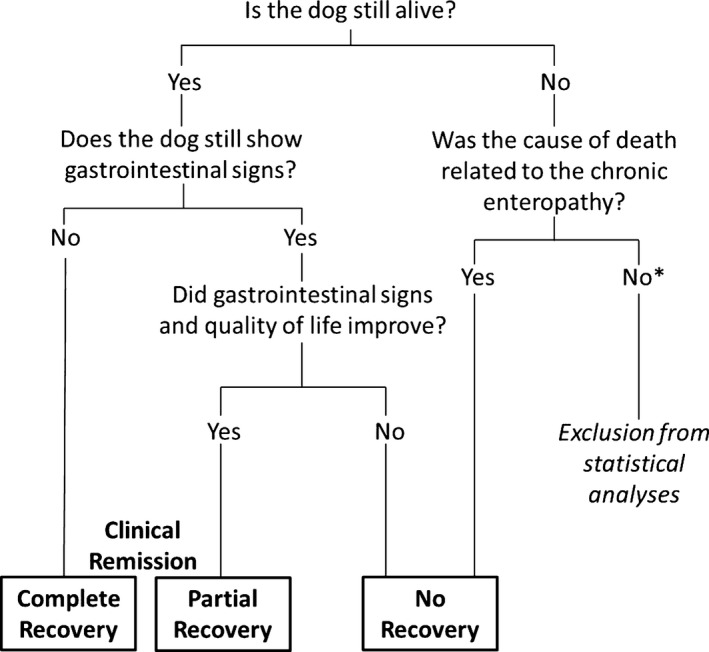
Methods: Retrospective review of medical records (Small Animal Clinic, Freie Universität Berlin, Germany, 09/2009-07/2011). Quantification of final diagnoses and comparison of clinical aspects including disease severity and clinicopathological abnormalities among dogs with clinical remission (either complete [gastrointestinal signs absent] or partial [clinical improvement of gastrointestinal signs and reduced episodes with shortened duration]), and those without recovery.
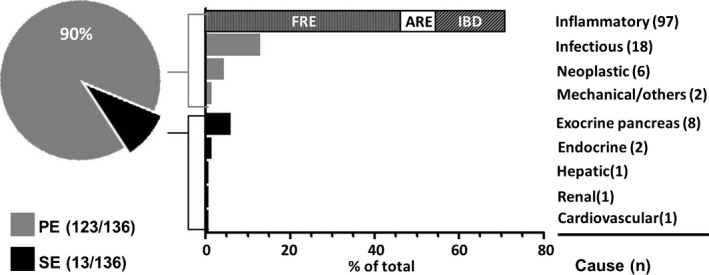
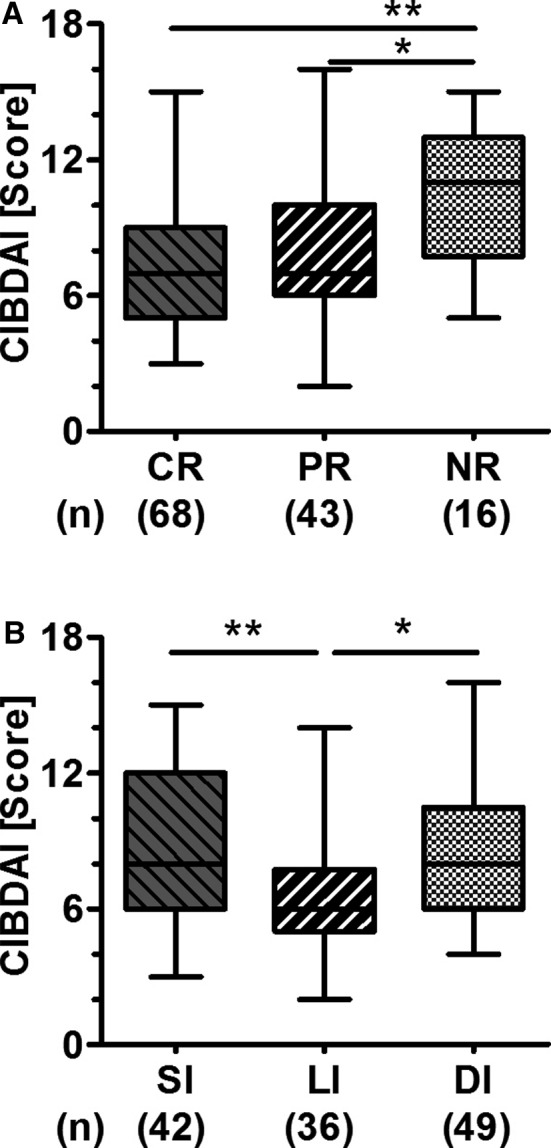
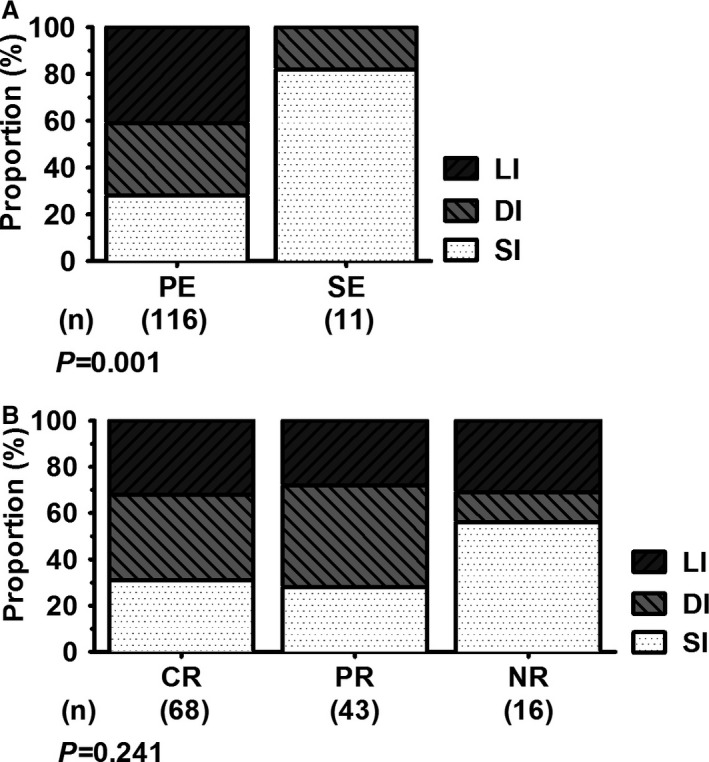
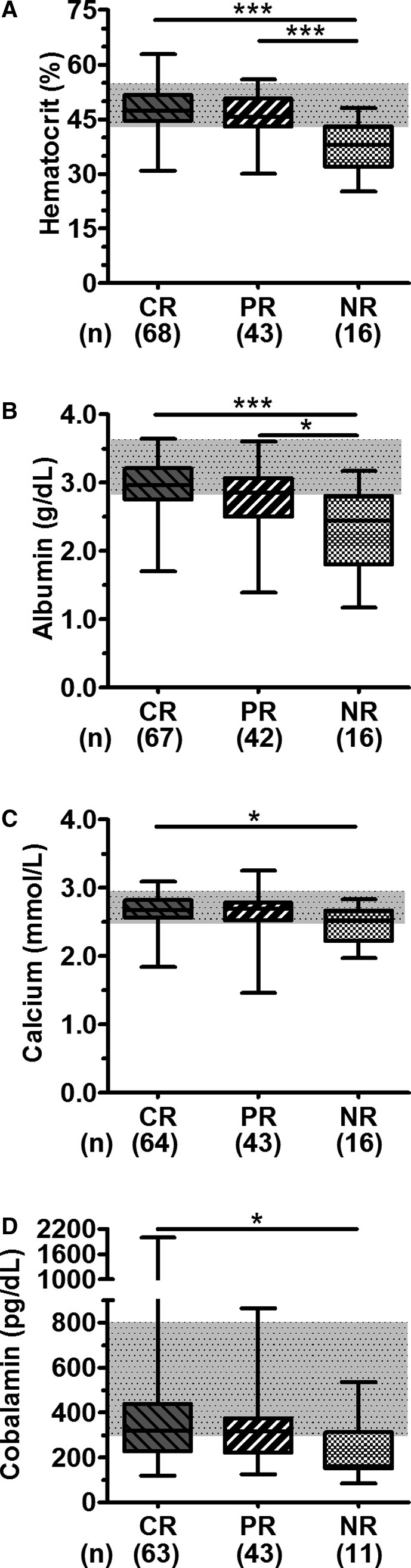
Results: Ninety percent of dogs were diagnosed with a primary enteropathy: inflammatory (71%; of those 66% dietary responsive, 23% idiopathic, 11% antibiotic responsive), infectious (13%), neoplastic (4%), and in one dog each mechanical disease or systemic vasculitis. Secondary causes were diagnosed in 10% of dogs: exocrine pancreatic (6%), endocrine (2%), and in one dog each hepatic, renal, and cardiac disease. In total, 87% of dogs had clinical remission, whereas 13% died or did not respond to treatment: Lack of recovery was frequently recorded for dogs with primary inflammatory (idiopathic) or neoplastic disease and was significantly associated with increased disease severity scores (P = .005), anemia (hematocrit < 40%, P < .001), severe hypoalbuminemia (serum albumin <2.0 g/dL, P = .008), and severe hypocobalaminemia (serum cobalamin concentration <200 pg/mL, P = .006).
Conclusions and clinical importance: Inflammatory enteropathies and particularly those of dietary origin were the most common causes of CD in dogs. Findings support the usefulness of hematocrit, and serum albumin and cobalamin concentration as prognostic markers in dogs with CD.
Keywords: Enteropathy; Epidemiology; Inflammatory bowel disease; Outcome.
Copyright © 2017 The Authors. Journal of Veterinary Internal Medicine published by Wiley Periodicals, Inc. on behalf of the American College of Veterinary Internal Medicine.
Figures
References
-
- Hall EJ, German AJ. Diseases of the Small Intestine In: Ettinger SJ, Feldman EC, eds. Textbook of Veterinary Medicine ‐ Diseases of the Dog and the Cat, 7 ed Philadelphia: Saunders; 2010:1526–1572.
-
- Marks SL. Diarrhea In: Washabau RJ, Day MJ, eds. Canine and Feline Gastroenterology. St.Louis, Missouri: Elsevier Saunders; 2013:99–108.
-
- Schreiner NM, Gaschen F, Grone A, et al. Clinical signs, histology, and CD3‐positive cells before and after treatment of dogs with chronic enteropathies. J Vet Intern Med 2008;22:1079–1083. - PubMed
-
- Allenspach K. Tests to investigate gastrointestinal diseases in dogs–which markers are actually useful for the practitioner? J Small Anim Pract 2007;48:607–608. - PubMed
-
- Allenspach K, Wieland B, Grone A, et al. Chronic enteropathies in dogs: Evaluation of risk factors for negative outcome. J Vet Intern Med 2007;21:700–708. - PubMed
MeSH terms
LinkOut - more resources
Full Text Sources
Other Literature Sources
Medical