Clinical and parasitological factors in parasite persistence after treatment and clinical cure of cutaneous leishmaniasis
- PMID: 28704369
- PMCID: PMC5526576
- DOI: 10.1371/journal.pntd.0005713
Clinical and parasitological factors in parasite persistence after treatment and clinical cure of cutaneous leishmaniasis
Abstract
Background: The determinants of parasite persistence or elimination after treatment and clinical resolution of cutaneous leishmaniasis (CL) are unknown. We investigated clinical and parasitological parameters associated with the presence and viability of Leishmania after treatment and resolution of CL caused by L. Viannia.
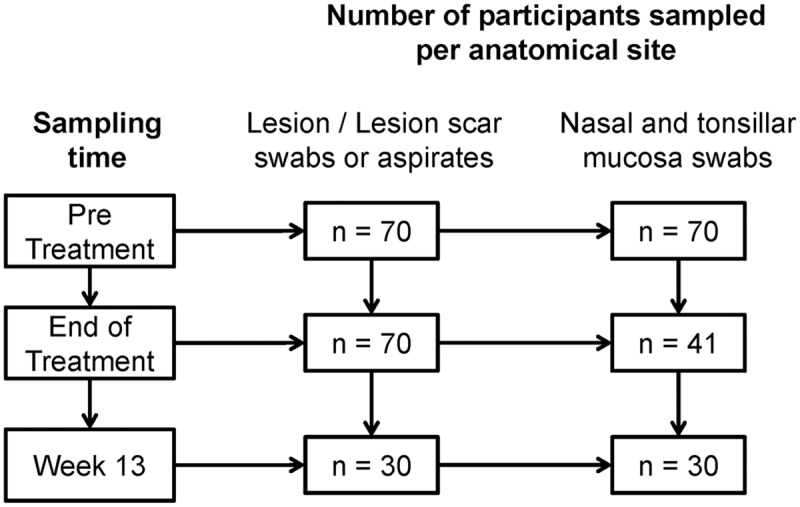
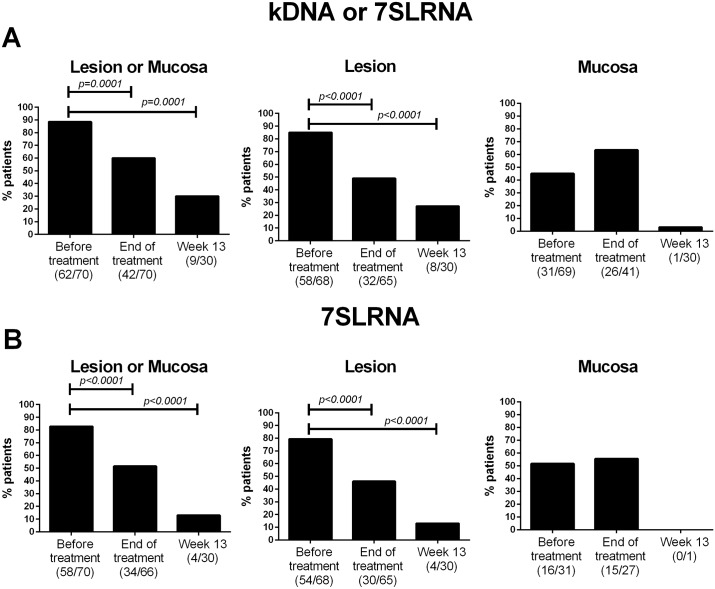
Methods: Seventy patients who were treated with meglumine antimoniate (n = 38) or miltefosine (n = 32) and cured, were included in this study. Leishmania persistence and viability were determined by detection of kDNA and 7SLRNA transcripts, respectively, before, at the end of treatment (EoT), and 13 weeks after initiation of treatment in lesions and swabs of nasal and tonsillar mucosa.
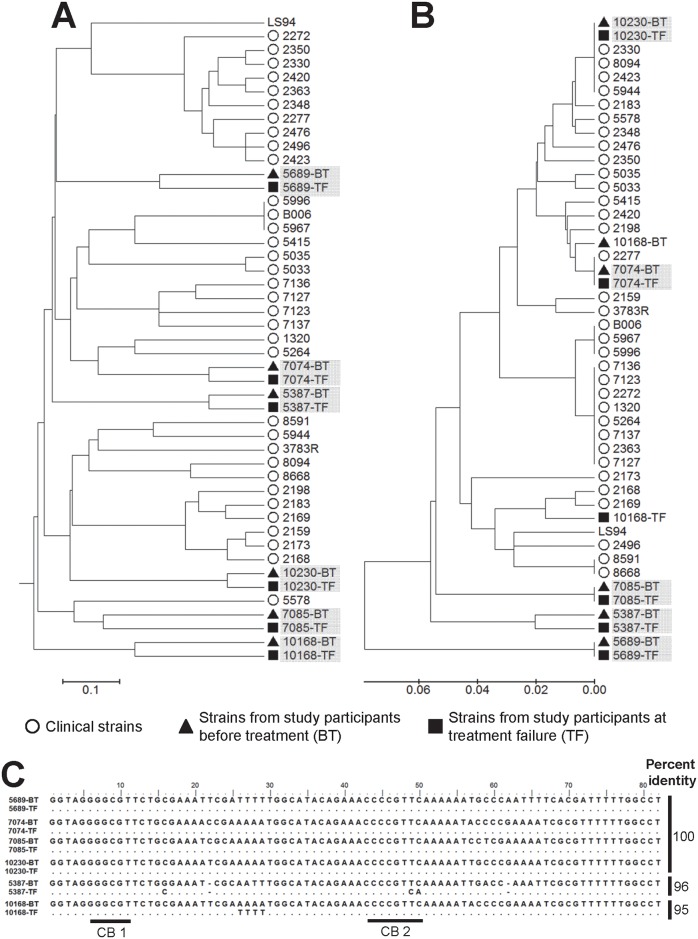
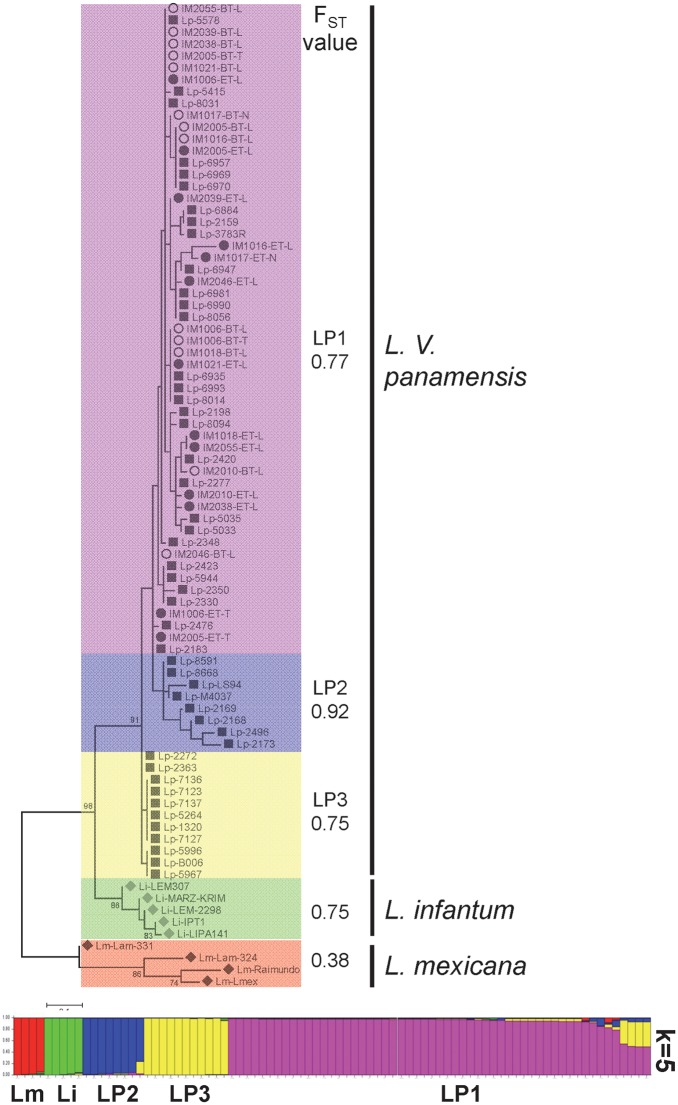
Results: Sixty percent of patients (42/70) had evidence of Leishmania persistence at EoT and 30% (9/30) 13 weeks after treatment initiation. A previous episode of CL was found to be a protective factor for detectable Leishmania persistence (OR: 0.16, 95%CI: 0.03-0.92). kDNA genotyping could not discern differences between parasite populations that persisted and those isolated at diagnosis.
Conclusions: Leishmania persist in skin and mucosal tissues in a high proportion of patients who achieved therapeutic cure of CL. This finding prompts assessment of the contribution of persistent infection in transmission and endemicity of CL, and in disease reactivation and protective immunity.
Conflict of interest statement
The authors declare that they have no conflicts of interest with the contents of this article.
Figures
References
-
- de Oliveira Camera P, Junger J, do Espirito Santo Silva Pires F, Mattos M, Oliveira-Neto MP, Fernandes O, et al. Haematogenous dissemination of Leishmania (Viannia) braziliensis in human American tegumentary leishmaniasis. Transactions of the Royal Society of Tropical Medicine and Hygiene. 2006;100(12):1112–7. doi: 10.1016/j.trstmh.2006.02.014 . - DOI - PubMed
-
- Figueroa RA, Lozano LE, Romero IC, Cardona MT, Prager M, Pacheco R, et al. Detection of leishmania in unaffected mucosal tissues of patients with cutaneous leishmaniasis caused by leishmania (viannia) species. The Journal of infectious diseases. 2009;200(4):638–46. Epub 2009/07/03. doi: 10.1086/600109 . - DOI - PMC - PubMed
-
- Mendonca MG, de Brito ME, Rodrigues EH, Bandeira V, Jardim ML, Abath FG. Persistence of leishmania parasites in scars after clinical cure of American cutaneous leishmaniasis: is there a sterile cure? The Journal of infectious diseases. 2004;189(6):1018–23. doi: 10.1086/382135 . - DOI - PubMed
-
- Vergel C, Palacios R, Cadena H, Posso CJ, Valderrama L, Perez M, et al. Evidence for leishmania (viannia) parasites in the skin and blood of patients before and after treatment. The Journal of infectious diseases. 2006;194(4):503–11. doi: 10.1086/505583 . - DOI - PubMed
-
- Schubach A, Marzochi MC, Cuzzi-Maya T, Oliveira AV, Araujo ML, Oliveira AL, et al. Cutaneous scars in American tegumentary leishmaniasis patients: a site of Leishmania (Viannia) braziliensis persistence and viability eleven years after antimonial therapy and clinical cure. The American journal of tropical medicine and hygiene. 1998;58(6):824–7. . - PubMed
MeSH terms
Substances
Grants and funding
LinkOut - more resources
Full Text Sources
Other Literature Sources