


Genetic compensation: A phenomenon in search of mechanisms
- PMID: 28704371
- PMCID: PMC5509088
- DOI: 10.1371/journal.pgen.1006780
Genetic compensation: A phenomenon in search of mechanisms
Abstract
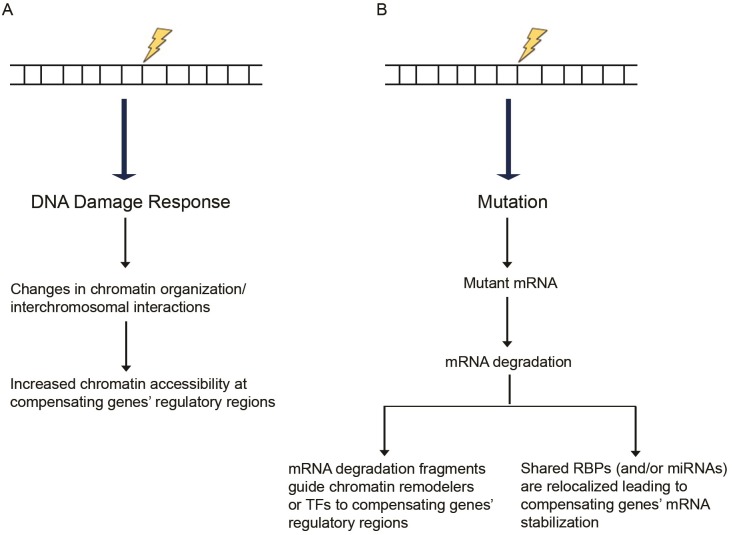
Several recent studies in a number of model systems including zebrafish, Arabidopsis, and mouse have revealed phenotypic differences between knockouts (i.e., mutants) and knockdowns (e.g., antisense-treated animals). These differences have been attributed to a number of reasons including off-target effects of the antisense reagents. An alternative explanation was recently proposed based on a zebrafish study reporting that genetic compensation was observed in egfl7 mutant but not knockdown animals. Dosage compensation was first reported in Drosophila in 1932, and genetic compensation in response to a gene knockout was first reported in yeast in 1969. Since then, genetic compensation has been documented many times in a number of model organisms; however, our understanding of the underlying molecular mechanisms remains limited. In this review, we revisit studies reporting genetic compensation in higher eukaryotes and outline possible molecular mechanisms, which may include both transcriptional and posttranscriptional processes.
Conflict of interest statement
The authors have declared that no competing interests exist.
Figures
References
-
- Mather K. Genetical control of stability in development. Heredity. 1953;7(3):297–336.
-
- Waddington CH. Canalization of Development and Genetic Assimilation of Acquired Characters. Nature. 1959;183(4676):1654–5. - PubMed
-
- Muller HJ, editor Further studies on the nature and causes of gene mutations. Proceedings of the 6th International Congress of Genetics; 1932.
-
- Mukherjee AS, Beermann W. Synthesis of ribonucleic acid by the X-chromosomes of Drosophila melanogaster and the problem of dosage compensation. Nature. 1965;207(998):785–6. Epub 1965/08/14. . - PubMed
-
- Barr ML, Bertram EG. A morphological distinction between neurones of the male and female, and the behaviour of the nucleolar satellite during accelerated nucleoprotein synthesis. Nature. 1949;163(4148):676 Epub 1949/04/30. . - PubMed
Publication types
MeSH terms
Substances
LinkOut - more resources
Full Text Sources
Other Literature Sources
Molecular Biology Databases
