


Mammary candidiasis: A medical condition without scientific evidence?
- PMID: 28704470
- PMCID: PMC5509296
- DOI: 10.1371/journal.pone.0181071
Mammary candidiasis: A medical condition without scientific evidence?
Abstract
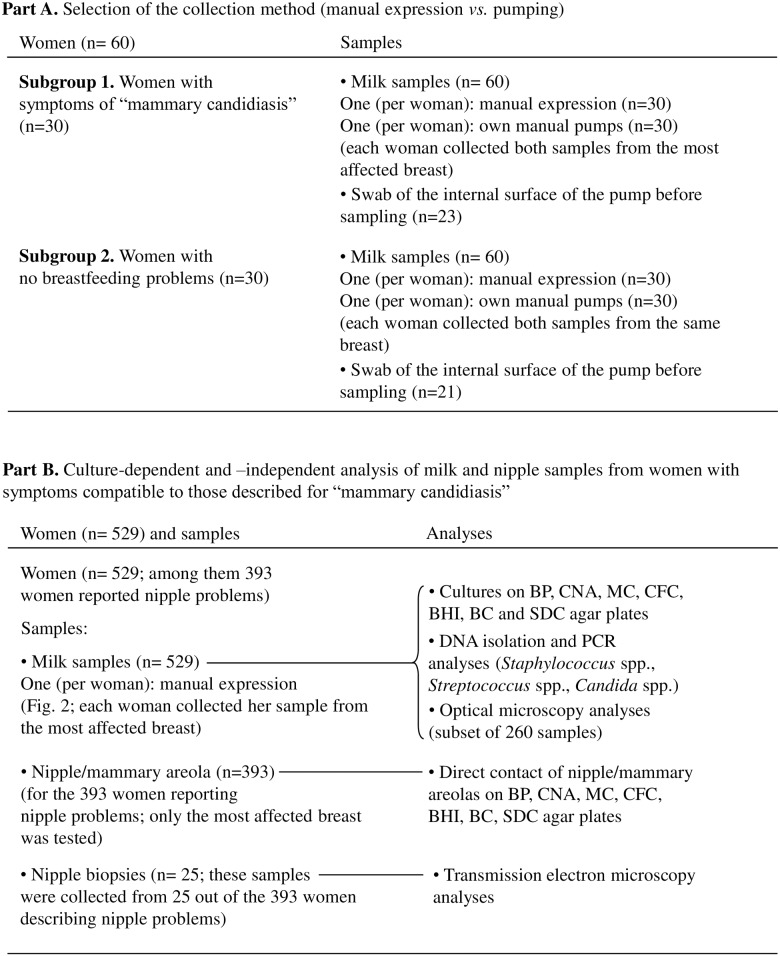
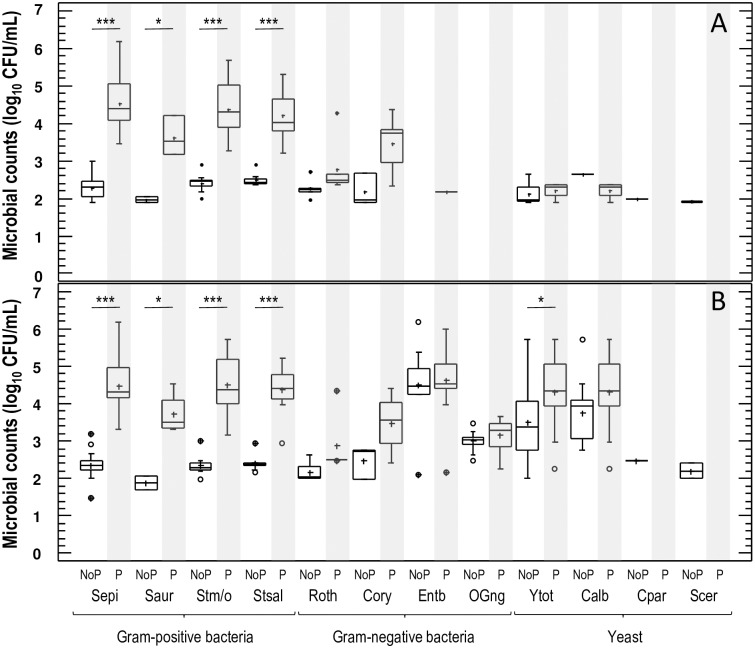
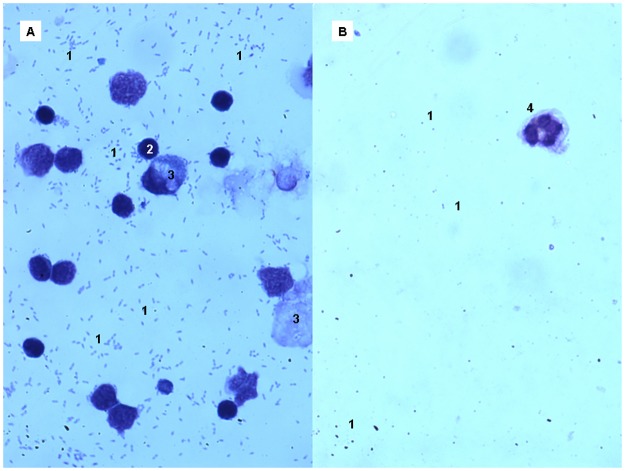
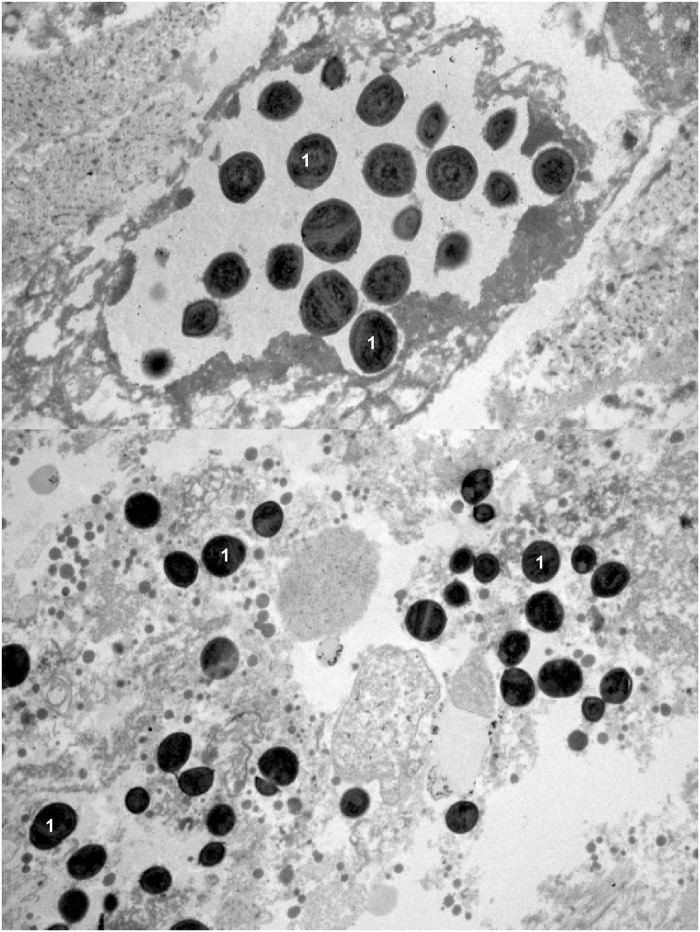
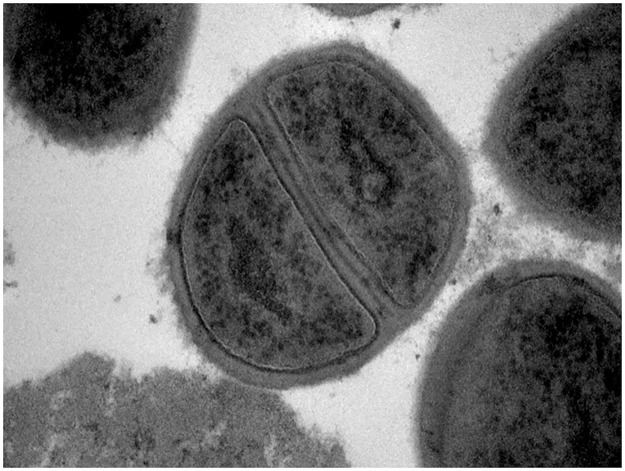
Many physicians, midwives and lactation consultants still believe that yeasts (particularly Candida spp.) play an important role as an agent of nipple and breast pain despite the absolute absence of scientific proofs to establish such association. In this context, the objective of this study was to investigate the microorganisms involved in sore nipples and/or painful "shooting" breastfeeding by using a variety of microscopy techniques, as well as culture-dependent and-independent identification methods. Initially, 60 women (30 diagnosed as suffering "mammary candidiasis" and 30 with no painful breastfeeding) were recruited to elucidate the role of their pumps on the milk microbial profiles. After realizing the bias introduced by using such devices, manual expression was selected as the collection method for the microbiological analysis of milk samples provided by 529 women with symptoms compatible with "mammary candidiasis". Nipple swabs and nipple biopsy samples were also collected from the participating women. Results showed that the role played by yeasts in breast and nipple pain is, if any, marginal. In contrast, our results strongly support that coagulase-negative staphylococci and streptococci (mainly from the mitis and salivarius groups) are the agents responsible for such cases. As a consequence, and following the recommendations of the US Library of Medicine for the nomenclature of infectious diseases, the term "mammary candidiasis" or "nipple thrush" should be avoided when referring to such condition and replaced by "subacute mastitis".
Conflict of interest statement
Figures
References
-
- U.S. Department of Health and Human Services. The Surgeon General’s Call to Action to Support Breastfeeding. Washington, DC: U.S. Department of Health and Human Services, Office of the Surgeon General; 2011.
-
- American Academy of Pediatrics. Breastfeeding and the use of human milk. Pediatrics. 2012;129: e827–e841. doi: 10.1542/peds.2011-3552 - DOI - PubMed
-
- Renfrew MJ, Pokhrel S, Quigley M, McCormick F, Fox-Rushby J, Dodds R et al. Preventing disease and saving resources: the potential contribution of increasing breastfeeding rates in the UK. London: UNICEF UK; 2012.
-
- Johnstone HA, Marcinak JF. Candidiasis in the breastfeeding mother and infant. JObstet Gynecol Neonatal Nurs.1990;19: 171–173. - PubMed
-
- Amir LH. Candida and the lactating breast: Predisposing factors. J Hum Lact.1991;7: 177–181. doi: 10.1177/089033449100700414 - DOI - PubMed
MeSH terms
Substances
LinkOut - more resources
Full Text Sources
Other Literature Sources
Research Materials
Miscellaneous
