


Socio-economic predictors of stillbirths in Nepal (2001-2011)
- PMID: 28704548
- PMCID: PMC5509325
- DOI: 10.1371/journal.pone.0181332
Socio-economic predictors of stillbirths in Nepal (2001-2011)
Abstract
Introduction: Stillbirth has a long-lasting impact on parents and families. This study examined socio-economic predictors associated with stillbirth in Nepal for the year 2001, 2006 and 2011.
Methods: The Nepalese Demographic and Health Survey (NDHS) data for the period (2001-2011) were pooled to estimate socio-economic predictors associated with stillbirths in Nepal using binomial logistic regression while taking clustering and sampling weights into account.
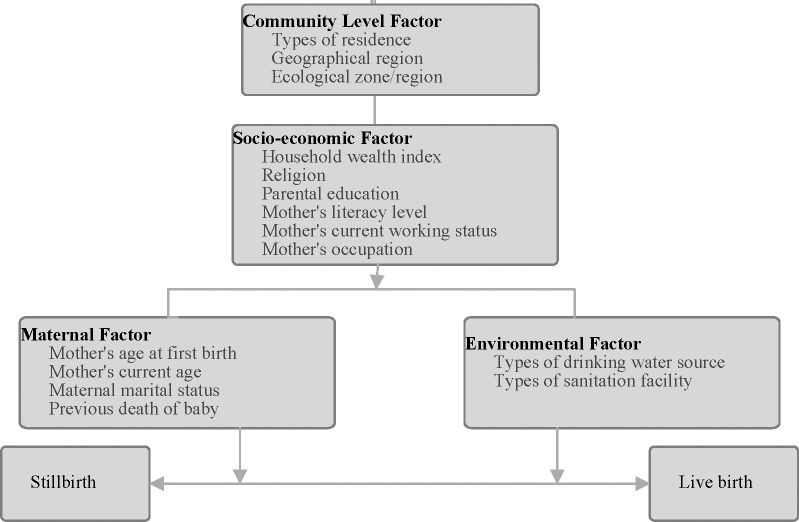
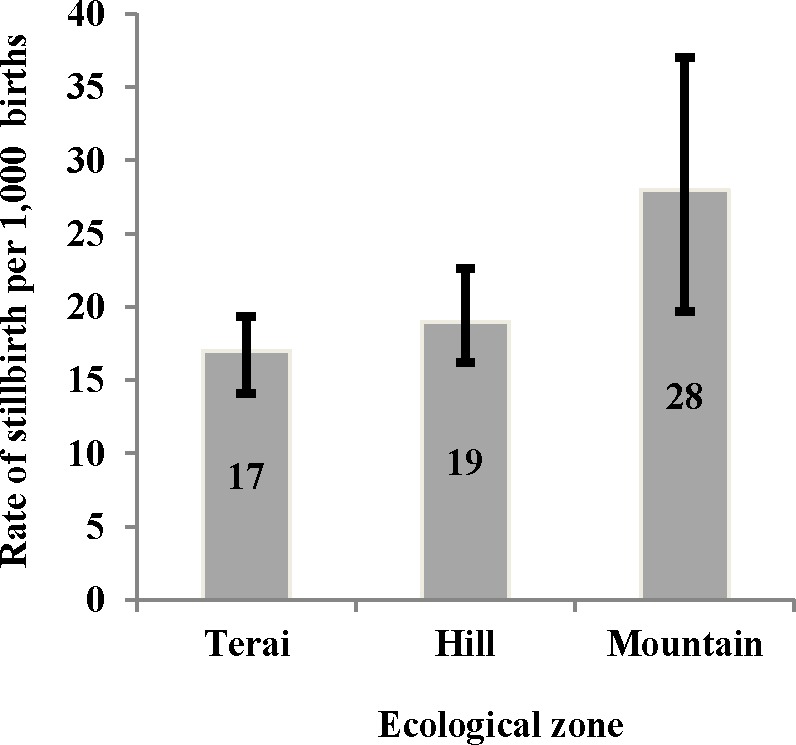
Results: A total of 18,386 pregnancies of at least 28 weeks gestation were identified. Of these pregnancies, 335 stillbirths were reported. Stillbirth increased significantly among women that lived in the hills ecological zones (aRR 1.38, 95% CI 1.02, 1.87) or in the mountains ecological zones (aRR 1.71, 95% CI 1.10, 2.66). Women with no schooling (aRR 1.72, 95% CI 1.10, 2.69), women with primary education (aRR 1.81, 95% CI 1.11, 2.97); open defecation (aRR 1.48, 95% CI 1.00, 2.18), and those whose major occupation was agriculture (aRR 1.80, 95% CI 1.16, 2.78) are more likely to report higher stillbirth.
Conclusions: Low levels of education, ecological zones and open defecation were found to be strong predictors of stillbirth. Access to antenatal care services and skilled birth attendants for women in the mountainous and hilly ecological zones of Nepal is needed to further reduce stillbirth and improved services should also focus on women with low levels of education.
Conflict of interest statement
Figures
References
-
- World health Organization. Maternal, newborn, child and adolescent health, 2015. Available from: http://www.who.int/maternal_child_adolescent/epidemiology/stillbirth/en/.
-
- De Bernis L, Kinney MV, Stones W, Ten Hoope-Bender P, Vivio D, Leisher SH, et al. Stillbirths: ending preventable deaths by 2030. The Lancet. 2016. January 18; 387: 703–716. - PubMed
-
- Lawn JE, Blencowe H, Waiswa P, Amouzou A, Mathers C, Hogan D, et al. Stillbirths: rates, risk factors, and acceleration towards 2030. The Lancet. 2016. January 18; 387: 587–603. - PubMed
-
- Lawn JE, Blencowe H, Pattinson R, Cousens S, Kumar R, Ibiebele I, et al. Stillbirths: Where? When? Why? How to make the data count? The Lancet. 2011. April 14; 377: 1448–1463. - PubMed
-
- Cousens S, Blencowe H, Stanton C, Chou D, Ahmed S, Steinhardt L, et al. National, regional, and worldwide estimates of stillbirth rates in 2009 with trends since 1995: a systematic analysis. The Lancet. 2011. April 14; 377:1319–1330. - PubMed
MeSH terms
LinkOut - more resources
Full Text Sources
Other Literature Sources
Medical
