Rehabilitation and Improvement of Health-Related Quality-of-Life Detriments in Individuals With Chronic Ankle Instability: A Meta-Analysis
- PMID: 28704635
- PMCID: PMC5561776
- DOI: 10.4085/1062-6050-52.5.01
Rehabilitation and Improvement of Health-Related Quality-of-Life Detriments in Individuals With Chronic Ankle Instability: A Meta-Analysis
Abstract
Objective: To conduct a systematic review with meta-analysis assessing the effectiveness of conservative rehabilitation programs for improving health-related quality of life (HRQL) in individuals with chronic ankle instability (CAI).
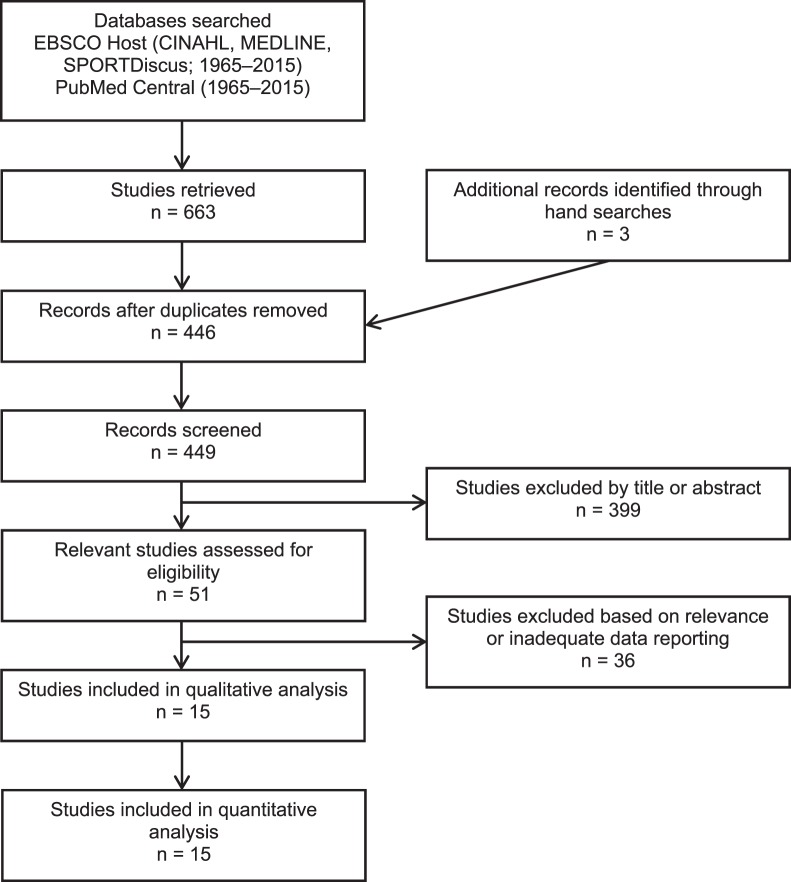
Data sources: PubMed, MEDLINE, CINAHL, and SPORTDiscus were searched from inception to January 2016.
Study selection: Studies were included if the researchers examined the effects of a conservative rehabilitation protocol in individuals with CAI, used validated patient-reported outcomes (PROs) to quantify participant-perceived HRQL, and provided adequate data to calculate the effect sizes (ESs) and 95% confidence intervals (CIs). Studies were excluded if the authors evaluated surgical interventions, prophylactic taping, or bracing applications or examined only the immediate effects of 1 treatment session.
Data extraction: Two investigators independently assessed methodologic quality using the Physiotherapy Evidence Database (PEDro) Scale. Studies were considered low quality if fewer than 60% of the criteria were met. Level of evidence was assessed using the Strength of Recommendation Taxonomy. Preintervention and postintervention sample sizes, means, and standard deviations of PROs were extracted.
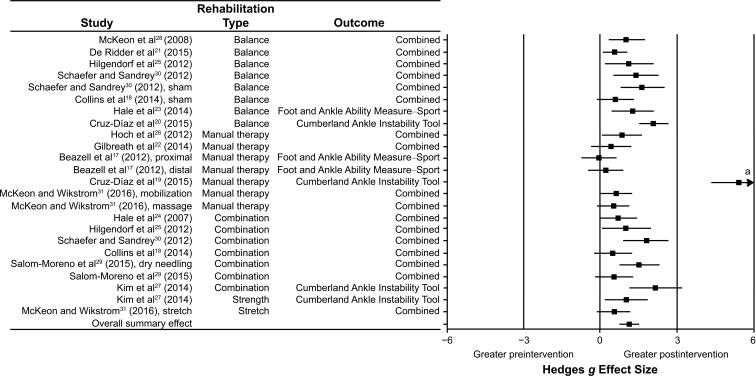
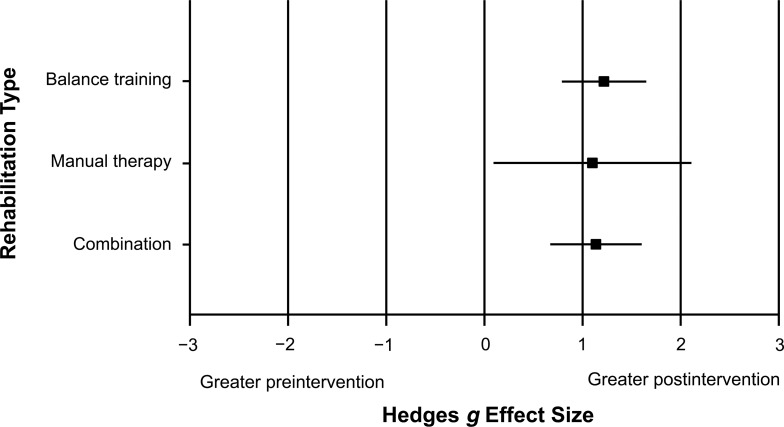
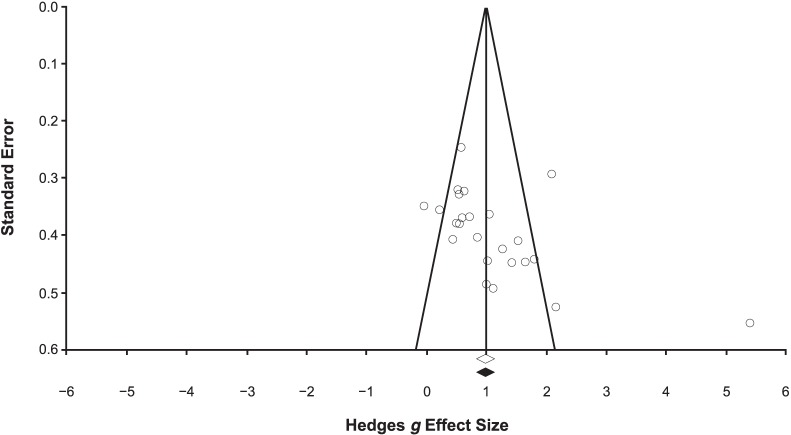
Data synthesis: A total of 15 studies provided 24 participant groups that were included in the analysis. Seven high-quality studies with a median PEDro score of 50% (range = 10%-80%) and a median level of evidence of 2 (range = 1-2) were identified. The magnitudes of preintervention to postintervention PRO differences were examined using bias-corrected Hedges g ESs. Random-effects meta-analysis was performed to synthesize PRO changes across all participant groups. Positive ES values indicated better PRO scores at postintervention than at preintervention. The α level was set at .05. Meta-analysis revealed a strong ES with a nonoverlapping 95% CI (ES = 1.20, CI = 0.80, 1.60; P < .001), indicating HRQL improved after conservative rehabilitation.
Conclusions: Based on the quality of the evidence and the results of the meta-analysis, grade A evidence showed that conservative rehabilitation produces large improvements in HRQL for people with CAI.
Keywords: ankle sprains; conservative care; patient-reported outcomes.
Figures
References
-
- Waterman BR, Belmont PJ, Cameron KL, Deberardino TM, Owens BD. . Epidemiology of ankle sprain at the United States Military Academy. Am J Sports Med. 2010; 38 4: 797– 803. - PubMed
-
- Konradsen L, Bech L, Ehrenbjerg M, Nickelsen T. . Seven years follow-up after ankle inversion trauma. Scand J Med Sci Sports. 2002; 12 3: 129– 135. - PubMed
Publication types
MeSH terms
LinkOut - more resources
Full Text Sources
Other Literature Sources
Medical
Miscellaneous