


Prophylactic Wound Vacuum Therapy after Cesarean Section to Prevent Wound Complications in the Obese Population: A Randomized Controlled Trial (the ProVac Study)
- PMID: 28704847
- PMCID: PMC5983905
- DOI: 10.1055/s-0037-1604161
Prophylactic Wound Vacuum Therapy after Cesarean Section to Prevent Wound Complications in the Obese Population: A Randomized Controlled Trial (the ProVac Study)
Abstract
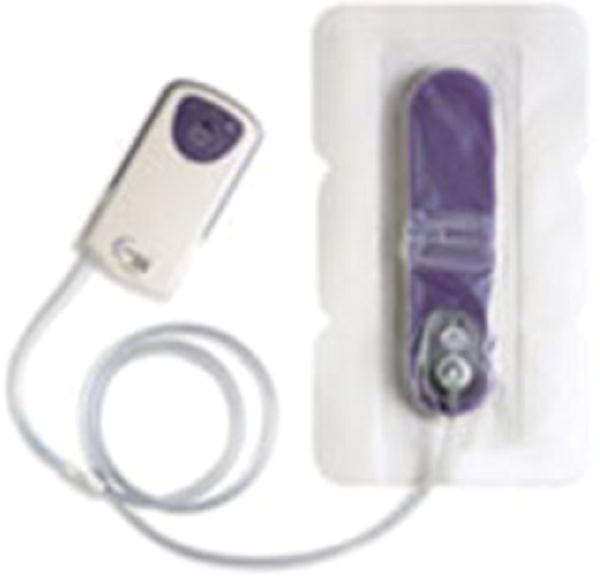
Objective: The objective of this study was to perform a randomized controlled feasibility trial investigating negative pressure wound therapy (NPWT) system versus a standard postcesarean wound care (WC) on the development of a postoperative surgical site infection (SSI) and/or a wound dehiscence in obese women.
Study Design: This is a randomized controlled feasibility trial of obese women undergoing an unscheduled cesarean delivery. Women with an initial body mass index ≥ 30 kg/m2 who were ≥ 4 cm dilated were included. Women were assigned to either a NPWT or standard WC. The primary outcome was a composite of wound morbidity at 4 weeks postpartum including SSI and/or wound opening (clinicaltrials. gov, NCT02128997). Continuous variables were analyzed with t-test and Wilcoxon rank-sum tests and categorical variables with Fisher’s exact test.
Results: Of 136 women randomized, 67 received NPWT and 69 received standard WC. The 4-week follow-up rate was 88%. Maternal clinical and surgical characteristics were similar between the groups. The prevalence of the composite wound morbidity outcome was not different between those with NPWT and standard WC (4.9 vs. 6.9%; p = 0.71).
Conclusion: Routine clinical use of a NPWT system after cesarean delivery did not result in a significant reduction of wound morbidity over standard WC.
Conflict of interest statement
Conflict of Interest: None.
Figures

References
-
- Krieger Y, Walfisch A, Sheiner E. Surgical site infection following cesarean deliveries: trends and risk factors. J Matern Fetal Neonatal Med. 2017;30(01):8–12. - PubMed
Publication types
MeSH terms
Associated data
Grants and funding
LinkOut - more resources
Full Text Sources
Other Literature Sources
Medical
