


Role of the p-Coumaroyl Moiety in the Antioxidant and Cytoprotective Effects of Flavonoid Glycosides: Comparison of Astragalin and Tiliroside
- PMID: 28704976
- PMCID: PMC6152332
- DOI: 10.3390/molecules22071165
Role of the p-Coumaroyl Moiety in the Antioxidant and Cytoprotective Effects of Flavonoid Glycosides: Comparison of Astragalin and Tiliroside
Abstract
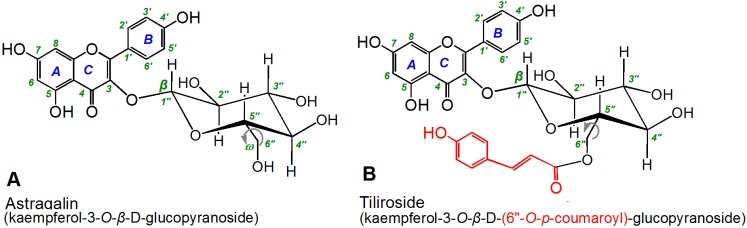
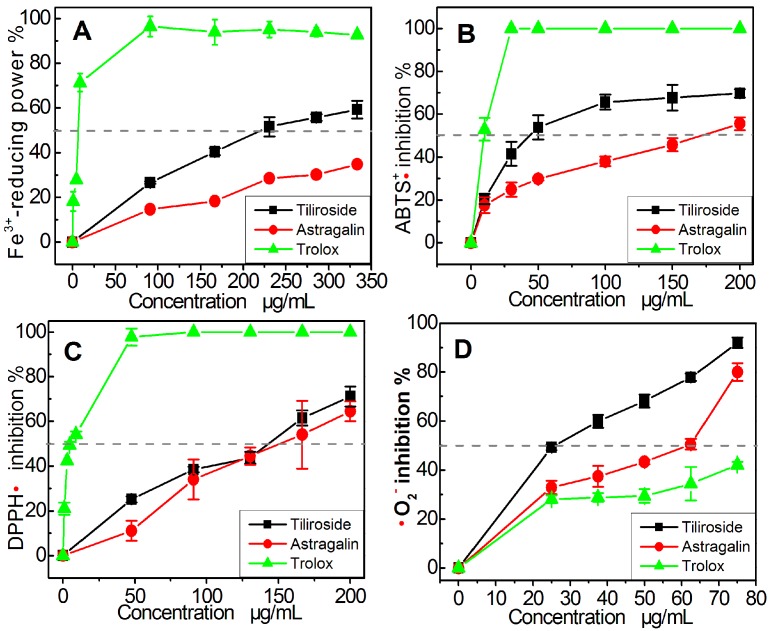
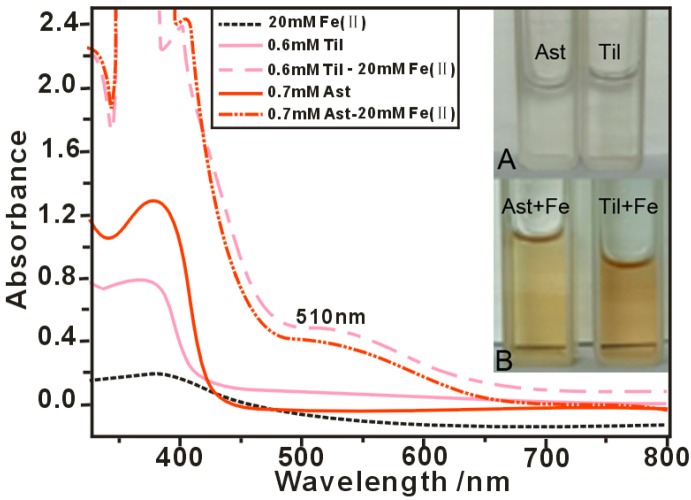
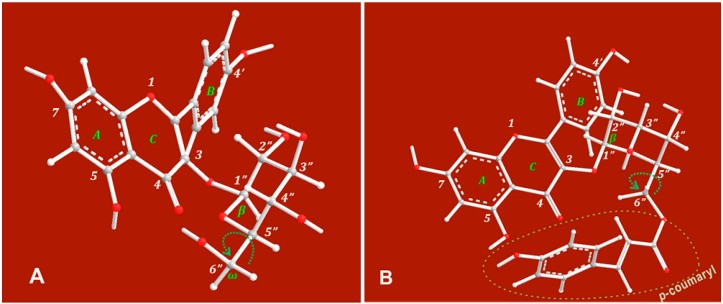
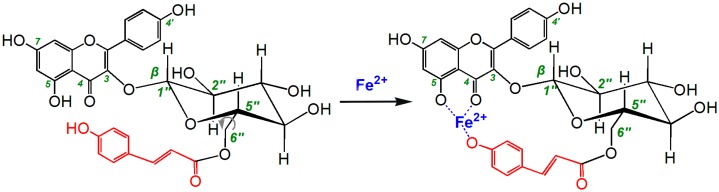
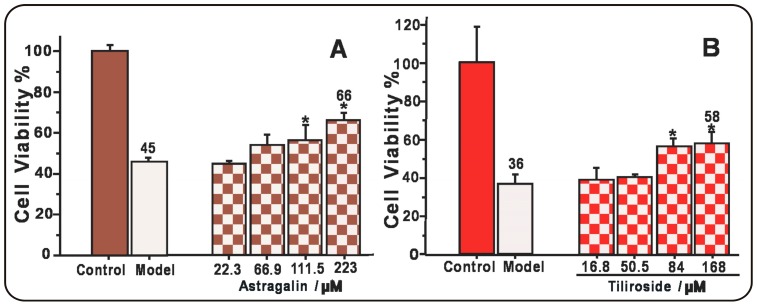
The aim of this study was to explore the role of p-coumaroyl in the antioxidant and cytoprotective effects of flavonoid glycosides. The antioxidant effects of astragalin and tiliroside were compared using ferric ion reducing antioxidant power, DPPH• scavenging, ABTS•⁺ scavenging, •O₂- scavenging, and Fe2+-chelating assays. The results of these assays revealed that astragalin and tiliroside both exhibited dose-dependent activities; however, tiliroside exhibited lower IC50 values than astragalin. In the Fe2+-chelating assay, tiliroside gave a larger shoulder-peak at 510 nm than astragalin, and was also found to be darker in color. Both of these compounds were subsequently evaluated in a Fenton-induced mesenchymal stem cell (MSC) damaged assay, where tiliroside performed more effectively as a cytoprotective agent than astragalin. Tiliroside bearing a 6''-O-p-coumaroyl moiety exhibits higher antioxidant and cytoprotective effects than astragalin. The 6''-O-p-coumaroyl moiety of tiliroside not only enhances the possibility of electron-transfer and hydrogen-atom-transfer-based multi-pathways, but also enhances the likelihood of Fe-chelating. The p-coumaroylation of the 6"-OH position could therefore be regarded as a potential approach for improving the antioxidant and cytoprotective effects of flavonoid glycosides in MSC implantation therapy.
Keywords: astragalin; flavonoid glycoside; mesenchymal stem cells; p-coumaroyl; tiliroside.
Conflict of interest statement
The authors declare no conflict of interest.
Figures
References
-
- Li Y.L., Lu J.X., Li X.H., Han Q., Jiang X.T. The study of active ingredients on 8 traditional Chinese Medicines by the Brine Shrimp Letality Bioassay. Acta Bot. Boreali-Occident. Sin. 1994;4:324.
-
- Tohge T., Zhang Y., Peterek S., Matros A., Rallapalli G., Tandrón Y.A., Butelli E., Kallam K., Hertkorn N., Mock H.P., et al. Ectopic expression of snapdragon transcription factors facilitates the identification of genes encoding enzymes of anthocyanin decoration in tomato. Plant. J. 2015;83:686–704. doi: 10.1111/tpj.12920. - DOI - PubMed
Publication types
MeSH terms
Substances
LinkOut - more resources
Full Text Sources
Other Literature Sources
Medical
