


Etiology and prognosis of acute viral encephalitis and meningitis in Chinese children: a multicentre prospective study
- PMID: 28705180
- PMCID: PMC5513334
- DOI: 10.1186/s12879-017-2572-9
Etiology and prognosis of acute viral encephalitis and meningitis in Chinese children: a multicentre prospective study
Abstract
Background: In China, there were few studies about the pathogens of acute viral encephalitis and meningitis in children in recent years. The aims of this study were to characterize the etiology and prognosis of acute viral encephalitis and meningitis in Chinese children.
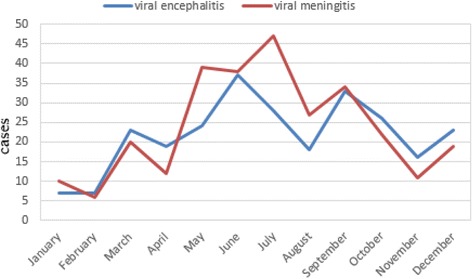
Methods: This was a multicentre prospective study. Two hundred and sixty one viral encephalitis patients and 285 viral meningitis patients were enrolled. The mean age of viral encephalitis and meningitis were 5.88 ± 3.60 years and 6.39 ± 3.57 years, respectively. Real-time reverse transcription PCR and multiplex PCR were used to detect human enteroviruses and herpes viruses in cerebrospinal fluid (CSF) of patients with encephalitis or meningitis. The enzyme-linked immune absorbent assay (ELISA) was used for detecting IgM antibody against Japanese encephalitis virus (JEV) in CSF and against mumps virus, tick-borne encephalitis virus (TBEV), dengue virus and rubella virus in acute serum. The clinical and outcome data were collected during patients' hospitalization.
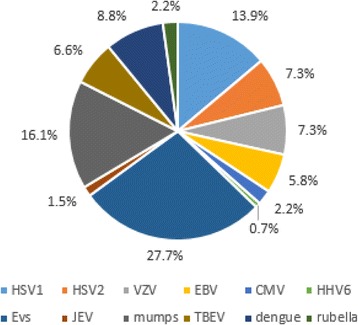
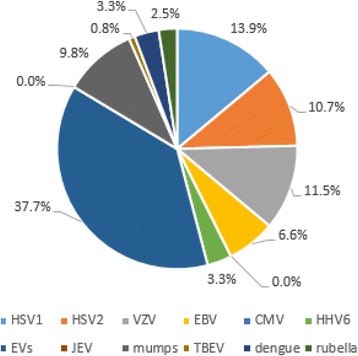
Results: The etiology of viral encephalitis was confirmed in 52.5% patients. The primary pathogen was human enteroviruses (27.7%) in viral encephalitis. The incidence of sequelae and the fatality rate of viral encephalitis with confirmed etiology were 7.5% and 0.8%, respectively. The etiology of viral meningitis was identified in 42.8% cases. The leading pathogen was also human enteroviruses (37.7%) in viral meningitis. The prognosis of viral meningitis was favorable with only 0.7% patients had neurological sequelae.
Conclusions: Human enteroviruses were the leading cause both in acute viral encephalitis and viral meningitis in children. The incidence of sequelae and fatality rate of viral encephalitis with confirmed etiology were 7.5% and 0.8%, respectively. The prognosis of viral meningitis was favorable compared to viral encephalitis.
Keywords: Children; Etiology; Prognosis; Viral encephalitis; Viral meningitis.
Conflict of interest statement
Ethics approval and consent to participate
This study was approved by Medical Ethics Committee of Beijing Children’s Hospital, Capital Medical University. Written informed consent was obtained from the patients’ parents.
Consent for publication
Not applicable.
Competing interests
The authors declare that they have no competing interests.
Publisher’s Note
Springer Nature remains neutral with regard to jurisdictional claims in published maps and institutional affiliations.
Figures
References
Publication types
MeSH terms
LinkOut - more resources
Full Text Sources
Other Literature Sources
