Review
. 2017 Jul 14;357(6347):149-152.
doi: 10.1126/science.aam8335.

Opportunities and challenges in modeling emerging infectious diseases

Affiliations
Review

Opportunities and challenges in modeling emerging infectious diseases

C Jessica E Metcalf et al. Science. .

Abstract

The term "pathogen emergence" encompasses everything from previously unidentified viruses entering the human population to established pathogens invading new populations and the evolution of drug resistance. Mathematical models of emergent pathogens allow forecasts of case numbers, investigation of transmission mechanisms, and evaluation of control options. Yet, there are numerous limitations and pitfalls to their use, often driven by data scarcity. Growing availability of data on pathogen genetics and human ecology, coupled with computational and methodological innovations, is amplifying the power of models to inform the public health response to emergence events. Tighter integration of infectious disease models with public health practice and development of resources at the ready has the potential to increase the timeliness and quality of responses.


Figures

Figure 1:
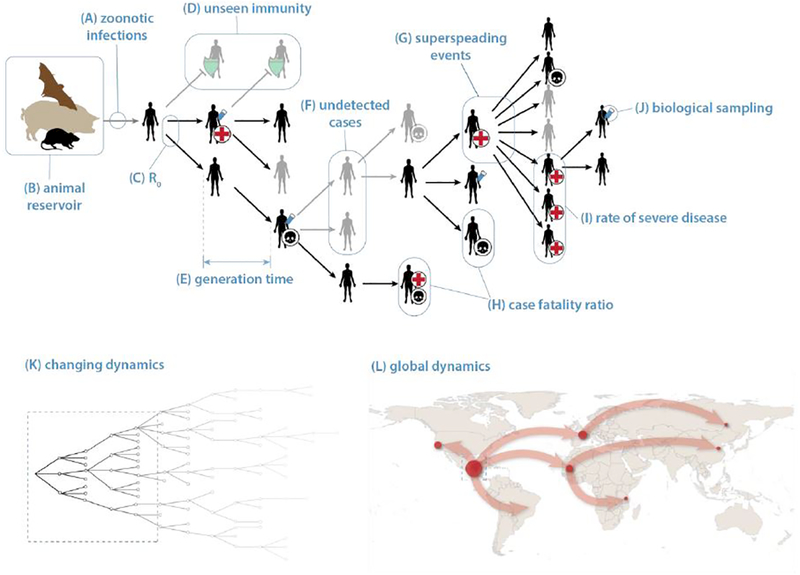
Figure 1:. Classic Zoonotic Emergence to Human-to-Human Transmission.
Typically, emergence occurs after a pathogen circulating in an animal reservoir enters the human population through a zoonotic infection event (A-B). The key to understanding whether the pathogen will pose a sustained threat to humans is the average number of cases caused by early infections, i.e., the basic reproductive number R0 (C). Generally, models assume every human is susceptible, but there may be significant unseen immunity (D, green shields) if the pathogen is closely related to a circulating disease (e.g., pandemic H1N1 (3)) or in populations with frequent exposure to the animal reservoir (e.g., antibodies to MERS-CoV in shepherds (9)). The time between subsequent generations of cases, i.e., the generation time (E) combined with R0 determine the speed of epidemic growth. Asymptomatic and undetected cases (F) and superspreading events (G) can have important impacts on disease dynamics and control not obvious from observed aggregate case counts. Superspreading events are often associated with health care facilities (as with MERS-CoV (10)) or other high contact settings (e.g., funerals in Ebola (7)). Reducing or eliminating transmission in these contexts can have a disproportionate impact on reducing R and controlling the epidemic. R0 and the generation time combined with the frequency at which cases die (H, skulls) or have severe outcomes (I, red crosses indicate hospitalization) determine the impact of the disease on the human population. Mechanistic models are both informed and can be used to estimate these values, and the combination of such models with pathogen genetic information obtained from biological sampling of a subset of cases (J, test tube) can allow for inferences when simple observational data does not. Over the medium- to long-term, the reproductive number will change (K) due to depletion of susceptibles, interventions and behaviour changes in response to the emerging threat. The latter two are hard to predict, adding to the difficulties in forecasting over the medium-term. Spread at the global scale (L) may require alternate modeling approaches, with more emphasis on human mobility and environmental suitability than drivers local of pathogen dynamics.
Figure 2:
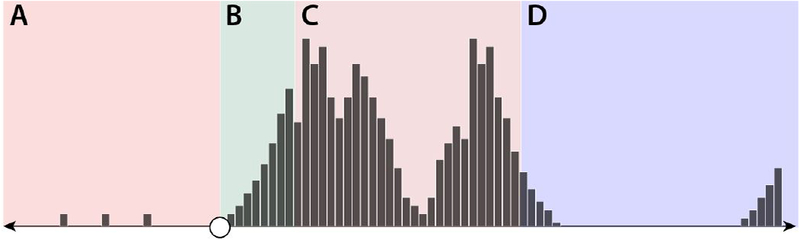
Figure 2:. Phases of the emergence process.
(A) Pre-emergence period: can last years to decades, and can feature occasional zoonotic transmission events. (B) Short-term post-emergence: the first several generations (lasting months to years depending on the pathogen’s generation time), characterized by exponential growth. (C) Medium-term post-emergence: patterns driven by hard to predict aspects of pathogen ecology and human behavior. (D) Long-term post-emergence period: general trends dictated by pathogen properties and basic epidemic theory.

References

    1. Meltzer MI et al., Estimating the future number of cases in the Ebola epidemic—Liberia and Sierra Leone, 2014−−2015. MMWR Surveill. Summ 63, 1–14 (2014). - PubMed
    1. Ferguson NM et al., EPIDEMIOLOGY. Countering the Zika epidemic in Latin America. Science. 353, 353–354 (2016). - PMC - PubMed
    1. Fraser C et al., Pandemic potential of a strain of influenza A (H1N1): early findings. Science. 324, 1557–1561 (2009). - PMC - PubMed
    1. Cauchemez S et al., Middle East respiratory syndrome coronavirus: quantification of the extent of the epidemic, surveillance biases, and transmissibility. Lancet Infect. Dis 14, 50–56 (2014). - PMC - PubMed
    1. Fraser C, Riley S, Anderson RM, Ferguson NM, Factors that make an infectious disease outbreak controllable. Proc. Natl. Acad. Sci. U. S. A 101, 6146–6151 (2004). - PMC - PubMed