Review
. 2017 Jul 12:7:22.
doi: 10.1186/s13601-017-0157-8. eCollection 2017.

Endotype-driven treatment in chronic upper airway diseases

Affiliations
Review

Endotype-driven treatment in chronic upper airway diseases

Glynnis De Greve et al. Clin Transl Allergy. .

Abstract

Rhinitis and rhinosinusitis are the two major clinical entities of chronic upper airway disease. Chronic rhinosinusitis (CRS) and allergic rhinitis (AR) affect respectively up to 10 and 30% of the total population, hence being associated with an important socio-economic burden. Different phenotypes of rhinitis and CRS have been described based on symptom severity and duration, atopy status, level of control, comorbidities and presence or absence of nasal polyps in CRS. The underlying pathophysiological mechanisms are diverse, with different, and sometimes overlapping, endotypes being recognized. Type 2 inflammation is well characterized in both AR and CRS with nasal polyps (CRSwNP), whereas type 1 inflammation is found in infectious rhinitis and CRS without nasal polyps (CRSsNP). The neurogenic endotype has been demonstrated in some forms of non-allergic rhinitis. Epithelial barrier dysfunction is shown in AR and CRSwNP. Emerging therapies are targeting one specific pathophysiological pathway or endotype. This endotype-driven treatment approach requires careful selection of the patient population who might benefit from a specific treatment. Personalized medicine is addressing the issue of providing targeted treatment for the right patient and should be seen as one aspect of the promising trend towards precision medicine. This review provides a comprehensive overview of the current state of endotypes, biomarkers and targeted treatments in chronic inflammatory conditions of the nose and paranasal sinuses.

Keywords: Biologicals; Biomarker; Chronic rhinosinusitis; Personalised medicine; Phenotype; Precision medicine; Rhinitis.


Figures
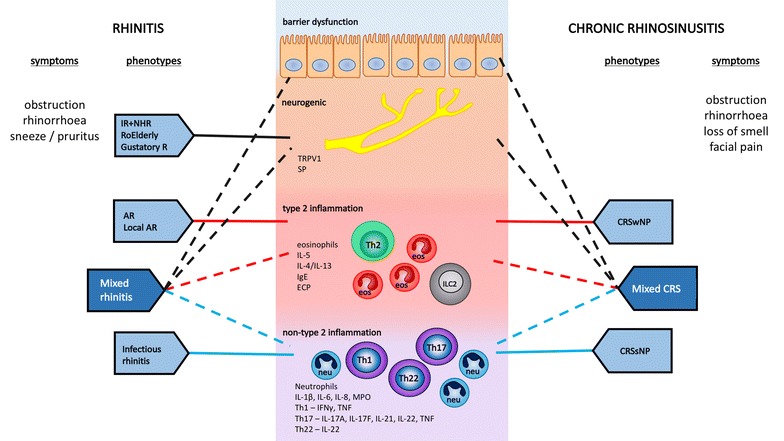
Fig. 1
Fig. 1
Overview of endotypes and phenotypes in rhinitis and chronic rhinosinusitis. Endotype predominantly underlying the phenotype, solid lines; endotype potentially contributing to the phenotype, dashed lines. AR allergic rhinitis; CRSsNP chronic rhinosinusitis without nasal polyps; CRSwNP chronic rhinosinusitis with nasal polyps; IR idiopathic rhinitis; RoElderly rhinitis of the elderly; Gustatory R gustatory rhinitis
Fig. 2
Fig. 2
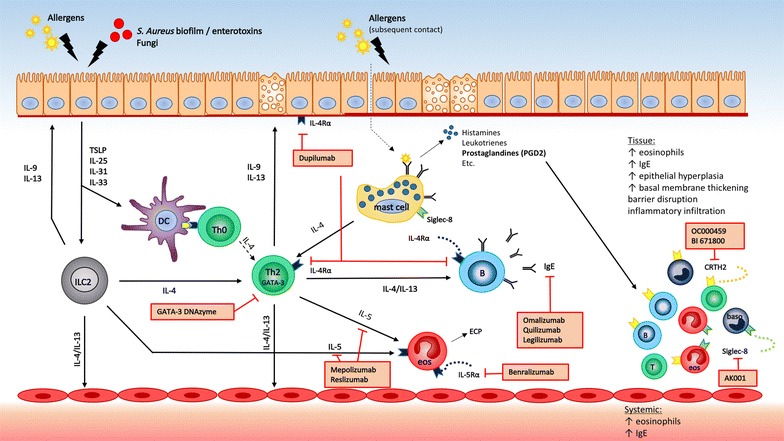
Type 2 inflammation and biologicals. B B cell; baso basophil; DC dendritic cell; ECP eosinophilic cationic protein; eos eosinophils; ILC2 type 2 innate lymphoid cell; Th T helper cell
Fig. 3
Fig. 3
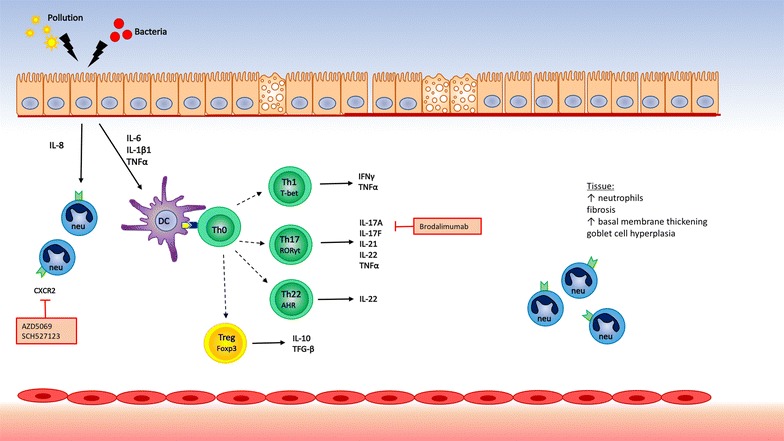
Non-type 2 inflammation and biological. None-type 2 hosts different T helper subsets. Th1 cells, Th17 and Th22 cells characterized by their individual transcription factors (T-bet, RORyt, AHR) are responsible for Th1, Th17 and Th22 cytokines respectively. Regulatory T cells suppress the immune response via production of IL-10 and TGF-β. DC dendritic cell; neu neutrophils; Th T helper cell; Treg T regulatory cell
Fig. 4
Fig. 4
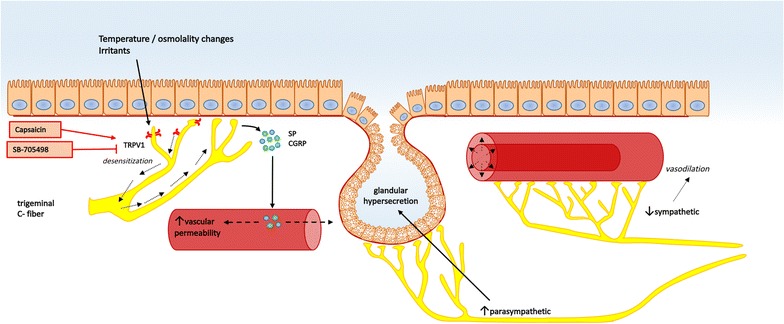
Neurogenic endotype and biologicals. TRPV1 overexpression resulting in nasal hyperreactivity on temperature and/or osmolality changes and irritants (left side). Dysautonomia (right side). CGRP calcitonin G-related peptide; SP substance P; TRPV1 transient receptor potential vanniloid 1
Fig. 5
Fig. 5
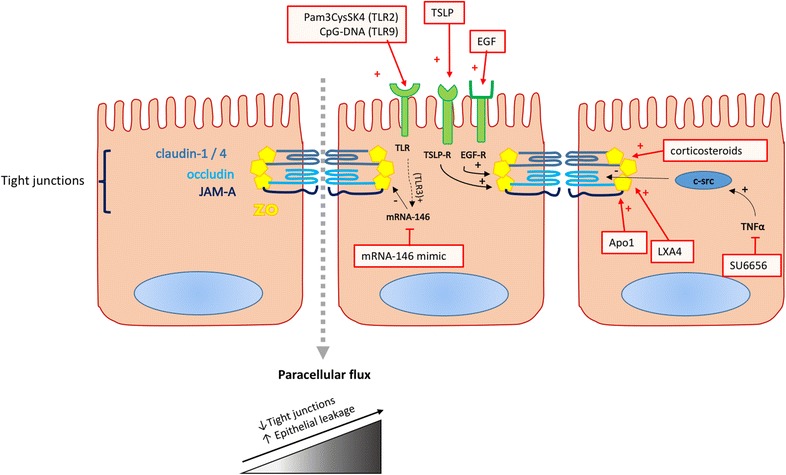
Barrier dysfunction and potential biomarkers. EGF epidermal growth factor; EGF-R epidermal growth factor receptor; JAM-A junctional adhesion molecule A; TLR toll-like receptor; ZO zona occludens

References

    1. Katelaris CH, Lee BW, Potter PC, Maspero JF, Cingi C, Lopatin A, et al. Prevalence and diversity of allergic rhinitis in regions of the world beyond Europe and North America. Clin Exp Allergy. 2012;42(2):186–207. doi: 10.1111/j.1365-2222.2011.03891.x. - DOI - PubMed
    1. Hastan D, Fokkens WJ, Bachert C, Newson RB, Bislimovska J, Bockelbrink A, et al. Chronic rhinosinusitis in Europe–an underestimated disease. A GA2LEN study. Allergy. 2011;66(9):1216–1223. doi: 10.1111/j.1398-9995.2011.02646.x. - DOI - PubMed
    1. Bousquet J, Schünemann HJ, Samolinski B, Demoly P, Baena-Cagnani CE, Bachert C, et al. Allergic rhinitis and its impact on asthma (ARIA): achievements in 10 years and future needs. J Allergy Clin Immunol. 2012;130(5):1049–1062. doi: 10.1016/j.jaci.2012.07.053. - DOI - PubMed
    1. Hens G, Vanaudenaerde BM, Bullens DM, Piessens M, Decramer M, Dupont LJ, et al. Sinonasal pathology in nonallergic asthma and COPD: ‘united airway disease’ beyond the scope of allergy. Allergy. 2008;63(3):261–267. doi: 10.1111/j.1398-9995.2007.01545.x. - DOI - PubMed
    1. Muraro A, Fokkens WJ, Pietikainen S, Borrelli D, Agache I, Bousquet J, et al. European symposium on precision medicine in allergy and airways diseases: report of the European Union parliament symposium (October 14, 2015) Rhinology. 2015;53(4):303–307. - PubMed