


Dipeptidyl Peptidase-4 Regulates Hematopoietic Stem Cell Activation in Response to Chronic Stress
- PMID: 28710180
- PMCID: PMC5586325
- DOI: 10.1161/JAHA.117.006394
Dipeptidyl Peptidase-4 Regulates Hematopoietic Stem Cell Activation in Response to Chronic Stress
Abstract
Background: DPP4 (Dipeptidyl peptidase-4)-GLP-1 (glucagon-like peptide-1) and its receptor (GLP-1R) axis has been involved in several intracellular signaling pathways. The Adrβ3 (β3-adrenergic receptor)/CXCL12 (C-X-C motif chemokine 12) signal was required for the hematopoiesis. We investigated the novel molecular requirements between DPP4-GLP-1/GLP-1 and Adrβ3/CXCL12 signals in bone marrow (BM) hematopoietic stem cell (HSC) activation in response to chronic stress.
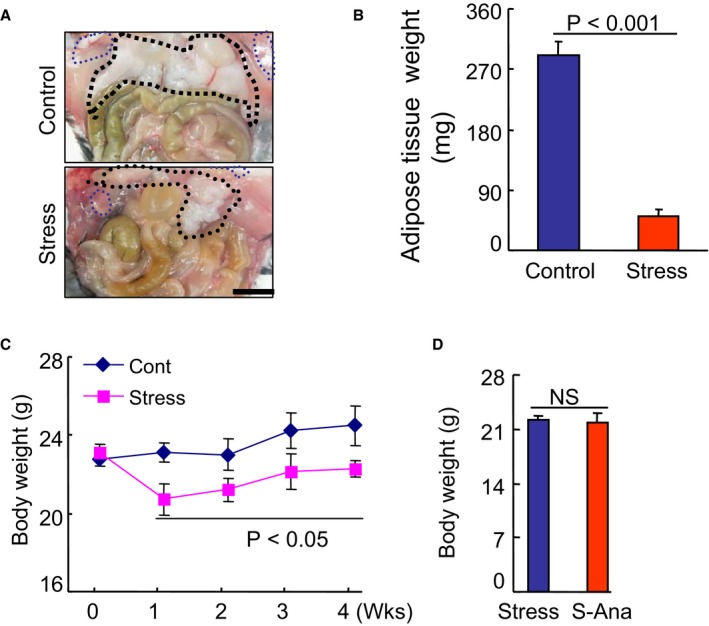
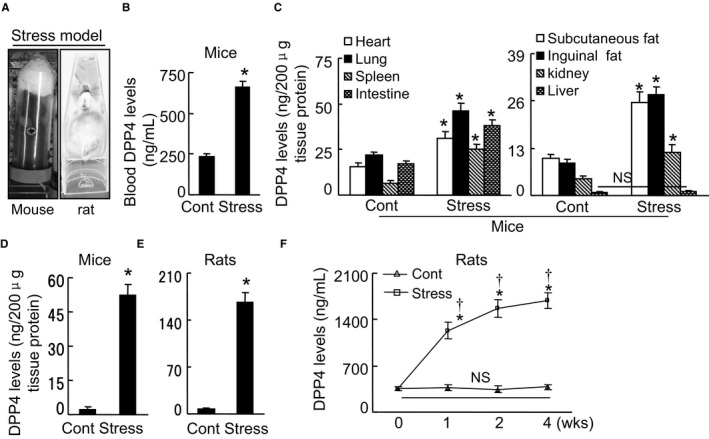
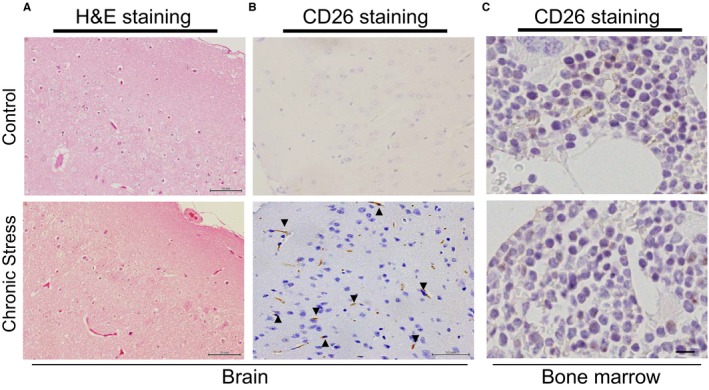
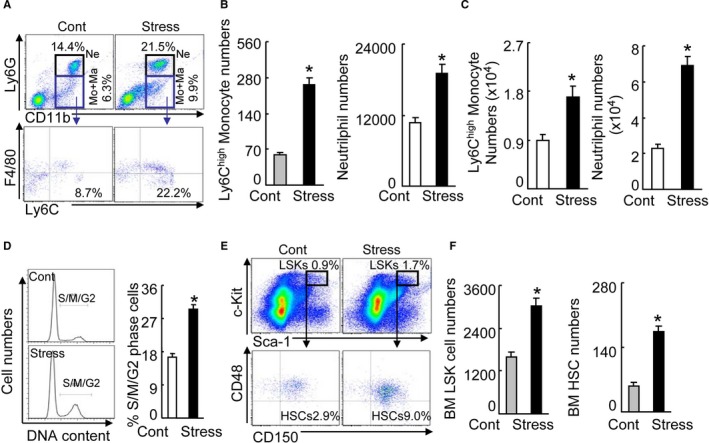
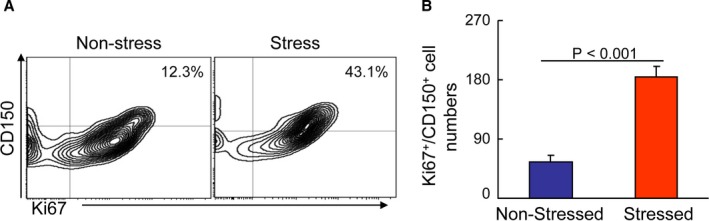
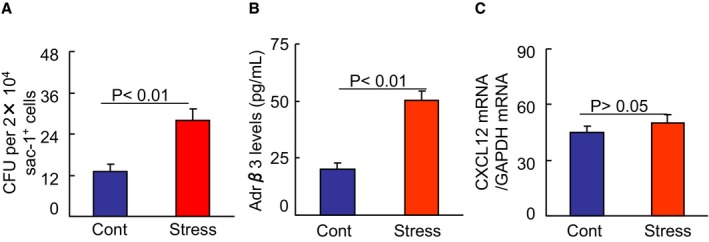
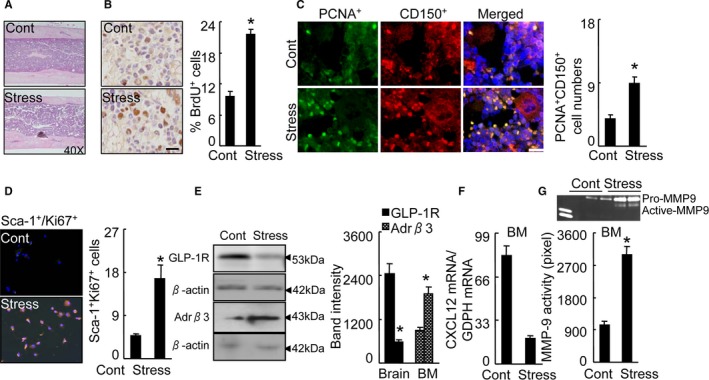
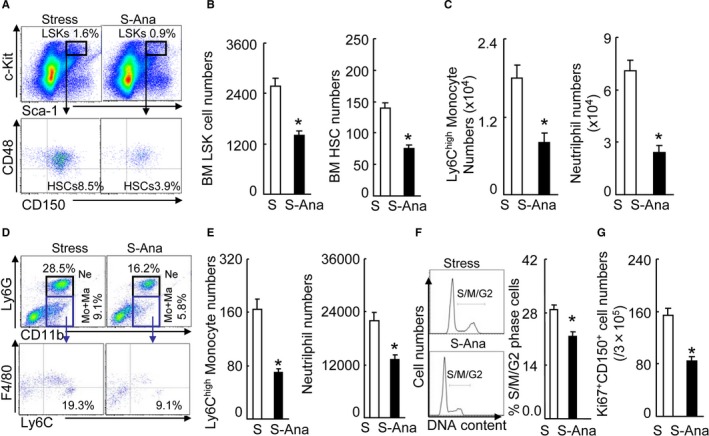
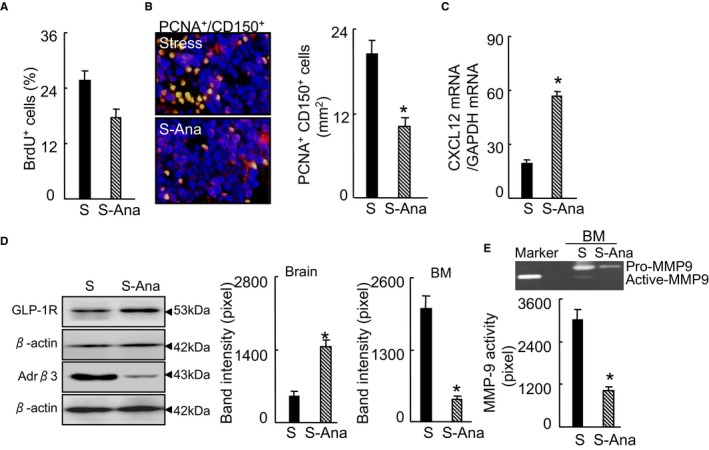
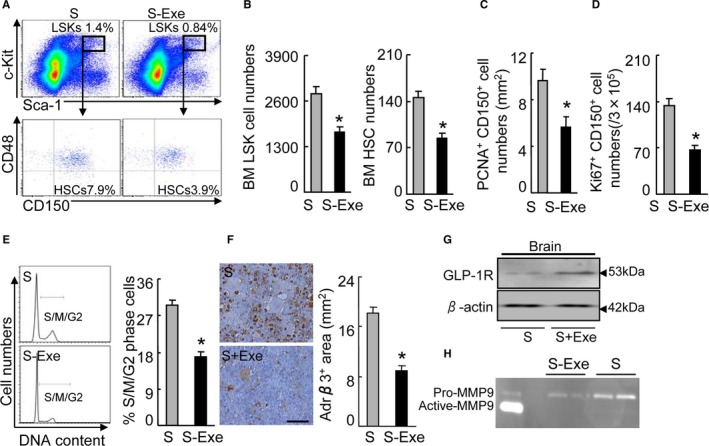
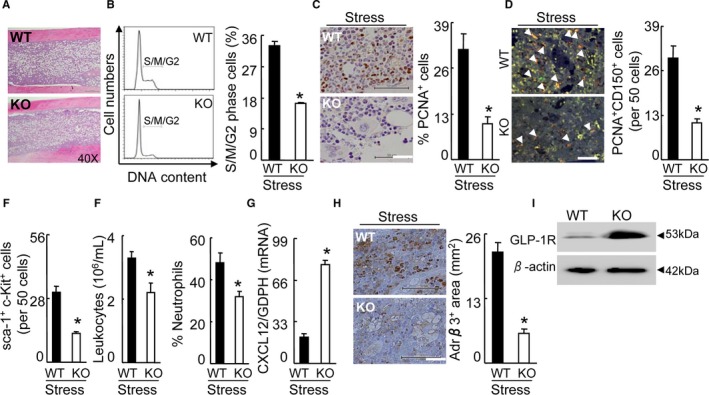
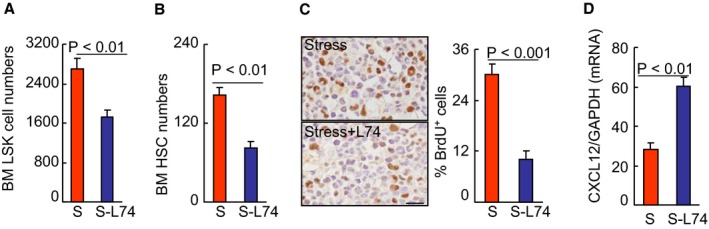
Methods and results: Male 8-week-old mice were subjected to 4-week intermittent restrain stress and orally treated with vehicle or the DPP4 inhibitor anagliptin (30 mg/kg per day). Control mice were left undisturbed. The stress increased the blood and brain DPP4 levels, the plasma epinephrine and norepinephrine levels, and the BM niche cell Adrβ3 expression, and it decreased the plasma GLP-1 levels and the brain GLP-1R and BM CXCL12 expressions. These changes were reversed by DPP4 inhibition. The stress activated BM sca-1highc-KithighCD48lowCD150high HSC proliferation, giving rise to high levels of blood leukocytes and monocytes. The stress-activated HSC proliferation was reversed by DPP4 depletion and by GLP-1R activation. Finally, the selective pharmacological blocking of Adrβ3 mitigated HSC activation, accompanied by an improvement of CXCL12 gene expression in BM niche cells in response to chronic stress.
Conclusions: These findings suggest that DPP4 can regulate chronic stress-induced BM HSC activation and inflammatory cell production via an Adrβ3/CXCL12-dependent mechanism that is mediated by the GLP-1/GLP-1R axis, suggesting that the DPP4 inhibition or the GLP-1R stimulation may have applications for treating inflammatory diseases.
Keywords: glucagon‐like peptide‐1; inflammation; stress.
© 2017 The Authors. Published on behalf of the American Heart Association, Inc., by Wiley.
Figures
References
-
- Gu HF, Tang CK, Yang YZ. Psychological stress, immune response, and atherosclerosis. Atherosclerosis. 2012;223:69–77. - PubMed
-
- Jing L, Tamplin OJ, Chen MJ, Deng Q, Patterson S, Kim PG, Durand EM, McNeil A, Green JM, Matsuura S, Ablain J, Brandt MK, Schlaeger TM, Huttenlocher A, Daley GQ, Ravid K, Zon LI. Adenosine signaling promotes hematopoietic stem and progenitor cell emergence. J Exp Med. 2008;212:649–663. - PMC - PubMed
-
- Tzeng YS, Li H, Kang YL, Chen WC, Cheng WC, Lai DM. Loss of Cxcl12/Sdf‐1 in adult mice decreases the quiescent state of hematopoietic stem/progenitor cells and alters the pattern of hematopoietic regeneration after myelosuppression. Blood. 2011;117:429–439. - PubMed
MeSH terms
Substances
LinkOut - more resources
Full Text Sources
Other Literature Sources
Medical
Research Materials
Miscellaneous
