


Acute Kidney Injury in Pregnancy
- PMID: 28711077
- PMCID: PMC5662118
- DOI: 10.1016/j.semnephrol.2017.05.010
Acute Kidney Injury in Pregnancy
Abstract
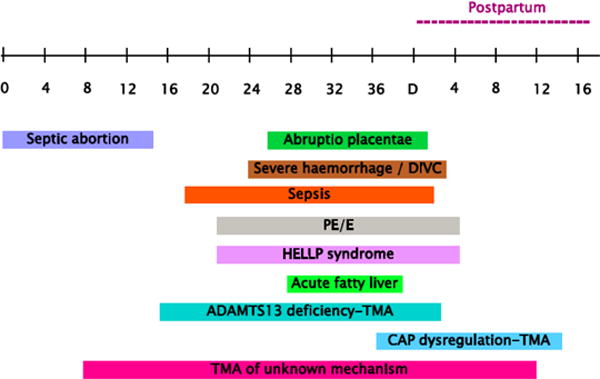
Pregnancy-related acute kidney injury (AKI) has declined in incidence in the last three decades, although it remains an important cause of maternal and fetal morbidity and mortality. Pregnancy-related causes of AKI such as preeclampsia, acute fatty liver of pregnancy, HELLP (Hemolysis, Elevated Liver function tests, Low Platelets) syndrome, and the thrombotic microangiopathies (thrombotic thrombocytopenic purpura, atypical hemolytic-uremic syndrome [HUS]) exhibit overlapping features and often present as diagnostic dilemmas. Differentiating among these conditions may be difficult or impossible based on clinical criteria only. In difficult and rare cases, a renal biopsy may need to be considered for the exact diagnosis and to facilitate appropriate treatment, but the risks and benefits need to be carefully weighed. The use of eculizumab for the treatment of atypical HUS has demonstrated efficacy in early case reports. Non-pregnancy related causes such as volume depletion and pyelonephritis require early and aggressive resuscitative as well as antibiotic measures respectively. We will discuss in this review the various etiologies of AKI in pregnancy, current diagnostic approaches, and the latest treatment strategies. Given the recent trends of increasing maternal age at the time of pregnancy, and the availability of modern reproductive methods increase the risks of AKI in pregnancy in the coming years.
Keywords: Acute kidney injury; HELLP; preeclampsia; pregnancy; thrombotic microangiopathy.
Copyright © 2017 Elsevier Inc. All rights reserved.
Figures
References
-
- Prakash J, Kumar H, Sinha DK, et al. Acute renal failure in pregnancy in a developing country: twenty years of experience. Ren Fail. 2006;28(4):309–313. - PubMed
-
- Stratta P, Besso L, Canavese C, et al. Is pregnancy-related acute renal failure a disappearing clinical entity? Ren Fail. 1996 Jul;18(4):575–584. - PubMed
Publication types
MeSH terms
Substances
Supplementary concepts
Grants and funding
LinkOut - more resources
Full Text Sources
Other Literature Sources
Medical
