Characterizing the malaria rural-to-urban transmission interface: The importance of reactive case detection
- PMID: 28715415
- PMCID: PMC5531679
- DOI: 10.1371/journal.pntd.0005780
Characterizing the malaria rural-to-urban transmission interface: The importance of reactive case detection
Abstract
Background: Reported urban malaria cases are increasing in Latin America, however, evidence of such trend remains insufficient. Here, we propose an integrated approach that allows characterizing malaria transmission at the rural-to-urban interface by combining epidemiological, entomological, and parasite genotyping methods.
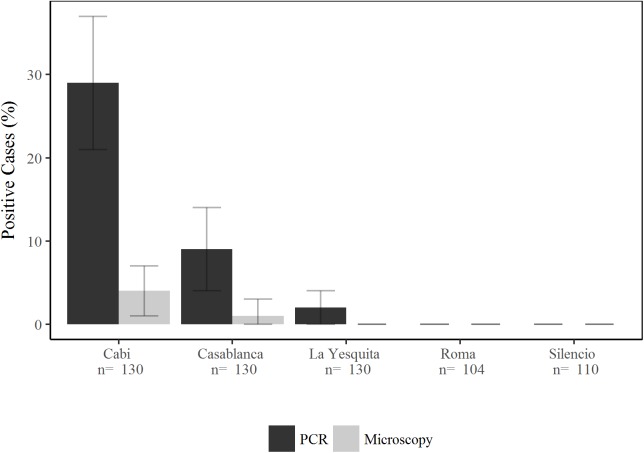
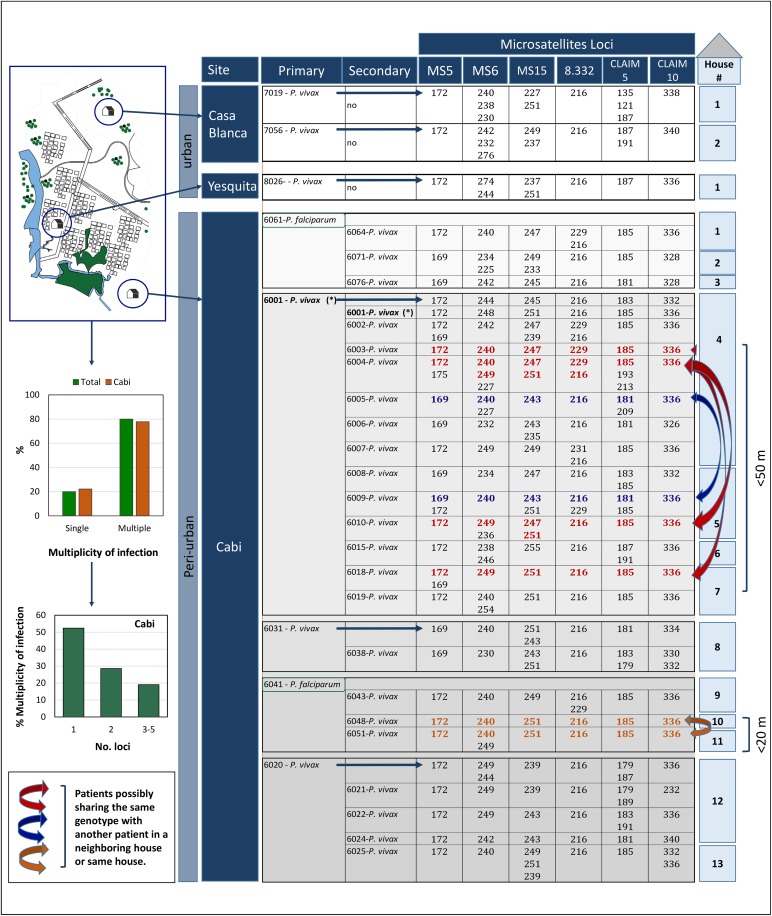
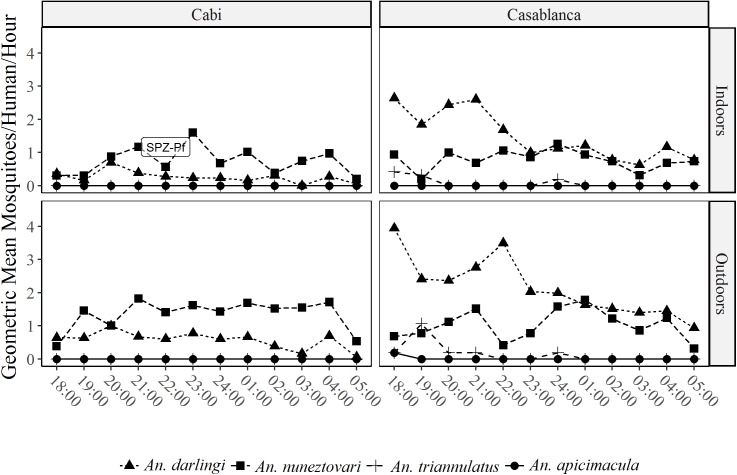
Methods/principal findings: A descriptive study that combines active (ACD), passive (PCD), and reactive (RCD) case detection was performed in urban and peri-urban neighborhoods of Quibdó, Colombia. Heads of households were interviewed and epidemiological surveys were conducted to assess malaria prevalence and identify potential risk factors. Sixteen primary cases, eight by ACD and eight by PCD were recruited for RCD. Using the RCD strategy, prevalence of 1% by microscopy (6/604) and 9% by quantitative polymerase chain reaction (qPCR) (52/604) were found. A total of 73 houses and 289 volunteers were screened leading to 41 secondary cases, all of them in peri-urban settings (14% prevalence). Most secondary cases were genetically distinct from primary cases indicating that there were independent occurrences. Plasmodium vivax was the predominant species (76.3%, 71/93), most of them being asymptomatic (46/71). Urban and peri-urban neighborhoods had significant sociodemographic differences. Twenty-four potential breeding sites were identified, all in peri-urban areas. The predominant vectors for 1,305 adults were Anopheles nuneztovari (56,2%) and An. Darlingi (42,5%). One An. nuneztovari specimen was confirmed naturally infected with P. falciparum by ELISA.
Conclusions: This study found no evidence supporting the existence of urban malaria transmission in Quibdó. RCD strategy was more efficient for identifying malaria cases than ACD alone in areas where malaria transmission is variable and unstable. Incorporating parasite genotyping allows discovering hidden patterns of malaria transmission that cannot be detected otherwise. We propose to use the term "focal case" for those primary cases that lead to discovery of secondary but genetically unrelated malaria cases indicating undetected malaria transmission.
Conflict of interest statement
The authors have declared that no competing interests exist.
Figures
References
-
- WHO (2015) World Malaria Report 2015 World Health Organization.
-
- Keiser J, Utzinger J, Caldas de Castro M, Smith TA, Tanner M, et al. (2004) Urbanization in sub-saharan Africa and implication for malaria control. Am J Trop Med Hyg 71: 118–127. - PubMed
-
- Robert V, Macintyre K, Keating J, Trape JF, Duchemin JB, et al. (2003) Malaria transmission in urban sub-Saharan Africa. Am J Trop Med Hyg 68: 169–176. - PubMed
-
- Wilson ML, Krogstad DJ, Arinaitwe E, Arevalo-Herrera M, Chery L, et al. (2015) Urban Malaria: Understanding its Epidemiology, Ecology, and Transmission Across Seven Diverse ICEMR Network Sites. Am J Trop Med Hyg 93: 110–123. doi: 10.4269/ajtmh.14-0834 - DOI - PMC - PubMed
-
- Donnelly MJ, McCall PJ, Lengeler C, Bates I, D'Alessandro U, et al. (2005) Malaria and urbanization in sub-Saharan Africa. Malar J 4: 12 doi: 10.1186/1475-2875-4-12 - DOI - PMC - PubMed
MeSH terms
Grants and funding
LinkOut - more resources
Full Text Sources
Other Literature Sources
Medical