


Bilateral Wilms tumour: a review of clinical and molecular features
- PMID: 28716159
- PMCID: PMC5687181
- DOI: 10.1017/erm.2017.8
Bilateral Wilms tumour: a review of clinical and molecular features
Abstract
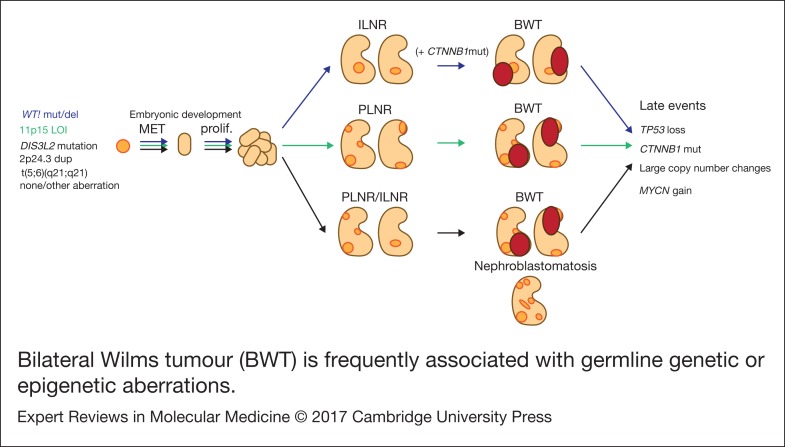
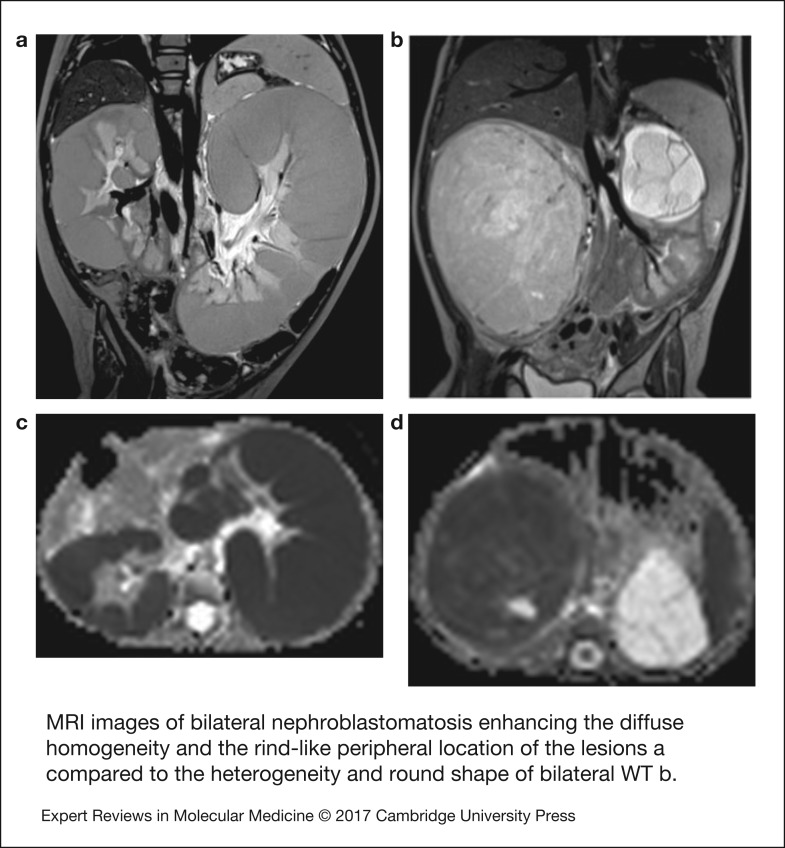
Wilms tumour (WT) is the most common paediatric kidney cancer and affects approximately one in 10 000 children. The tumour is associated with undifferentiated embryonic lesions called nephrogenic rests (NRs) or, when diffuse, nephroblastomatosis. WT or NRs can occur in both kidneys, termed bilateral disease, found in only 5-8% of cases. Management of bilateral WT presents a major clinical challenge in terms of maximising survival, preserving renal function and understanding underlying genetic risk. In this review, we compile clinical data from 545 published cases of bilateral WT and discuss recent progress in understanding the molecular basis of bilateral WT and its associated precursor NRs in the context of the latest radiological, surgical and epidemiological features.
Figures
References
-
- Scott R.H. et al. (2008) Constitutional 11p15 abnormalities, including heritable imprinting center mutations, cause nonsyndromic Wilms tumor. Nature Genetics 40(11), 1329-1334 - PubMed
-
- Wegert J. et al. (2015) Mutations in the SIX1/2 pathway and the DROSHA/DGCR8 miRNA microprocessor complex underlie high-risk Blastemal type Wilms Tumors. Cancer Cell 27(2), 298-311 - PubMed
Publication types
MeSH terms
Grants and funding
LinkOut - more resources
Full Text Sources
Other Literature Sources
Medical
