Meta-Analysis
. 2017 Jul 18;6(7):e005835.
doi: 10.1161/JAHA.117.005835.

Effects of Non-Vitamin K Antagonist Oral Anticoagulants Versus Warfarin in Patients With Atrial Fibrillation and Valvular Heart Disease: A Systematic Review and Meta-Analysis

Affiliations
Meta-Analysis

Effects of Non-Vitamin K Antagonist Oral Anticoagulants Versus Warfarin in Patients With Atrial Fibrillation and Valvular Heart Disease: A Systematic Review and Meta-Analysis

Kuo-Li Pan et al. J Am Heart Assoc. .

Abstract

Background: The original non-vitamin K antagonist oral anticoagulant (NOAC) trials in nonvalvular atrial fibrillation (AF) enrolled patients with native valve pathologies. The object of this study was to quantify the benefit-risk profiles of NOACs versus warfarin in AF patients with native valvular heart disease (VHD).

Methods and results: Trials were identified by exhaustive literature search. Trial data were combined using inverse variance weighting to produce a meta-analytic summary hazard ratio (HR) and 95% confidence interval (CI) of efficacy and safety of NOACs versus warfarin. Our final analysis included 4 randomized controlled trials that enrolled 71 526 participants, including 13 574 with VHD. Pooling results from included trials showed that NOACs versus warfarin reduced stroke or systemic embolism (HR: 0.70; 95% CI, 0.60-0.82) and intracranial hemorrhage (HR: 0.47; 95% CI, 0.24-0.92) in AF patients with VHD. However, risk reduction of major bleeding and intracranial hemorrhage was driven by apixaban, edoxaban, and dabigatran (HR for major bleeding: 0.79 [95% CI, 0.69-0.91]; HR for intracranial hemorrhage: 0.33 [95% CI, 0.25-0.45]) but not rivaroxaban (HR for major bleeding: 1.56 [95% CI, 1.20-2.04]; HR for intracranial hemorrhage: 1.27 [95% CI, 0.77-2.10]).

Conclusions: Among patients with AF and native VHD, NOACs reduce stroke and systemic embolism compared with warfarin. Evidence shows that apixaban, dabigatran, and edoxaban also reduce bleeding in this patient subgroup, whereas major bleeding (but not intracranial hemorrhage or mortality rate) is significantly increased in VHD patients treated with rivaroxaban. NOACs are a reasonable alternative to warfarin in AF patients with VHD.

Keywords: anticoagulant; atrial fibrillation; bleeding; stroke; valve.


Figures

Figure 1
Figure 1
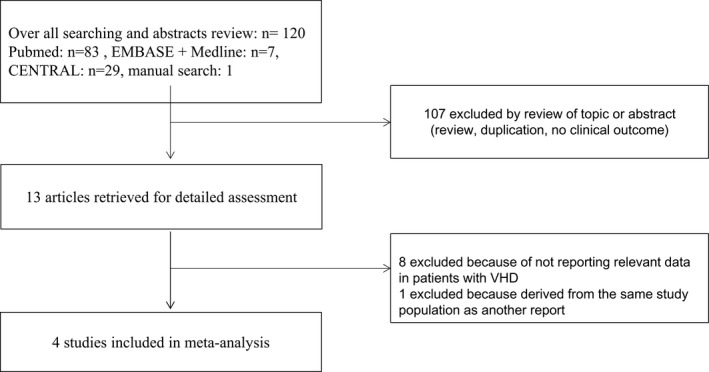
Flow chart of study selection. CENTRAL indicates Cochrane Central Register of Controlled Trials; VHD indicates valvular heart disease.
Figure 2
Figure 2
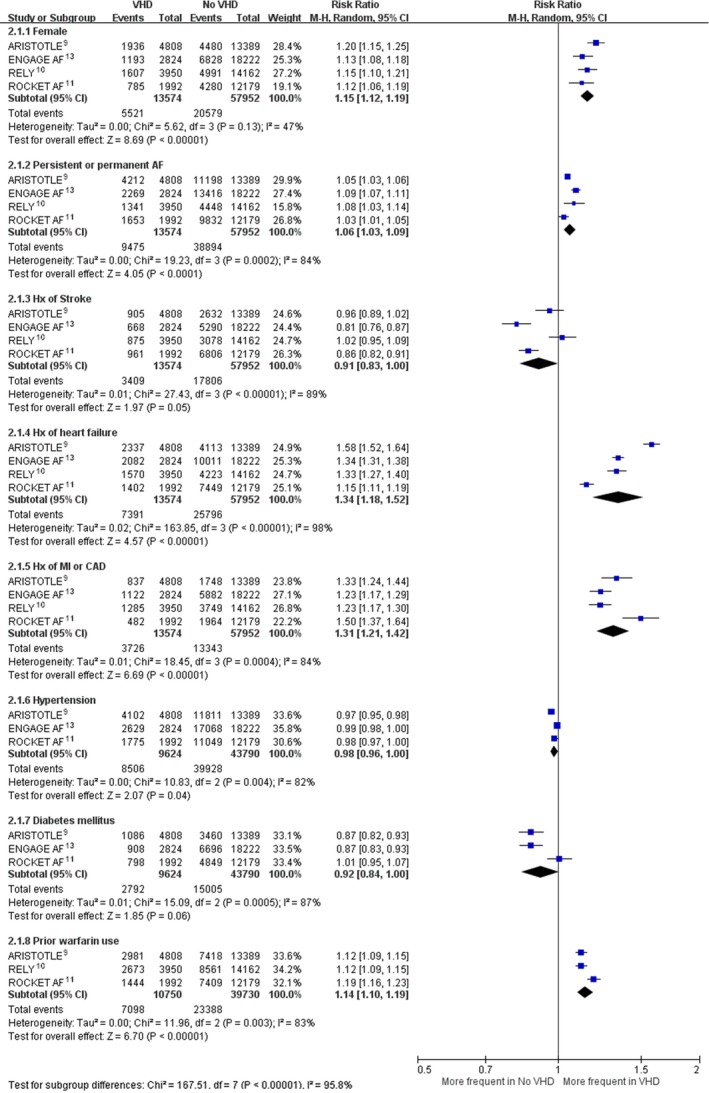
Prevalence of baseline characteristics of AF patients with and without valvular heart disease. AF indicates atrial fibrillation; ARISTOTLE, Apixaban for Reduction in Stroke and Other Thromboembolic Events in Atrial Fibrillation; CAD, coronary artery disease; CI, confidence interval; ENGAGE AF, Effective Anticoagulation with Factor Xa Next Generation in Atrial Fibrillation; Hx, history; M‐H, Mantel–Haenszel; MI, myocardial infarction; RE‐LY, Randomized Evaluation of Long‐Term Anticoagulation Therapy; ROCKET AF, Rivaroxaban Once Daily Oral Direct Factor Xa Inhibition Compared with Vitamin K Antagonism for Prevention of Stroke and Embolism Trial in Atrial Fibrillation; VHD, valvular heart disease.
Figure 3
Figure 3
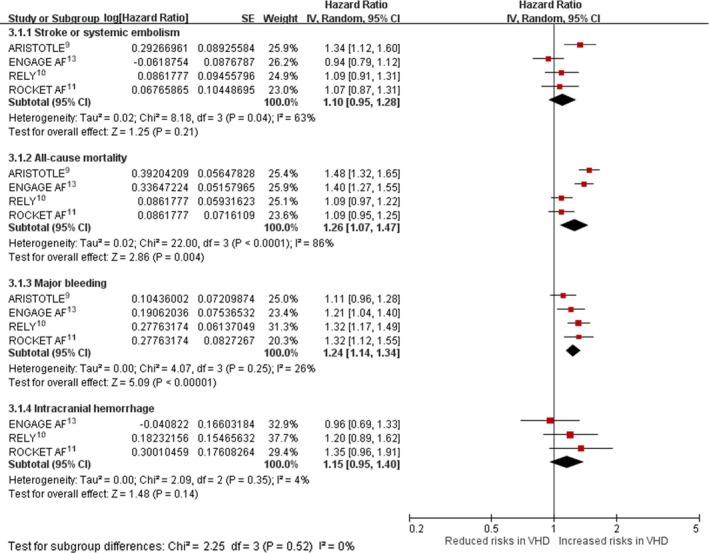
Hazard ratio with 95% confidence interval of outcomes, using overall patients enrolled in included trials, based on valvular status (VHD vs non‐VHD). ARISTOTLE, Apixaban for Reduction in Stroke and Other Thromboembolic Events in Atrial Fibrillation; CI, confidence interval; ENGAGE AF, Effective Anticoagulation with Factor Xa Next Generation in Atrial Fibrillation; IV, instrumental variable; RE‐LY, Randomized Evaluation of Long‐Term Anticoagulation Therapy; ROCKET AF, Rivaroxaban Once Daily Oral Direct Factor Xa Inhibition Compared with Vitamin K Antagonism for Prevention of Stroke and Embolism Trial in Atrial Fibrillation; VHD indicates valvular heart disease.
Figure 4
Figure 4
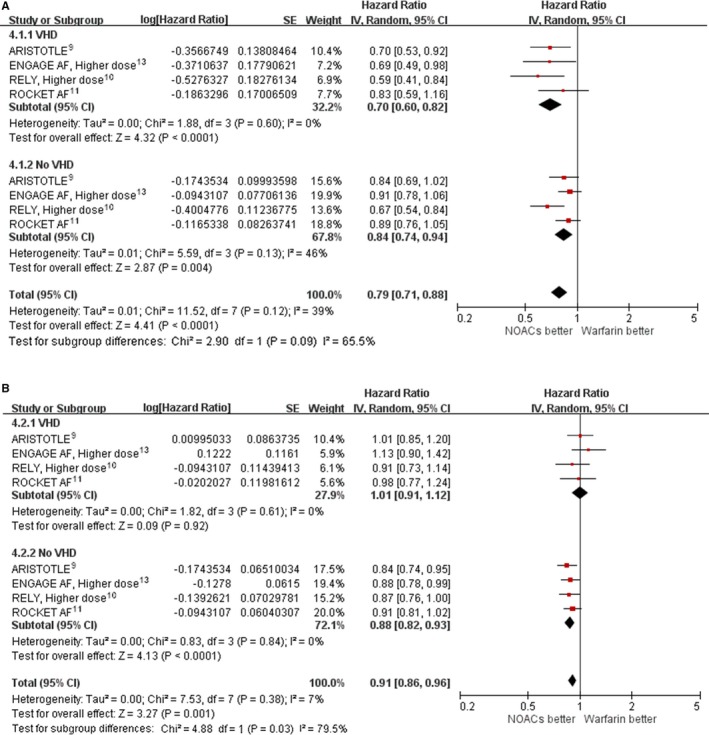
Hazard ratio with 95% confidence interval of efficacy outcomes (NOACs vs warfarin) in patients with and without VHD. A, Stroke or systemic embolism. B, Death. In ARISTOTLE, patients received apixaban 5 mg twice daily. ENGAGE AF used a higher dose, and patients received edoxaban 60 mg once daily. RELY was higher dose, and patients received dabigatran 150 mg twice daily. In ROCKET AF, patients received rivaroxaban 20 or 15 mg once daily. ARISTOTLE, Apixaban for Reduction in Stroke and Other Thromboembolic Events in Atrial Fibrillation; CI, confidence interval; ENGAGE AF, Effective Anticoagulation with Factor Xa Next Generation in Atrial Fibrillation; IV, instrumental variable; NOAC, non–vitamin K antagonist oral anticoagulant; RE‐LY, Randomized Evaluation of Long‐Term Anticoagulation Therapy; ROCKET AF, Rivaroxaban Once Daily Oral Direct Factor Xa Inhibition Compared with Vitamin K Antagonism for Prevention of Stroke and Embolism Trial in Atrial Fibrillation; VHD indicates valvular heart disease.
Figure 5
Figure 5
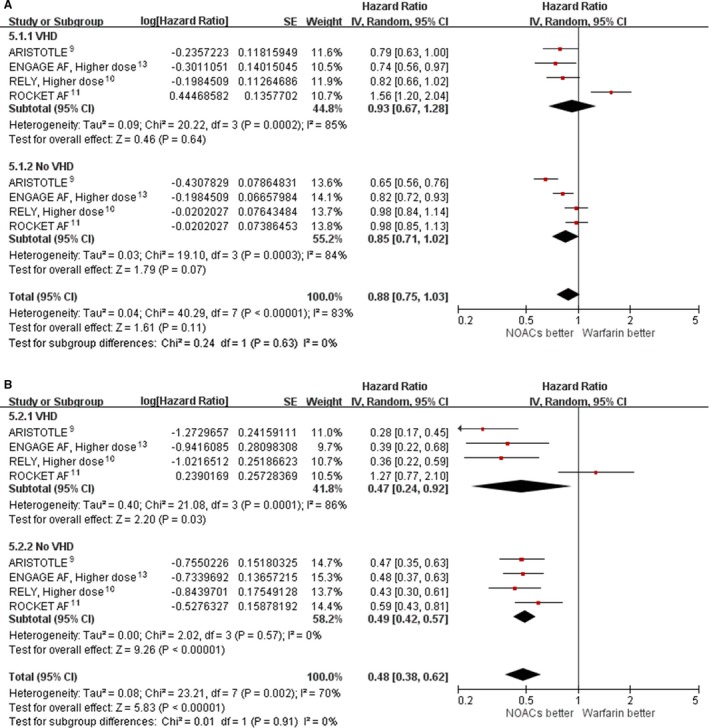
Hazard ratio with 95% confidence interval of safety outcomes (NOACs vs warfarin) in patients with and without VHD. A, Major bleeding. B, Intracranial hemorrhage. In ARISTOTLE, patients received apixaban 5 mg twice daily. ENGAGE AF used a higher dose, and patients received edoxaban 60 mg once daily. RELY was higher dose, and patients received dabigatran 150 mg twice daily. In ROCKET AF, patients received rivaroxaban 20 or 15 mg once daily. ARISTOTLE, Apixaban for Reduction in Stroke and Other Thromboembolic Events in Atrial Fibrillation; CI, confidence interval; ENGAGE AF, Effective Anticoagulation with Factor Xa Next Generation in Atrial Fibrillation; IV, instrumental variable; NOAC, non–vitamin K antagonist oral anticoagulant; RE‐LY, Randomized Evaluation of Long‐Term Anticoagulation Therapy; ROCKET AF, Rivaroxaban Once Daily Oral Direct Factor Xa Inhibition Compared with Vitamin K Antagonism for Prevention of Stroke and Embolism Trial in Atrial Fibrillation; VHD indicates valvular heart disease.
Figure 6
Figure 6
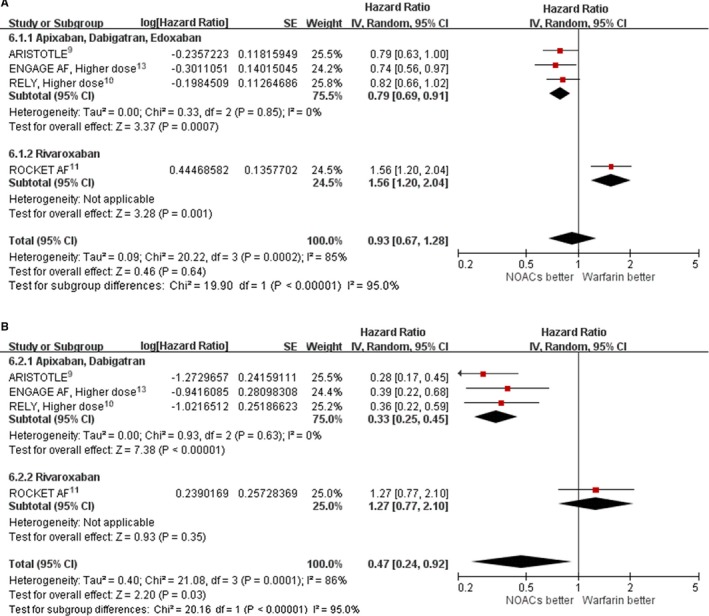
Effect of different non–vitamin K antagonist oral anticoagulants (dabigatran and apixaban vs rivaroxaban) in atrial fibrillation patients with valvular heart disease for safety end points. A, Major bleeding. B, Intracranial hemorrhage. In ARISTOTLE, patients received apixaban 5 mg twice daily. ENGAGE AF used a higher dose, and patients received edoxaban 60 mg once daily. RELY was higher dose, and patients received dabigatran 150 mg twice daily. In ROCKET AF, patients received rivaroxaban 20 or 15 mg once daily. ARISTOTLE, Apixaban for Reduction in Stroke and Other Thromboembolic Events in Atrial Fibrillation; CI, confidence interval; ENGAGE AF, Effective Anticoagulation with Factor Xa Next Generation in Atrial Fibrillation; IV, instrumental variable; NOAC, non–vitamin K antagonist oral anticoagulant; RE‐LY, Randomized Evaluation of Long‐Term Anticoagulation Therapy; ROCKET AF, Rivaroxaban Once Daily Oral Direct Factor Xa Inhibition Compared with Vitamin K Antagonism for Prevention of Stroke and Embolism Trial in Atrial Fibrillation.

References

    1. Wolf PA, Dawber TR, Thomas HE Jr, Kannel WB. Epidemiologic assessment of chronic atrial fibrillation and risk of stroke: the Framingham Study. Neurology. 1978;28:973–977. - PubMed
    1. Brand FN, Abbott RD, Kannel WB, Wolf PA. Characteristics and prognosis of lone atrial fibrillation. 30‐year follow‐up in the Framingham Study. JAMA. 1985;254:3449–3453. - PubMed
    1. Wolf PA, Abbott RD, Kannel WB. Atrial fibrillation as an independent risk factor for stroke: the Framingham Study. Stroke. 1991;22:983–988. - PubMed
    1. European Heart Rhythm A, European Association for Cardio‐Thoracic S , Camm AJ, Kirchhof P, Lip GY, Schotten U, Savelieva I, Ernst S, Van Gelder IC, Al‐Attar N, Hindricks G, Prendergast B, Heidbuchel H, Alfieri O, Angelini A, Atar D, Colonna P, De Caterina R, De Sutter J, Goette A, Gorenek B, Heldal M, Hohloser SH, Kolh P, Le Heuzey JY, Ponikowski P, Rutten FH. Guidelines for the management of atrial fibrillation: the Task Force for the Management of Atrial Fibrillation of the European Society of Cardiology (ESC). Eur Heart J. 2010;31:2369–2429. - PubMed
    1. Connolly SJ, Ezekowitz MD, Yusuf S, Eikelboom J, Oldgren J, Parekh A, Pogue J, Reilly PA, Themeles E, Varrone J, Wang S, Alings M, Xavier D, Zhu J, Diaz R, Lewis BS, Darius H, Diener HC, Joyner CD, Wallentin L; Committee R‐LS and Investigators . Dabigatran versus warfarin in patients with atrial fibrillation. N Engl J Med. 2009;361:1139–1151. - PubMed

MeSH terms

LinkOut - more resources