


Effect of a lotion containing the heat-treated probiotic strain Lactobacillus johnsonii NCC 533 on Staphylococcus aureus colonization in atopic dermatitis
- PMID: 28721083
- PMCID: PMC5501445
- DOI: 10.2147/CCID.S135529
Effect of a lotion containing the heat-treated probiotic strain Lactobacillus johnsonii NCC 533 on Staphylococcus aureus colonization in atopic dermatitis
Abstract
Objective: Staphylococcus aureus dominates the skin microbiota in patients with atopic dermatitis (AD), with bacterial loads correlating with disease severity. The aim of this exploratory study was to investigate the effect of a cosmetic lotion containing heat-treated Lactobacillus johnsonii NCC 533 (HT La1) on S. aureus colonization in AD patients.
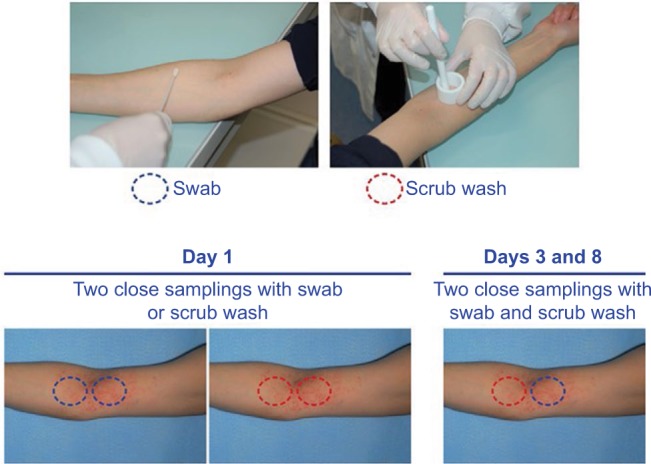
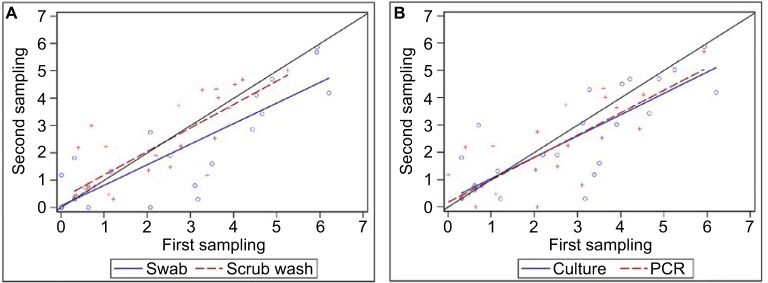
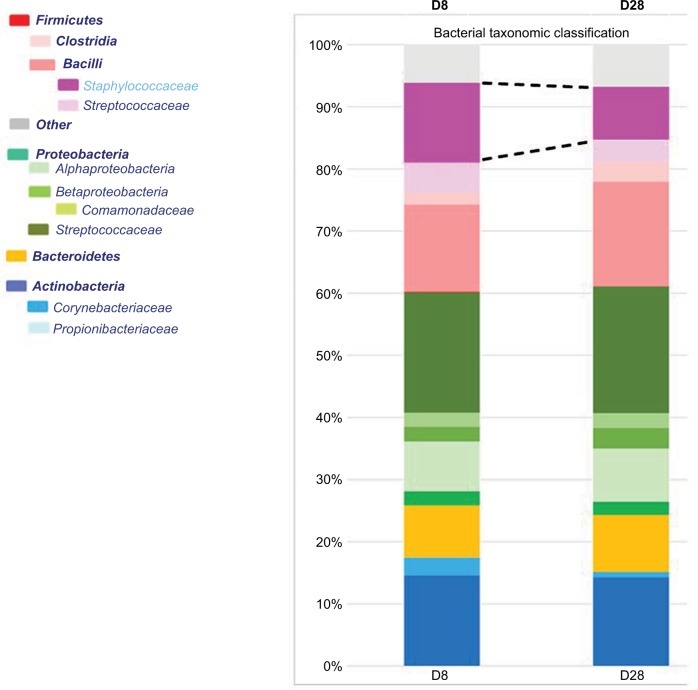
Methods: This open-label, multicenter study was performed in AD patients in Germany. First, detection of S. aureus was performed in all patients using the swab or scrub-wash method of sampling, followed by quantitative culture or quantitative polymerase chain reaction. Repeatability and reproducibility of all method combinations were evaluated to select the best combination of sampling and quantification. Second, a lotion containing HT La1 was applied to lesional skin twice daily for 3 weeks. Scoring using local objective SCORing Atopic Dermatitis (SCORAD), measurement of S. aureus load, and lesional microbiome analysis were performed before and after the 3-week treatment period.
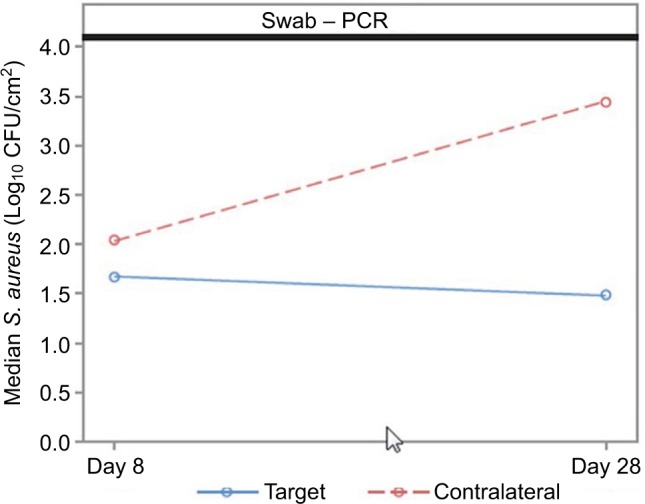
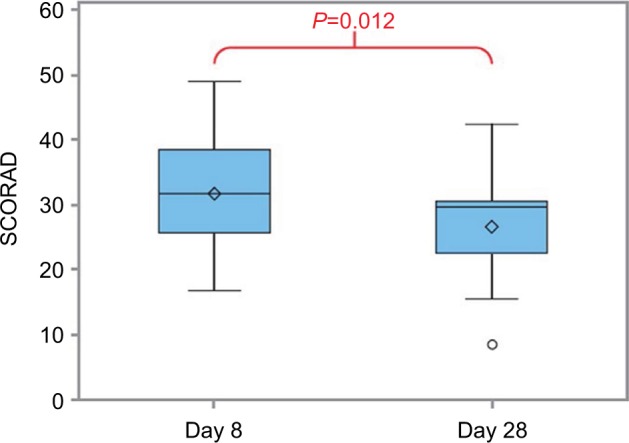
Results: Thirty-one patients with AD were included in the study. All sampling and quantification methods were found to be robust, reproducible, and repeatable for assessing S. aureus load. For simplicity, a combination of swab and quantitative polymerase chain reaction was chosen to assess the efficacy of HT La1. Following application of a lotion containing HT La1 to AD lesions for 3 weeks, a reduction in S. aureus load was observed in patients, which correlated with a decrease in local objective SCORAD. Interestingly, high baseline skin concentrations of S. aureus were associated with good responses to the lotion.
Conclusion: This study demonstrated that the application of a lotion containing HT La1 to the lesional skin of patients with AD for 3 weeks controlled S. aureus colonization and was associated with local clinical improvement (SCORAD). These findings support further development of topical treatments containing heat-treated nonreplicating beneficial bacteria for patients with AD.
Keywords: HT La1; L. johnsonii NCC 533; S. aureus; atopic dermatitis; heat treated La1; microbiology.
Conflict of interest statement
Disclosure SB-R and VB are employees of Galderma R&D. PA is a former employee of Galderma R&D. AM is an employee of the Nestlé Research Center, Nestec Ltd. The authors report no other conflicts of interest in this work.
Figures
References
-
- Weidinger S, Novak N. Atopic dermatitis. Lancet. 2016;387(10023):1109–1122. - PubMed
-
- Bieber T. Atopic dermatitis. N Engl J Med. 2008;358(14):1483–1494. - PubMed
-
- Leyden JJ, Marples RR, Kligman AM. Staphylococcus aureus in the lesions of atopic dermatitis. Br J Dermatol. 1974;90(5):525–530. - PubMed
-
- Gloor M, Peters G, Stoika D. On the resident aerobic bacterial skin flora in unaffected skin of patients with atopic dermatitis and in healthy controls. Dermatologica. 1982;164(4):258–265. - PubMed
-
- Higaki S, Morohashi M, Yamagishi T, Hasegawa Y. Comparative study of staphylococci from the skin of atopic dermatitis patients and from healthy subjects. Int J Dermatol. 1999;38(4):265–269. - PubMed
LinkOut - more resources
Full Text Sources
Other Literature Sources
