. 2018 Jul;23(7):1643-1651.
doi: 10.1038/mp.2017.129. Epub 2017 Jul 20.

Hippocampus-dependent memory and allele-specific gene expression in adult offspring of alcohol-consuming dams after neonatal treatment with thyroxin or metformin

Affiliations

Hippocampus-dependent memory and allele-specific gene expression in adult offspring of alcohol-consuming dams after neonatal treatment with thyroxin or metformin

E Tunc-Ozcan et al. Mol Psychiatry. 2018 Jul.

Abstract

Fetal alcohol spectrum disorder (FASD), the result of fetal alcohol exposure (FAE), affects 2-11% of children worldwide, with no effective treatments. Hippocampus-based learning and memory deficits are key symptoms of FASD. Our previous studies show hypothyroxinemia and hyperglycemia of the alcohol-consuming pregnant rat, which likely affects fetal neurodevelopment. We administered vehicle, thyroxine (T4) or metformin to neonatal rats post FAE and rats were tested in the hippocampus-dependent contextual fear-conditioning paradigm in adulthood. Both T4 and metformin alleviated contextual fear memory deficit induced by FAE, and reversed the hippocampal expression changes in the thyroid hormone-inactivating enzyme, deiodinase-III (Dio3) and insulin-like growth factor 2 (Igf2), genes that are known to modulate memory processes. Neonatal T4 restored maternal allelic expressions of the imprinted Dio3 and Igf2 in the adult male hippocampus, while metformin restored FAE-caused changes in Igf2 expression only. The decreased hippocampal expression of DNA methyltransferase 1 (Dnmt1) that maintains the imprinting of Dio3 and Igf2 during development was normalized by both treatments. Administering Dnmt1 inhibitor to control neonates resulted in FAE-like deficits in fear memory and hippocampal allele-specific expression of Igf2, which were reversed by metformin. We propose that neonatal administration of T4 and metformin post FAE affect memory via elevating Dnmt1 and consequently normalizing hippocampal Dio3 and Igf2 expressions in the adult offspring. The present results indicate that T4 and metformin, administered during the neonatal period that is equivalent to the third trimester of human pregnancy, are potential treatments for FASD and conceivably for other neurodevelopmental disorders with cognitive deficits.


Conflict of interest statement

Competing Financial Interests

All authors reported no financial interests or potential conflicts of interest.

Figures
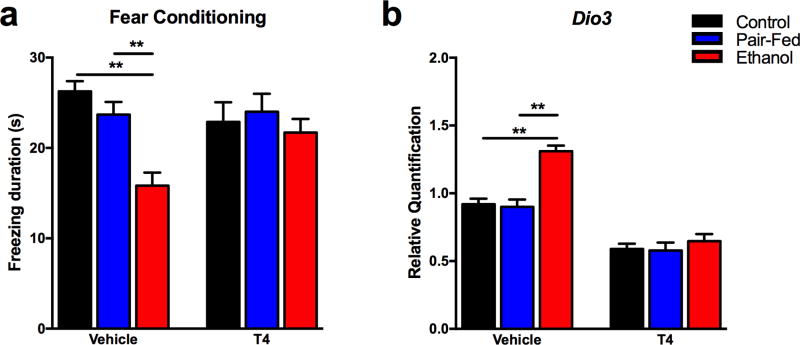
Figure 1
Figure 1. Hippocampal contextual fear memory deficit and increased Dio3 expression in adult FAE offspring are alleviated by neonatal T4 treatment
a) Memory deficit was measured as decreased time (in seconds) spent freezing in the second day of contextual FC test. Male and female neonates of dams on different diet from gestation day 8–21 received either T4 (0.05 µg/gr/day) or vehicle treatment between postnatal days 1 and 10, and were tested in adulthood (N = 16–24/prenatal diet/neonatal treatment; sex combined). b) Hippocampal transcript levels of Dio3 were measured by qPCR . N = 8–15/prenatal diet/neonatal treatment. Data represented as mean ± SEM. *p<0.05, **p<0.01, Bonferroni post-hoc test within neonatal treatments.
Figure 2
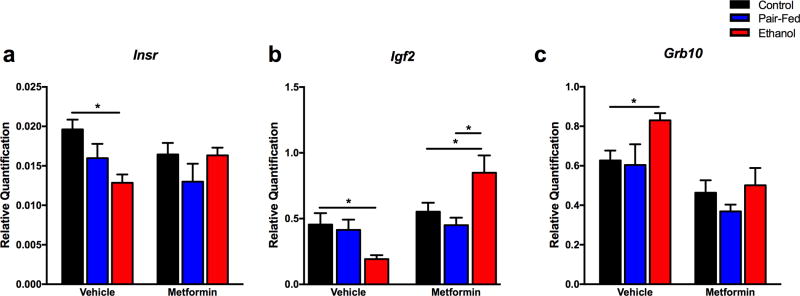
Figure 2. Administration of metformin reverses FAE-induced changes in gene expression in the ex vivo primary hippocampal culture
Metformin (0.4mM, every 48 h, for 10 days) was administered into primary hippocampal culture obtained from fetuses of the three prenatal diet groups (males and females combined). Transcript levels of a) Insr, N = 5–9/prenatal diet/ treatment, b) Igf2, N = 6–8/prenatal diet/treatment, and c) Grb10, N = 6–9/prenatal diet/treatment. Details are as described in Figure 1.
Figure 3
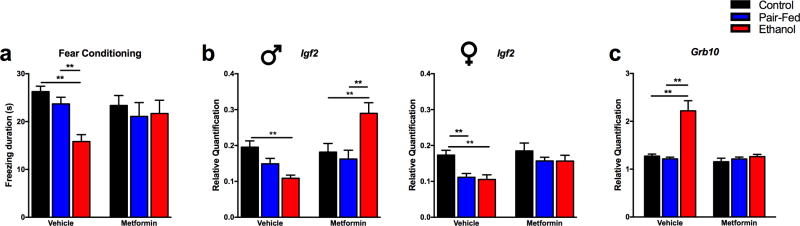
Figure 3. Neonatal metformin treatment reverses FAE-induced fear memory deficit and hippocampal Igf2 and Grb10 expression in adult offspring
a) Metformin administration (200 µg/gr/day, from postnatal day 1 to 10) reversed the fear memory deficit of adult Ethanol offspring. N = 11–24/prenatal diet/neonatal treatment; sex combined. Transcript levels of b) Igf2, male (N = 4–11/prenatal diet/neonatal treatment) and female (N = 5–8/prenatal diet/neonatal treatment), c) Grb10 (N = 8–13/ prenatal diet/neonatal treatment, sex combined) in the hippocampus of adult offspring. Details are as described in Figure 1.
Figure 4
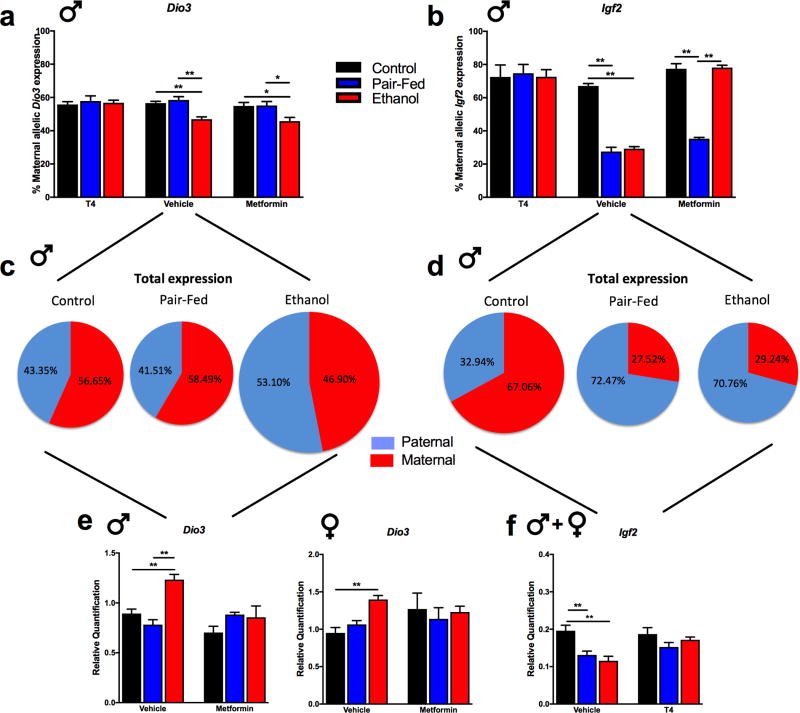
Figure 4. Changes in allele-specific and total expression of hippocampal Dio3 and Igf2 are sex- and treatment-dependent
Allele-specific expression in adult male hippocampus was determined by pyrosequencing using the already verified SNPs a) Dio3 (N=4–10/prenatal diet/neonatal treatment) and b) Igf2 (N=3–11/prenatal diet/neonatal treatment). Schematic representation of the maternal and the paternal allelic contributions to the total hippocampal expression of c) Dio3 and d) Igf2 (drawn not to the scale). e) Effects of neonatal metformin treatment on FAE-altered transcript levels of hippocampal Dio3 in adult offspring (N=4–8/sex/prenatal diet/neonatal treatment). f) Total transcript levels of Igf2 in the hippocampus of adult offspring in response to FAE and neonatal T4 treatment (N = 8–20/prenatal diet/neonatal treatment, sex combined). Details are as described in Figure 1.
Figure 5
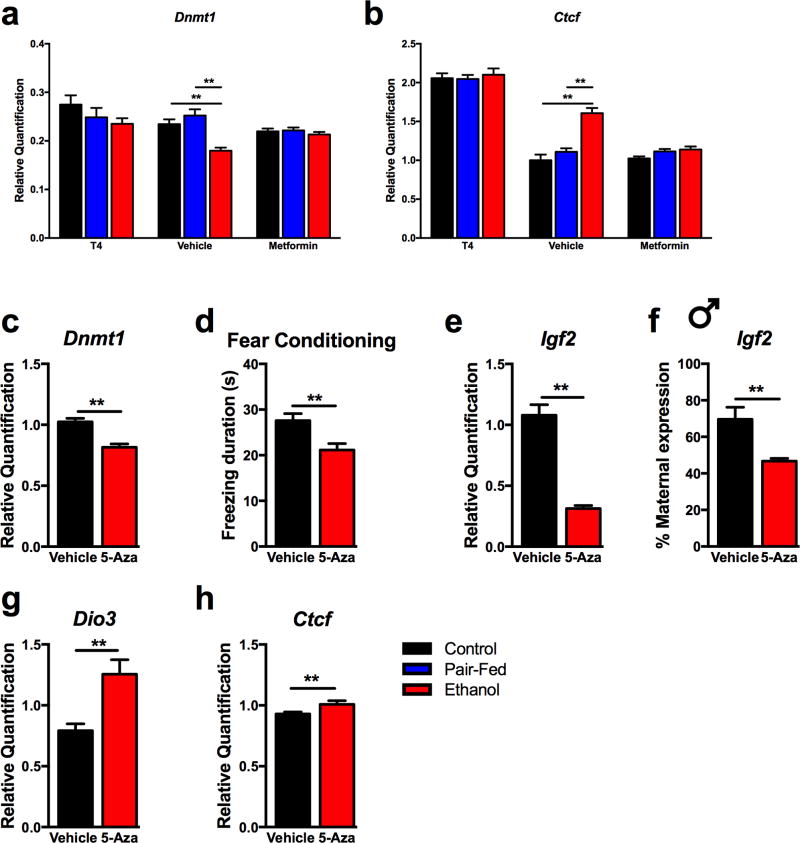
Figure 5. The role of Dnmt1 in FAE-induced deficits
a) Hippocampal Dnmt1 expression was affected by FAE and alleviated by neonatal treatments (N = 7–20/prenatal diet/neonatal treatment, sex combined). b) Treatment-specific changes in adult hippocampal Ctcf expression (sex combined T4: N = 9–10/prenatal diet/neonatal treatment; Metformin: N = 7–13/prenatal diet/neonatal treatment). Data is normalized to Vehicle Control animals. c-h) Administration of Dnmt1 inhibitor 5-aza-2’-deoxycytidine (5-Aza, 1 µg/gr/day, from postnatal day 1 to 10) to control neonates mimicked the effects of FAE in fear memory deficit and hippocampal gene expression changes in the adult offspring. N=13–14/neonatal treatment, sex combined, except f) N=4–5 males/neonatal treatment. Details are as described in Figure 1.

References

    1. Green PP, McKnight-Eily LR, Tan CH, Mejia R, Denny CH. Vital Signs: Alcohol-Exposed Pregnancies--United States, 2011–2013. MMWR Morb Mortal Wkly Rep. 2016;65:91–97. - PubMed
    1. Roozen S, Peters GJ, Kok G, Townend D, Nijhuis J, Curfs L. Worldwide Prevalence of Fetal Alcohol Spectrum Disorders: A Systematic Literature Review Including Meta-Analysis. Alcohol Clin Exp Res. 2016;40:18–32. - PubMed
    1. Murawski NJ, Moore EM, Thomas JD, Riley EP. Advances in Diagnosis and Treatment of Fetal Alcohol Spectrum Disorders: From Animal Models to Human Studies. Alcohol Res. 2015;37:97–108. - PMC - PubMed
    1. Petrenko CL, Alto ME. Interventions in fetal alcohol spectrum disorders: An international perspective. Eur J Med Genet. 2016 - PMC - PubMed
    1. Ryan SH, Williams JK, Thomas JD. Choline supplementation attenuates learning deficits associated with neonatal alcohol exposure in the rat: Effects of varying the timing of choline administration. Brain Res. 2008;1237:91–100. - PMC - PubMed

Publication types

MeSH terms