Contemporary status of insecticide resistance in the major Aedes vectors of arboviruses infecting humans
- PMID: 28727779
- PMCID: PMC5518996
- DOI: 10.1371/journal.pntd.0005625
Contemporary status of insecticide resistance in the major Aedes vectors of arboviruses infecting humans
Erratum in
-
Correction: Contemporary status of insecticide resistance in the major Aedes vectors of arboviruses infecting humans.PLoS Negl Trop Dis. 2021 Jan 19;15(1):e0009084. doi: 10.1371/journal.pntd.0009084. eCollection 2021 Jan. PLoS Negl Trop Dis. 2021. PMID: 33465099 Free PMC article.
Abstract
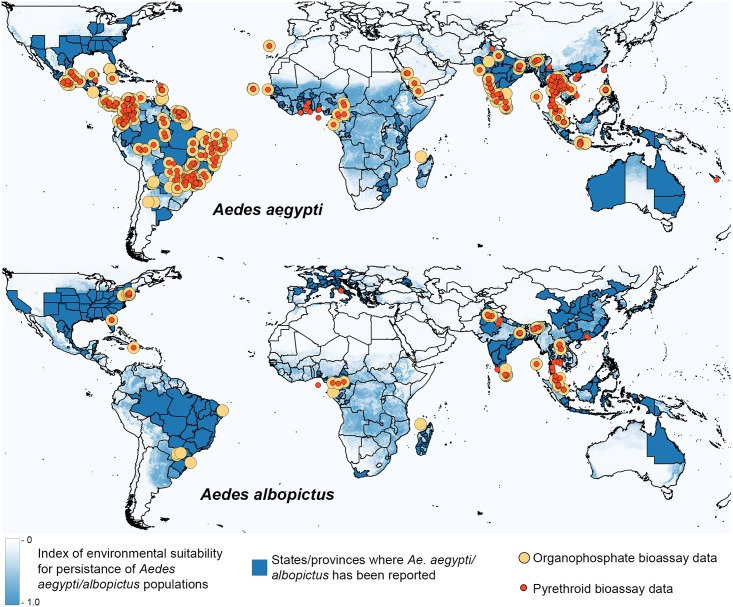
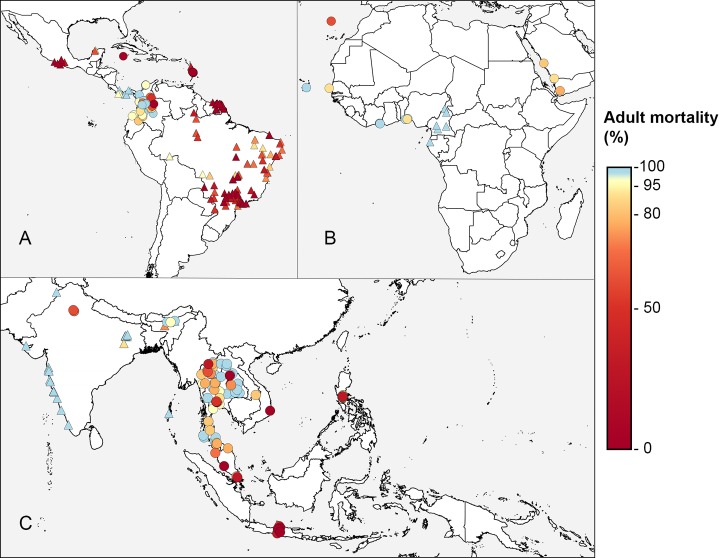
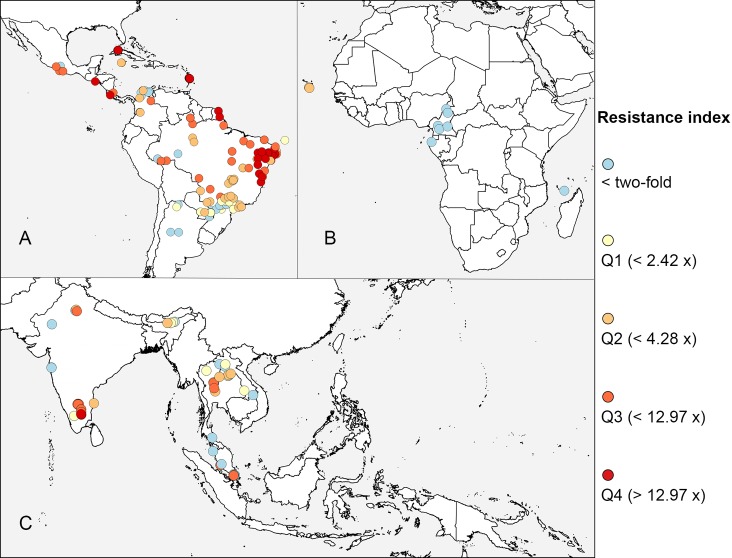
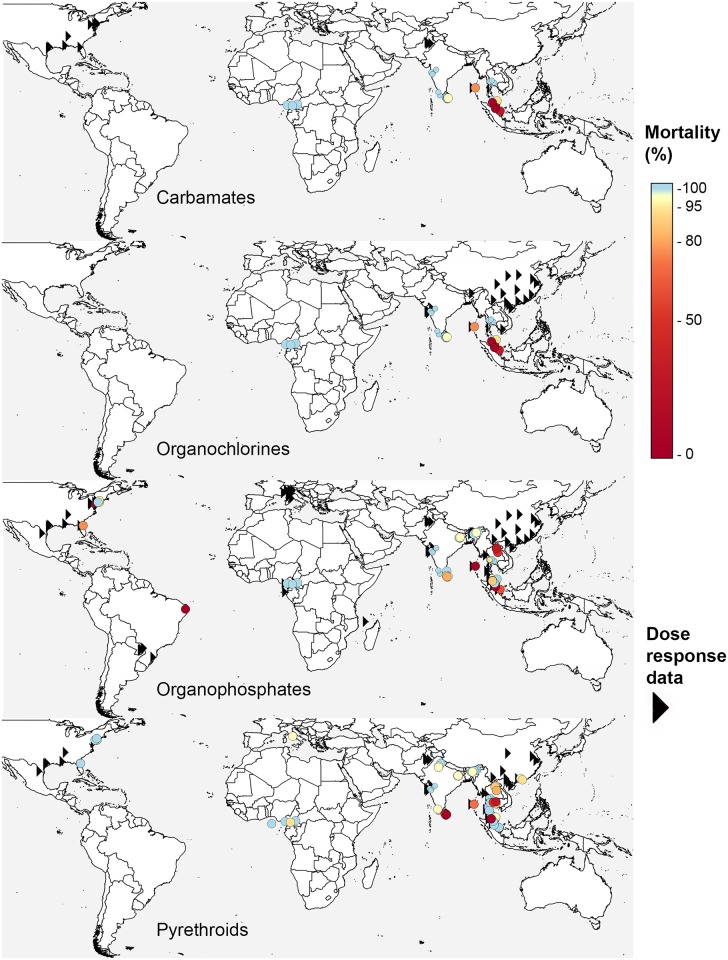
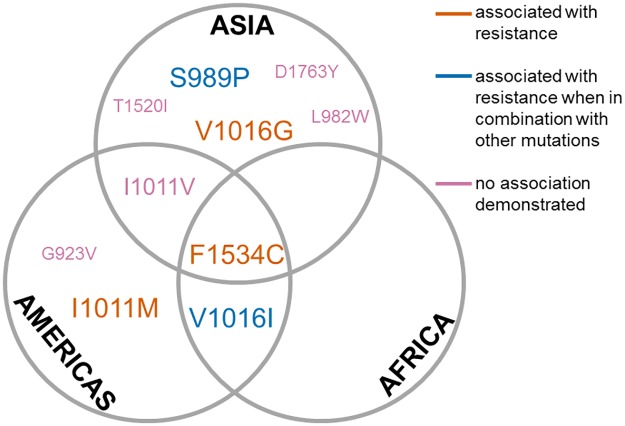
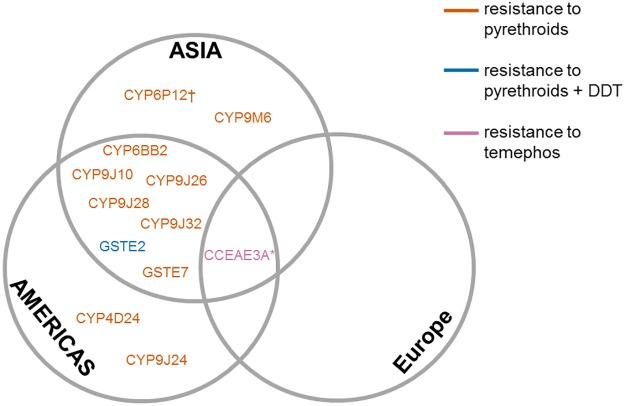
Both Aedes aegytpi and Ae. albopictus are major vectors of 5 important arboviruses (namely chikungunya virus, dengue virus, Rift Valley fever virus, yellow fever virus, and Zika virus), making these mosquitoes an important factor in the worldwide burden of infectious disease. Vector control using insecticides coupled with larval source reduction is critical to control the transmission of these viruses to humans but is threatened by the emergence of insecticide resistance. Here, we review the available evidence for the geographical distribution of insecticide resistance in these 2 major vectors worldwide and map the data collated for the 4 main classes of neurotoxic insecticide (carbamates, organochlorines, organophosphates, and pyrethroids). Emerging resistance to all 4 of these insecticide classes has been detected in the Americas, Africa, and Asia. Target-site mutations and increased insecticide detoxification have both been linked to resistance in Ae. aegypti and Ae. albopictus but more work is required to further elucidate metabolic mechanisms and develop robust diagnostic assays. Geographical distributions are provided for the mechanisms that have been shown to be important to date. Estimating insecticide resistance in unsampled locations is hampered by a lack of standardisation in the diagnostic tools used and by a lack of data in a number of regions for both resistance phenotypes and genotypes. The need for increased sampling using standard methods is critical to tackle the issue of emerging insecticide resistance threatening human health. Specifically, diagnostic doses and well-characterised susceptible strains are needed for the full range of insecticides used to control Ae. aegypti and Ae. albopictus to standardise measurement of the resistant phenotype, and calibrated diagnostic assays are needed for the major mechanisms of resistance.
Conflict of interest statement
The authors have declared that no competing interests exist.
Figures
References
-
- Global Burden of Disease Study 2013 Collaborators. Global, regional, and national incidence, prevalence, and years lived with disability for 301 acute and chronic diseases and injuries in 188 countries, 1990–2013: a systematic analysis for the Global Burden of Disease Study 2013. Lancet. 2015;386: 743–800. doi: 10.1016/S0140-6736(15)60692-4 - DOI - PMC - PubMed
-
- Naghavi M, Wang H, Lozano R, Davis A, Liang X, Zhou M, et al. Global, regional, and national age-sex specific all-cause and cause-specific mortality for 240 causes of death, 1990–2013: a systematic analysis for the Global Burden of Disease Study 2013. Lancet. 2015;385: 117–71. doi: 10.1016/S0140-6736(14)61682-2 - DOI - PMC - PubMed
-
- Global Burden of Disease 2015 Disease and Injury Incidence Prevalence Collaborators. Global, regional, and national incidence, prevalence, and years lived with disability for 310 diseases and injuries, 1990–2015: a systematic analysis for the Global Burden of Disease Study 2015. Lancet. 2016;388: 1545–602. doi: 10.1016/S0140-6736(16)31678-6 - DOI - PMC - PubMed
-
- Yen C, Hyde TB, Costa AJ, Fernandez K, Tam JS, Hugonnet S, et al. The development of global vaccine stockpiles. Lancet Infectious Diseases. 2015;15: 340–7. doi: 10.1016/S1473-3099(14)70999-5 - DOI - PMC - PubMed
-
- Esu E, Lenhart A, Smith L, Horstick O. Effectiveness of peridomestic space spraying with insecticide on dengue transmission; systematic review. Tropical Medicine & International Health. 2010;15: 619–31. - PubMed
Publication types
MeSH terms
Substances
Grants and funding
LinkOut - more resources
Full Text Sources
Other Literature Sources