Review
. 2017 Jul 21;357(6348):eaal2380.
doi: 10.1126/science.aal2380.

Epigenetic plasticity and the hallmarks of cancer

Affiliations
Review

Epigenetic plasticity and the hallmarks of cancer

William A Flavahan et al. Science. .

Abstract

Chromatin and associated epigenetic mechanisms stabilize gene expression and cellular states while also facilitating appropriate responses to developmental or environmental cues. Genetic, environmental, or metabolic insults can induce overly restrictive or overly permissive epigenetic landscapes that contribute to pathogenesis of cancer and other diseases. Restrictive chromatin states may prevent appropriate induction of tumor suppressor programs or block differentiation. By contrast, permissive or "plastic" states may allow stochastic oncogene activation or nonphysiologic cell fate transitions. Whereas many stochastic events will be inconsequential "passengers," some will confer a fitness advantage to a cell and be selected as "drivers." We review the broad roles played by epigenetic aberrations in tumor initiation and evolution and their potential to give rise to all classic hallmarks of cancer.


Figures

Fig. 1
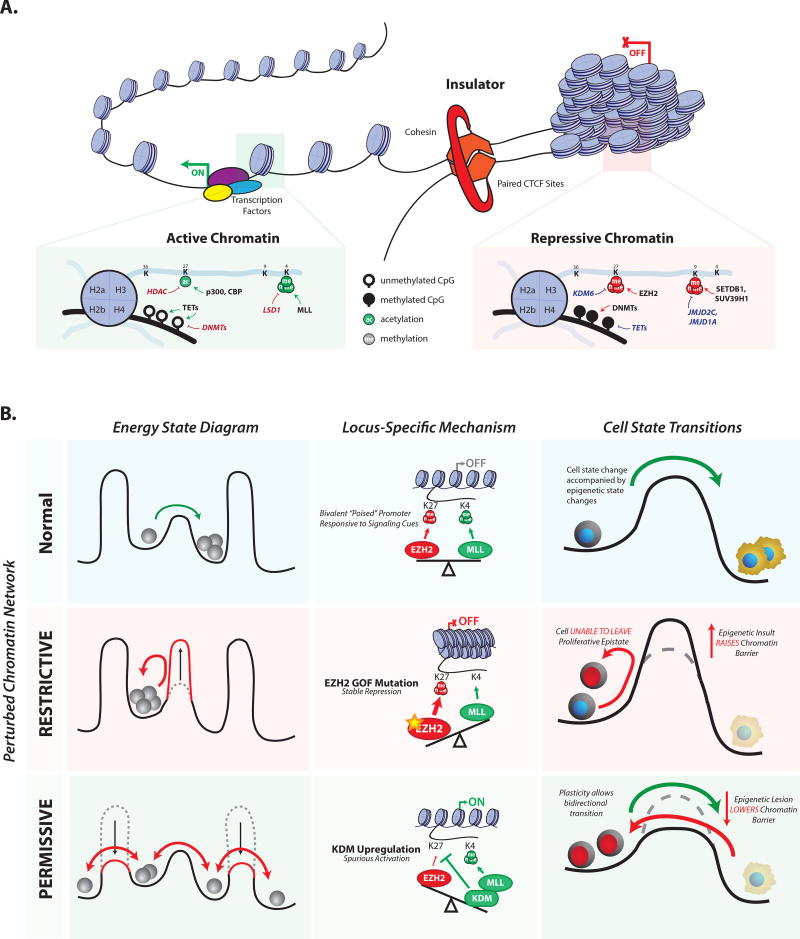
Fig. 1. Chromatin structure affects cellular identity and state transitions
(A) Chromatin can adopt active and repressive states. Active states are made accessible to TFs and other regulatory factors, and are enriched for histone modifications such as H3K27ac and H3K4me3,. Repressive states are more compact, and characterized by DNA hypermethylation, EZH2-catalyzed H3K27me3 and H3K9me3. CTCF and cohesin partition the genome into discrete regulatory units, termed TADs. (B) Chromatin networks reinforce cell states, and affect responsiveness to intrinsic and extrinsic cues. Cells with perturbed chromatin networks fail to respond appropriately to such cues. Overly restrictive chromatin accentuates epigenetic barriers that prevent cell state transitions. Overly permissive chromatin lowers barriers, allowing promiscuous sampling of alternate cell states. The opposing activities of the H3K27 methyltransferase EZH2 and the H3K4 methyltransferase MLL are given as an example; however, the concept holds for other regulators such as DNMTs and TET enzymes (see main text for details).
Fig. 2
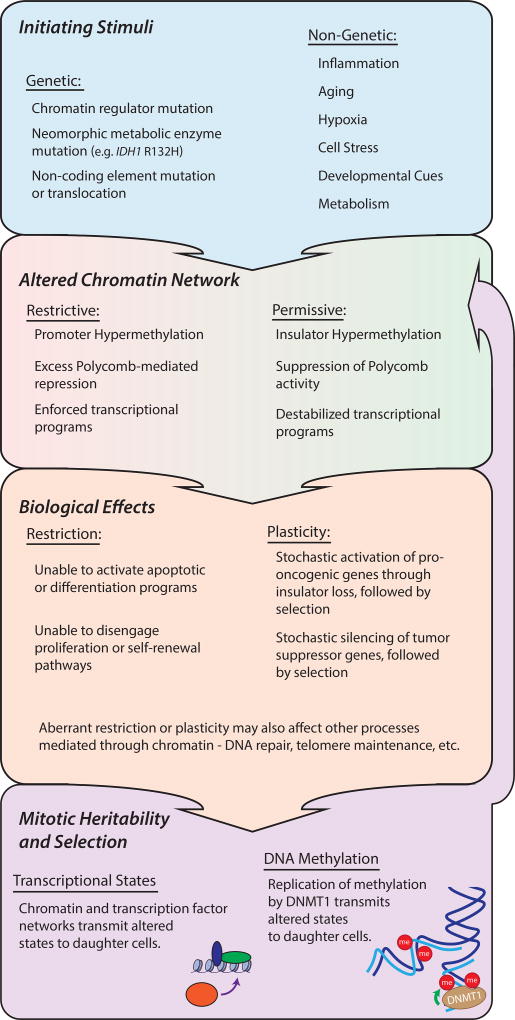
Fig. 2. Chromatin homeostasis is disrupted in cancer
Chromatin homeostasis may be disrupted by genetic stimuli (e.g., chromatin regulator mutations or regulatory element translocation) or non-genetic stimuli (e.g., aging, inflammation, hypoxia, etc). Such stimuli can result in an overly permissive or overly restrictive chromatin network. Restrictive or permissive states may create, or allow stochastic adoption of oncogenic epigenetic changes, such as silencing of tumor suppressor genes. Some such events are mitotically heritable and may be selected (Fig 3), giving rise to hallmarks of cancer (Fig 4).
Fig. 3
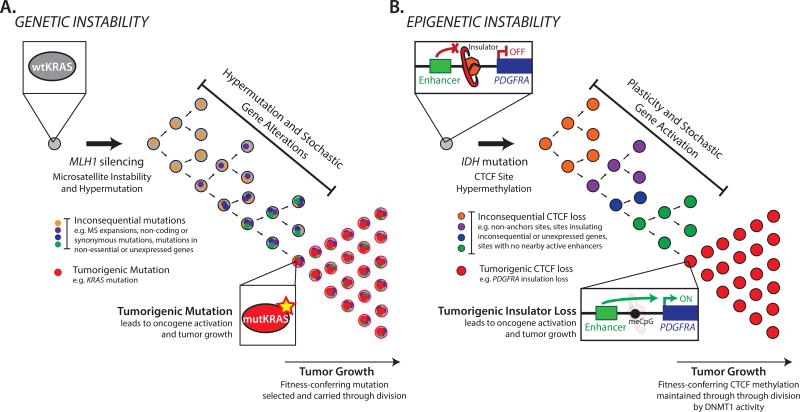
Fig. 3. Genetic and epigenetic evolution in cancer
(A) Genetic instability in tumor initiation. An initiating event (e.g., MLH1 silencing) causes stochastic hypermutation, leading to inconsequential ‘passenger’ alterations as well as a ‘driver’ mutation (e.g., KRAS) that is selected. (B) Epigenetic instability in tumor initiation. An initiating event (e.g., IDH mutation) causes stochastic hyper-methylation, leading to inconsequential ‘passenger’ CTCF losses, as well as a ‘driver’ event that disrupts insulation of the PDGFRA oncogene and is selected. Selective pressure and mechanisms of epigenetic mitotic heritability may result in persistence of the altered states even if the initiating stimulus is removed.
Fig. 4
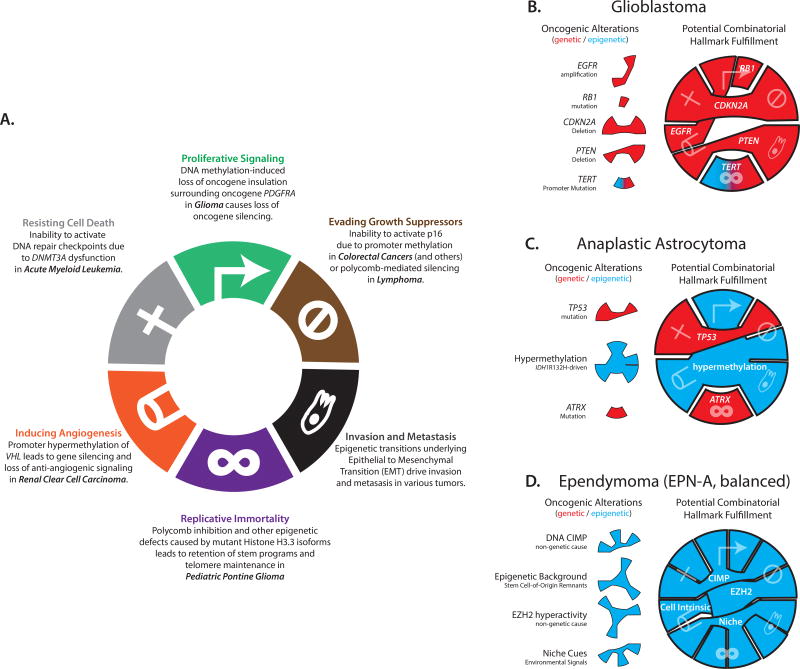
Fig. 4. Genetic and epigenetic mechanisms underlie the hallmarks of cancer
(A) Epigenetic mechanisms involving aberrant chromatin restriction or plasticity can give rise to each classic hallmark of cancer (see main text for citations). Figure adapted from (11). Human cancers are underpinned by varying degrees of epigenetic and genetic contributions, as conceptualized for three central nervous system tumors (B–D). While most hallmarks can be traced to genetic drivers in glioblastoma, epigenetic factors predominate in pediatric tumors such as ependymoma, which exhibits DNA hyper-methylation but lacks recurrent mutations.

References

    1. Margueron R, Reinberg D. Chromatin structure and the inheritance of epigenetic information. Nat. Rev. Genet. 2010;11:285–296. - PMC - PubMed
    1. Allis CD, Jenuwein T. The molecular hallmarks of epigenetic control. Nat. Rev. Genet. 2016;17:487–500. - PubMed
    1. Baylin SB, Jones PA. A decade of exploring the cancer epigenome - biological and translational implications. Nat. Rev. Cancer. 2011;11:726–734. - PMC - PubMed
    1. Esteller M. Epigenetics in cancer. N. Engl. J. Med. 2008;358:1148–1159. - PubMed
    1. Feinberg AP, Koldobskiy MA, Göndör A. Epigenetic modulators, modifiers and mediators in cancer aetiology and progression. Nat. Rev. Genet. 2016;17:284–299. - PMC - PubMed