


Bedside selection of positive end-expiratory pressure by electrical impedance tomography in hypoxemic patients: a feasibility study
- PMID: 28730554
- PMCID: PMC5519511
- DOI: 10.1186/s13613-017-0299-9
Bedside selection of positive end-expiratory pressure by electrical impedance tomography in hypoxemic patients: a feasibility study
Abstract
Background: Positive end-expiratory pressure (PEEP) is a key element of mechanical ventilation. It should optimize recruitment, without causing excessive overdistension, but controversy exists on the best method to set it. The purpose of the study was to test the feasibility of setting PEEP with electrical impedance tomography in order to prevent lung de-recruitment following a recruitment maneuver. We enrolled 16 patients undergoing mechanical ventilation with PaO2/FiO2 <300 mmHg. In all patients, under constant tidal volume (6-8 ml/kg) PEEP was set based on the PEEP/FiO2 table proposed by the ARDS network (PEEPARDSnet). We performed a recruitment maneuver and monitored the end-expiratory lung impedance (EELI) over 10 min. If the EELI signal decreased during this period, the recruitment maneuver was repeated and PEEP increased by 2 cmH2O. This procedure was repeated until the EELI maintained a stability over time (PEEPEIT).
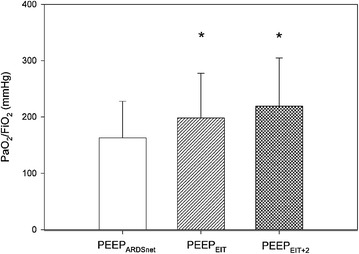
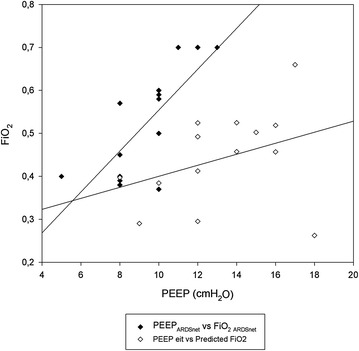
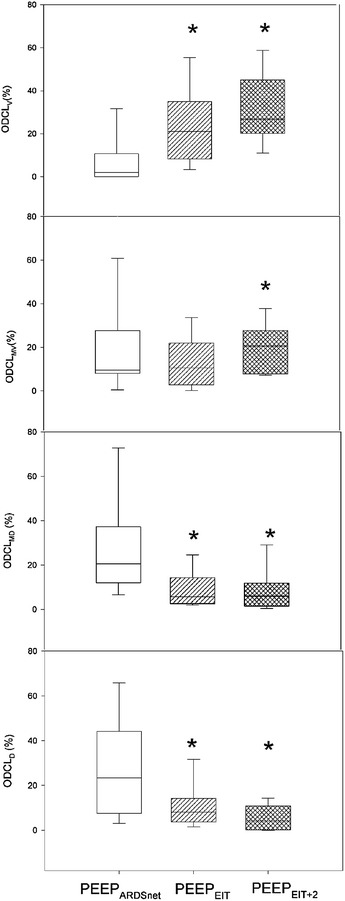
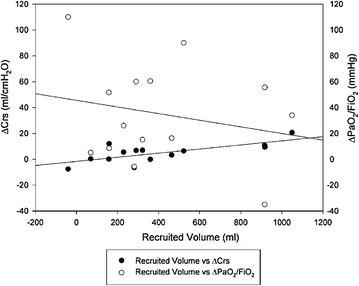
Results: The procedure was feasible in 87% patients. PEEPEIT was higher than PEEPARDSnet (13 ± 3 vs. 9 ± 2 cmH2O, p < 0.001). PaO2/FiO2 improved during PEEPEIT and driving pressure decreased. Recruited volume correlated with the decrease in driving pressure but not with oxygenation improvement. Finally, regional alveolar hyperdistention and collapse was reduced in dependent lung layers and increased in non-dependent lung layers.
Conclusions: In hypoxemic patients, a PEEP selection strategy aimed at stabilizing alveolar recruitment guided by EIT at the bedside was feasible and safe. This strategy led, in comparison with the ARDSnet table, to higher PEEP, improved oxygenation and reduced driving pressure, allowing to estimate the relative weight of overdistension and recruitment.
Keywords: EIT; Overdistension; PEEP; Recruitment.
Figures

References
-
- Caironi P, Cressoni M, Chiumello D, Ranieri M, Quintel M, Russo SG, Cornejo R, Bugedo G, Carlesso E, Russo R, Caspani L, Gattinoni L. Lung opening and closing during ventilation of acute respiratory distress syndrome. Am J Respir Crit Care Med. 2010;181(6):578–586. doi: 10.1164/rccm.200905-0787OC. - DOI - PubMed
-
- Grasso S, Terragni P, Mascia L, et al. Airway pressure-time curve profile (stress index) detects tidal recruitment/hyperinflation in experimental acute lung injury. Crit Care Med. 2004;32:1018–1027. doi: 10.1097/01.CCM.0000120059.94009.AD. - DOI - PubMed
LinkOut - more resources
Full Text Sources
Other Literature Sources
Medical
