


The individual and contextual determinants of the use of telemedicine: A descriptive study of the perceptions of Senegal's physicians and telemedicine projects managers
- PMID: 28732028
- PMCID: PMC5521789
- DOI: 10.1371/journal.pone.0181070
The individual and contextual determinants of the use of telemedicine: A descriptive study of the perceptions of Senegal's physicians and telemedicine projects managers
Abstract
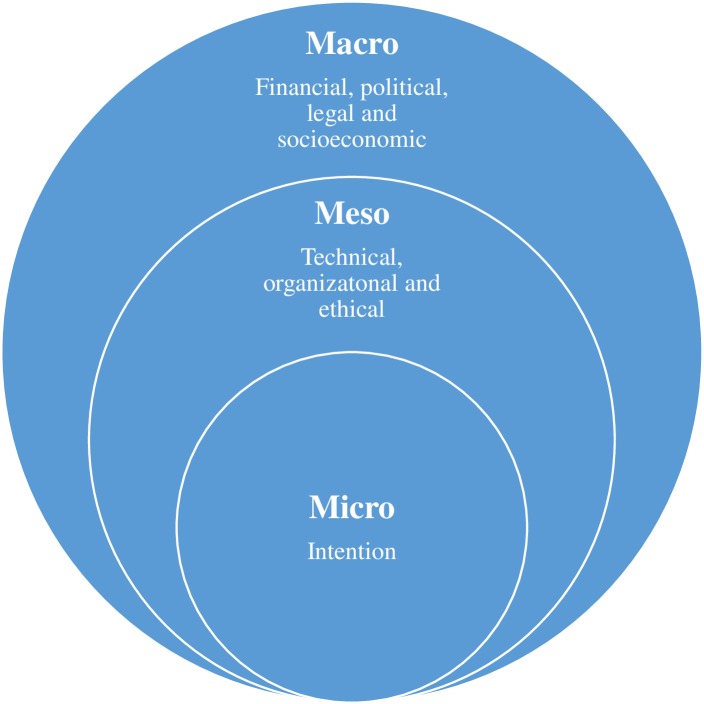
Telemedicine is considered to be an effective strategy to aid in the recruitment and retention of physicians in underserved areas and, in doing so, improve access to healthcare. Telemedicine's use, however, depends on individual and contextual factors. Using a mixed methods design, we studied these factors in Senegal based on a micro, meso and macro framework. A quantitative questionnaire administered to 165 physicians working in public hospitals and 151 physicians working in district health centres was used to identify individual (micro) factors. This was augmented with qualitative descriptive data involving individual interviews with 30 physicians working in public hospitals, 36 physicians working in district health centres and 10 telemedicine project managers to identify contextual (meso and macro) factors. Physicians were selected using purposeful random sampling; managers through snowball sampling. Quantitative data were analyzed descriptively using SPSS 23 and qualitative data thematically using NVivo 10. At the micro level, we found that 72.1% of the physicians working in public hospitals and 82.1% of the physicians working in district health centres were likely to use telemedicine in their professional activities. At the meso level, we identified several technical, organizational and ethical factors, while at the macro level the study revealed a number of financial, political, legal, socioeconomic and cultural factors. We conclude that better awareness of the interplay between factors can assist health authorities to develop telemedicine in ways that will attract use by physicians, thus improving physicians' recruitment and retention in underserved areas.
Conflict of interest statement
Figures
References
-
- Zurn P, Codjia L, Sall FL, Braichet J-M. How to recruit and retain health workers in underserved areas: the Senegalese experience. Bull World Health Organ. 2010;88:386–9. doi: 10.2471/BLT.09.070730 - DOI - PMC - PubMed
-
- SNIS. Carte sanitaire du Sénégal: mise à jour de 2010. Sénégal: Ministère de la Santé et de la Prévention, 2011.
-
- ANSD, ICF International. Enquête Démographique et de Santé à Indicateurs Multiples Sénégal (EDS-MICS) 2010–2011: Rapport final. Calverton, Maryland, USA: Agence Nationale de la Statistique et de la Démographie (ANSD) et ICF International, 2012.
-
- Zurn P, Codjia L, Sall FL. La fidélisation des personnels de santé dans les zones difficiles au Sénégal, accroître l’accès aux personnels de santé dans les zones rurales ou reculées: etude de cas No 1. Geneva: World Health Organization, 2010.
-
- Clemens MA, Pettersson G. New Data on African Health Professionals Abroad: Working Paper. Washington D.C.: Center for Global Development, 2007.
MeSH terms
LinkOut - more resources
Full Text Sources
Other Literature Sources
Medical
