


Exiguobacterium sp. A1b/GX59 isolated from a patient with community-acquired pneumonia and bacteremia: genomic characterization and literature review
- PMID: 28732529
- PMCID: PMC5521131
- DOI: 10.1186/s12879-017-2616-1
Exiguobacterium sp. A1b/GX59 isolated from a patient with community-acquired pneumonia and bacteremia: genomic characterization and literature review
Abstract
Background: Bacterial species belonging to the genus Exiguobacterium are facultative anaerobic, non-spore-forming, Gram-positive bacilli, and rarely associated with human infections. Herein, we reported the first case of community-acquired pneumonia (CAP) and bacteremia due to Exiguobacterium spp. in China.
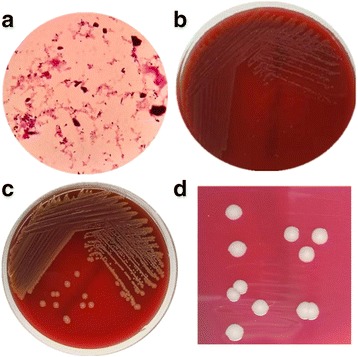
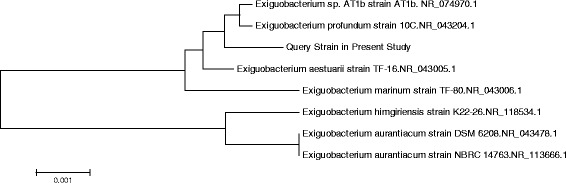
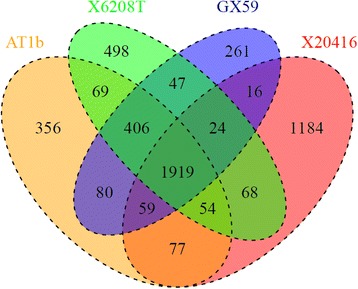
Case presentation: An adult male with severe CAP was hospitalized. The pathogen was isolated from his bloodstream and broncho-alveolar lavage fluid. The correct identification of the micro-organism was achieved using 16S rRNA sequencing, and its antibiotic susceptibility test was performed by microdilution method. The Whole Genome Sequencing (WGS) was used to characterize its genetic features and to elucidate its potential pathogenic mechanisms. Furthermore, its genome sequence was also compared with those of 3 publicly-available Exiguobacterium strains. A PubMed search was performed for further understanding the features of Exiguobacterium infections. Phylogenetic analysis of the 16S rRNA gene sequence showed that the strain GX59 was most closely related to Exiguobacterium AT1b (99.7%). The genome of GX59 was 2,727,929 bp in size, harbouring 2855 putative protein-coding genes, 5 rRNA operons, 37 tRNA genes and 1 tmRNA. The multiple genome comparison of 4 Exiguobacterium strains demonstrated that Exiguobacterium contained 37 genes of secretion systems, including sec, tat, FEA, Type IV Pili and competence-related DNA transformation transporter (Com). Virulence factors of the micro-organism included tlyC, NprR, MCP, Dam, which might play a critical role in causing lethal infection.
Conclusions: The study highlighted the potential pathogenicity of the genus Exiguobacterium for its unique genes encoding various virulence factors and those associated with antibiotic resistance, therefore, its clinical significance should be valued.
Keywords: Antibiotics; Bacteremia; Community-acquired pneumonia; Exiguobacterium spp.; Virulence factors; Whole genome sequencing.
Conflict of interest statement
Ethics approval and consent to participate
The institutional review boards at the Civil Aviation General Hospital approved the study protocol.
Consent for publication
Written informed consent was obtained from the patient’s direct relative for publication of this study. A copy of the written consent is available for review by the Editor of this journal.
Competing interests
The authors declare that they have no competing interests.
Publisher’s Note
Springer Nature remains neutral with regard to jurisdictional claims in published maps and institutional affiliations.
Figures
References
-
- Collins MD, Lund BM, JAE F, Schleifer KH. Chemotaxonomic study of an alkalophilic bacterium, Exiguobacterium aurantiacum gen. Nov., sp. nov. J Gen Microbiol. 1983;129:2037–2042.
Publication types
MeSH terms
Substances
LinkOut - more resources
Full Text Sources
Other Literature Sources
Molecular Biology Databases
Miscellaneous
