


Endometrial scratching in women with implantation failure after a first IVF/ICSI cycle; does it lead to a higher live birth rate? The SCRaTCH study: a randomized controlled trial (NTR 5342)
- PMID: 28732531
- PMCID: PMC5521151
- DOI: 10.1186/s12905-017-0378-y
Endometrial scratching in women with implantation failure after a first IVF/ICSI cycle; does it lead to a higher live birth rate? The SCRaTCH study: a randomized controlled trial (NTR 5342)
Abstract
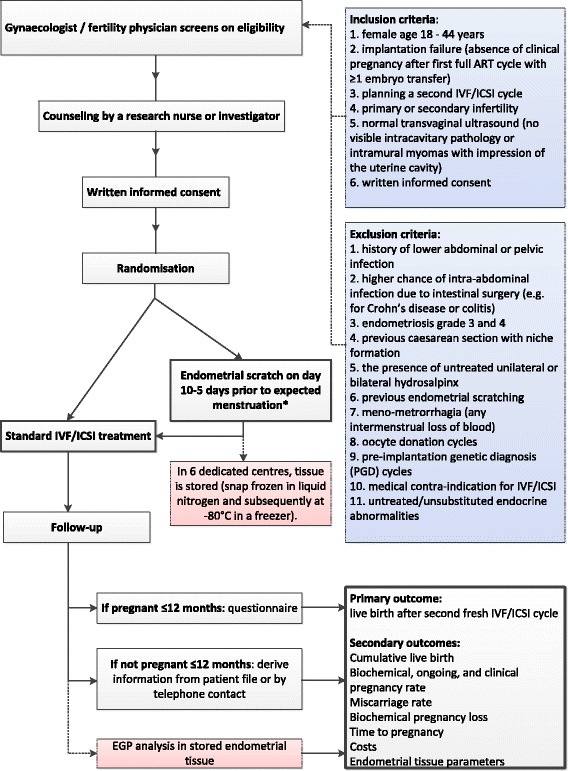
Background: Success rates of assisted reproductive techniques (ART) are approximately 30%, with the most important limiting factor being embryo implantation. Mechanical endometrial injury, also called 'scratching', has been proposed to positively affect the chance of implantation after embryo transfer, but the currently available evidence is not yet conclusive. The primary aim of this study is to determine the effect of endometrial scratching prior to a second fresh in vitro fertilization/intracytoplasmic sperm injection (IVF/ICSI) cycle on live birth rates in women with a failed first IVF/ICSI cycle.
Method: Multicenter randomized controlled trial in Dutch academic and non-academic hospitals. A total of 900 women will be included of whom half will undergo an endometrial scratch in the luteal phase of the cycle prior to controlled ovarian hyperstimulation using an endometrial biopsy catheter. The primary endpoint is the live birth rate after the 2nd fresh IVF/ICSI cycle. Secondary endpoints are costs, cumulative live birth rate (after the full 2nd IVF/ICSI cycle and over 12 months of follow-up); clinical and ongoing pregnancy rate; multiple pregnancy rate; miscarriage rate and endometrial tissue parameters associated with implantation failure.
Discussion: Multiple studies have been performed to investigate the effect of endometrial scratching on live birth rates in women undergoing IVF/ICSI cycles. Due to heterogeneity in both the method and population being scratched, it remains unclear which group of women will benefit from the procedure. The SCRaTCH trial proposed here aims to investigate the effect of endometrial scratching prior to controlled ovarian hyperstimulation in a large group of women undergoing a second IVF/ICSI cycle.
Trial registration: NTR 5342 , registered July 31st, 2015.
Protocol version: Version 4.10, January 4th, 2017.
Keywords: Endometrial injury; Endometrial scratch; Endometrial scratching; ICSI; IVF; Implantation failure; In vitro fertilization; Intracytoplasmic sperm injection.
References
-
- Amaroso E, Perry J. Ovarian activity during gestation. In: Weir BJ, Zuckerman S, editors. The Ovary. New York: Academic; 1977.
Publication types
MeSH terms
Associated data
LinkOut - more resources
Full Text Sources
Other Literature Sources
