Review
. 2017 Oct;38(10):705-718.
doi: 10.1016/j.it.2017.06.009. Epub 2017 Jul 19.

Programmed Cell Death and Inflammation: Winter Is Coming

Affiliations
Review

Programmed Cell Death and Inflammation: Winter Is Coming

Joseph P Kolb et al. Trends Immunol. 2017 Oct.

Abstract

The life of an organism requires the assistance of an unlikely process: programmed cell death. Both development and the maintenance of homeostasis result in the production of superfluous cells that must eventually be disposed of. Furthermore, programmed cell death can also represent a defense mechanism; for example, by depriving pathogens of a replication niche. The responsibility of handling these dead cells falls on phagocytes of the immune system, which surveil their surroundings for dying or dead cells and efficiently clear them in a quiescent manner. This process, termed efferocytosis, depends on cooperation between the phagocyte and the dying cell. In this review we explore different types of programmed cell death and their impact on innate immune responses.


Figures

Figure 1
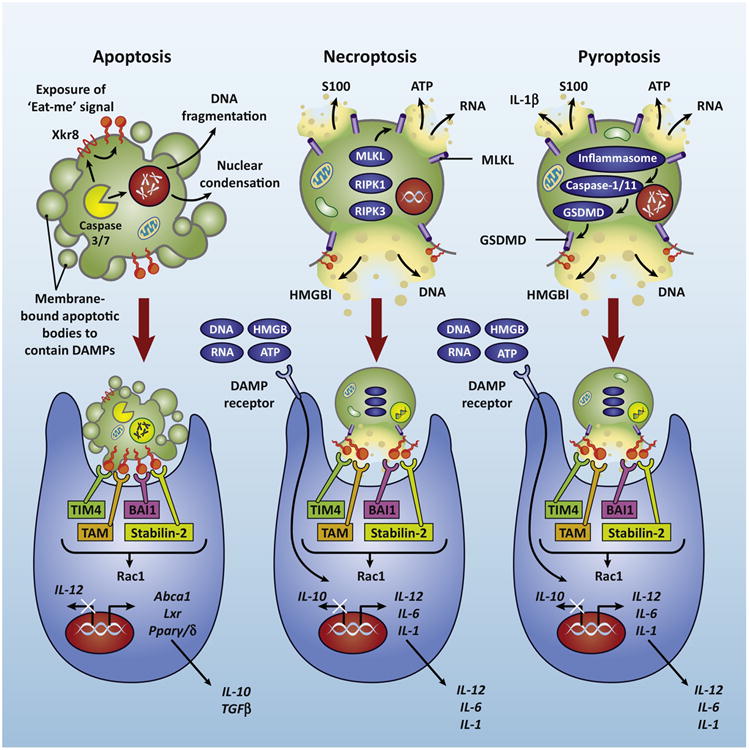
Figure 1. Different types of programmed cell death elicit different immune responses during efferocytosis
Caspase-mediated apoptosis results in DNA fragmentation, membrane blebbing, and caspase-dependent exposure of “eat-me” signals”. Phagocytes employ receptors that specifically recognize “eat-me” signals to facilitate engulfment of dying cells and a tolerant immune response. Necroptotic (mediated by RIPK1-RIPK3-MLKL) and pyroptosis (mediated by inflammatory caspases and GSDMD) results in membrane rupture and the release of DAMPs, like DNA, RNA, HMGB1, ATP, and IL-1β. These DAMPs are sensed by PRRs on the phagocyte, resulting in inflammation.
Figure 2
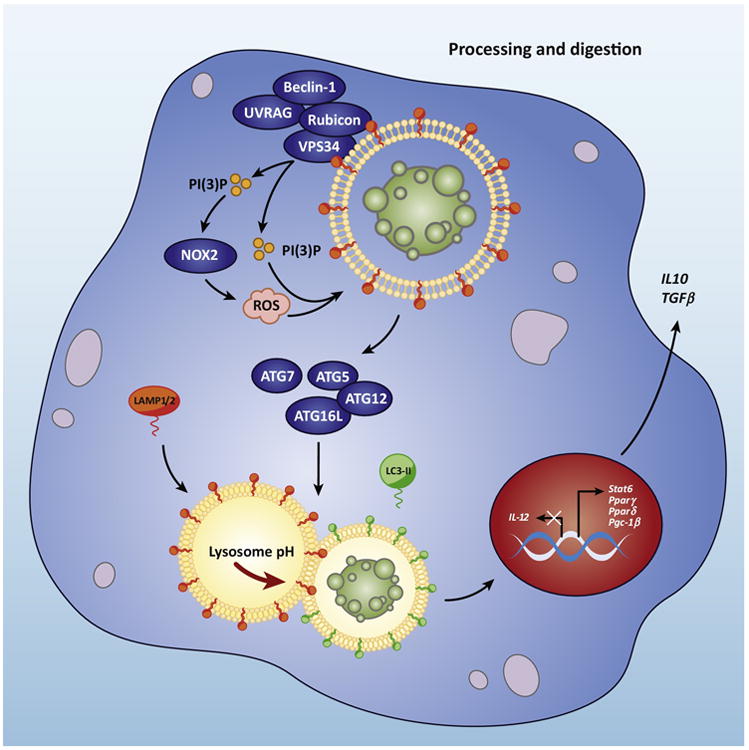
Figure 2. Efferocytosis utilizes LC3-associated phagocytosis
Upon engulfment of dying cells, components of the LC3-associated phagocytosis (LAP) pathway are recruitment to dead cell-containing LAPosome. The Class III PI3 K complex, composed of Beclin-1, VPS34, UVRAG, and Rubicon, is critical to the sustained and localized production of PI(3)P at the LAPosome. PI(3)P aids in the recruitment of the downstream autophagic/LAP machinery (such as ATG5, ATG12, ATG16L, ATG7), as well as the production of ROS by NOX2. Both ROS and PI(3)P are required for lipidation and translocation of LC3-II to the LAPosome. The antiinflammatory effects of efferocytosis are mediated by the activity of lipid and cholesterol sensors (Abca1, Lxr, Pparγ, Pparδ, and Pgc-1β), leading to the production of antiinflammatory mediators, IL-10 and TGFβ, while pro-inflammatory mediators, such as IL-12, are actively suppressed.

References

    1. Martinez J, et al. Microtubule-associated protein 1 light chain 3 alpha (LC3)-associated phagocytosis is required for the efficient clearance of dead cells. Proceedings of the National Academy of Sciences of the United States of America. 2011;108(42):17396–401. - PMC - PubMed
    1. Martinez J, et al. Noncanonical autophagy inhibits the autoinflammatory, lupus-like response to dying cells. Nature. 2016;533(7601):115–9. - PMC - PubMed
    1. Nagata S, et al. Autoimmunity and the clearance of dead cells. Cell. 2010;140(5):619–30. - PubMed
    1. Medzhitov R. Approaching the asymptote: 20 years later. Immunity. 2009;30(6):766–75. - PubMed
    1. Matzinger P. The danger model: a renewed sense of self. Science. 2002;296(5566):301–5. - PubMed