


Perceived academic benefit is associated with nonmedical prescription stimulant use among college students
- PMID: 28735038
- PMCID: PMC5614826
- DOI: 10.1016/j.addbeh.2017.07.013
Perceived academic benefit is associated with nonmedical prescription stimulant use among college students
Abstract
Introduction: College students are at higher than average risk for nonmedical use of prescription stimulants (NPS). A commonly identified motive among students who engage in NPS is to improve grades. Several research studies have observed that NPS most likely does not confer an academic advantage, and is associated with excessive drinking and other drug use. This study documents the proportion of the general college student population who believe that NPS will lead to improvements in academic performance.
Methods: This study gathered online survey data from a large, demographically diverse sample of college students to document the prevalence of perceived academic benefit of NPS for improving grades and to examine the association between such belief and NPS.
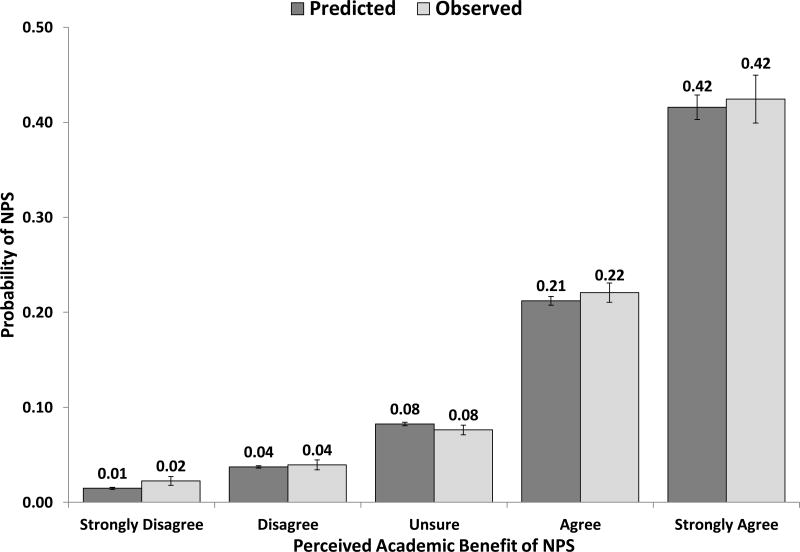
Results: Overall, 28.6% agreed or strongly agreed that NPS could help students earn higher grades, and an additional 38.0% were unsure. Students with a higher level of perceived academic benefit of NPS and more frequent patterns of drinking and marijuana use were more likely to engage in NPS, even after adjustment for a wide range of covariates.
Conclusions: The results underscore the need for interventions that simultaneously correct misperceptions related to academic benefit and target alcohol and marijuana use to reduce NPS.
Keywords: Academic achievement; Alcohol use; Marijuana use; Motives for nonmedical use of prescription stimulants; Undergraduates.
Copyright © 2017 Elsevier Ltd. All rights reserved.
Conflict of interest statement
Figures
References
-
- Arria AM, Wilcox HC, Caldeira KM, Vincent KB, Garnier-Dykstra LM, O'Grady KE. Dispelling the myth of “smart drugs”: Cannabis and alcohol use problems predict nonmedical use of prescription stimulants for studying. Addictive Behaviors. 2013;38(3):1643–1650. doi: 10.1016/j.addbeh.2012.10.002. - DOI - PMC - PubMed
Publication types
MeSH terms
Substances
Grants and funding
LinkOut - more resources
Full Text Sources
Other Literature Sources
Medical
