Common pitfalls and mistakes in the set-up, analysis and interpretation of results in network meta-analysis: what clinicians should look for in a published article
- PMID: 28739577
- PMCID: PMC10688544
- DOI: 10.1136/eb-2017-102753
Common pitfalls and mistakes in the set-up, analysis and interpretation of results in network meta-analysis: what clinicians should look for in a published article
Abstract
Objective: Several tools have been developed to evaluate the extent to which the findings from a network meta-analysis would be valid; however, applying these tools is a time-consuming task and often requires specific expertise. Clinicians have little time for critical appraisal, and they need to understand the key elements that help them select network meta-analyses that deserve further attention, optimising time and resources. This paper is aimed at providing a practical framework to assess the methodological robustness and reliability of results from network meta-analysis.
Methods: As a working example, we selected a network meta-analysis about drug treatments for generalised anxiety disorder, which was published in 2011 in the British Medical Journal. The same network meta-analysis was previously used to illustrate the potential of this methodology in a methodological paper published in JAMA.
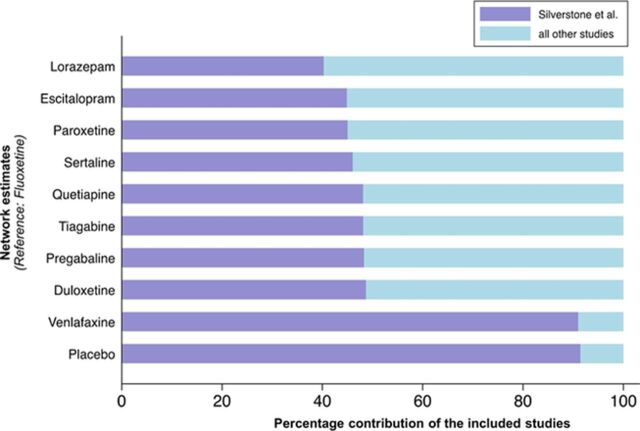
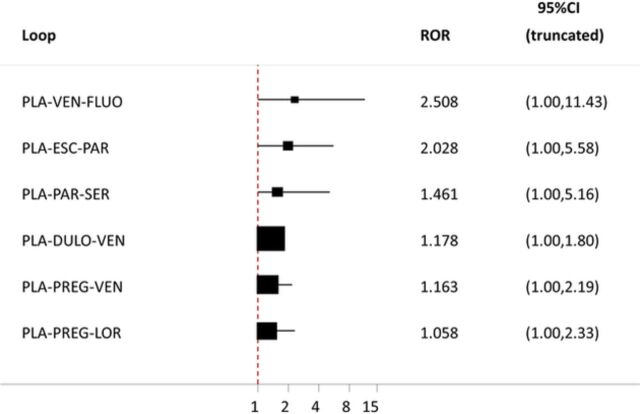
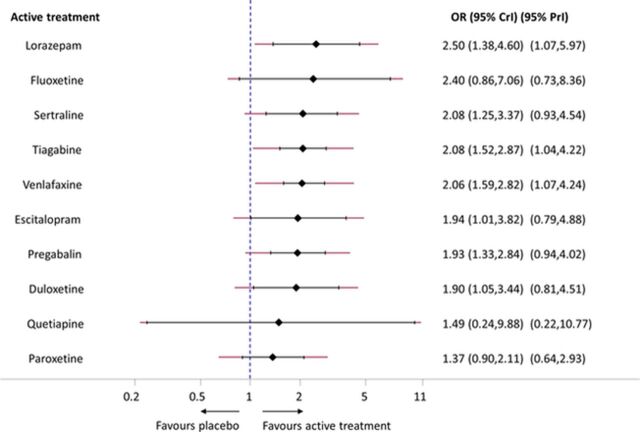
Results: We reanalysed the 27 studies included in this network following the methods reported in the original article and compared our findings with the published results. We showed how different methodological approaches and the presentation of results can affect conclusions from network meta-analysis. We divided our results into three sections, according to the specific issues that should always be addressed in network meta-analysis: (1) understanding the evidence base, (2) checking the statistical analysis and (3) checking the reporting of findings.
Conclusions: The validity of the results from network meta-analysis depends on the plausibility of the transitivity assumption. The risk of bias introduced by limitations of individual studies must be considered first and judgement should be used to infer about the plausibility of transitivity. Inconsistency exists when treatment effects from direct and indirect evidence are in disagreement. Unlike transitivity, inconsistency can be always evaluated statistically, and it should be specifically investigated and reported in the published paper. Network meta-analysis allows researchers to list treatments in preferential order; however, in this paper we demonstrated that rankings could be misleading if based on the probability of being the best. Clinicians should always be interested in the effect sizes rather than the naive rankings.
Keywords: Anxiety Disorders; Clinical Trials; Mental Health.
© Article author(s) (or their employer(s) unless otherwise stated in the text of the article) 2017. All rights reserved. No commercial use is permitted unless otherwise expressly granted.
Conflict of interest statement
Competing interests: None declared.
Figures
References
MeSH terms
LinkOut - more resources
Full Text Sources
Other Literature Sources
Research Materials