


The impact of meal timing on performance, sleepiness, gastric upset, and hunger during simulated night shift
- PMID: 28740034
- PMCID: PMC5633358
- DOI: 10.2486/indhealth.2017-0047
The impact of meal timing on performance, sleepiness, gastric upset, and hunger during simulated night shift
Abstract
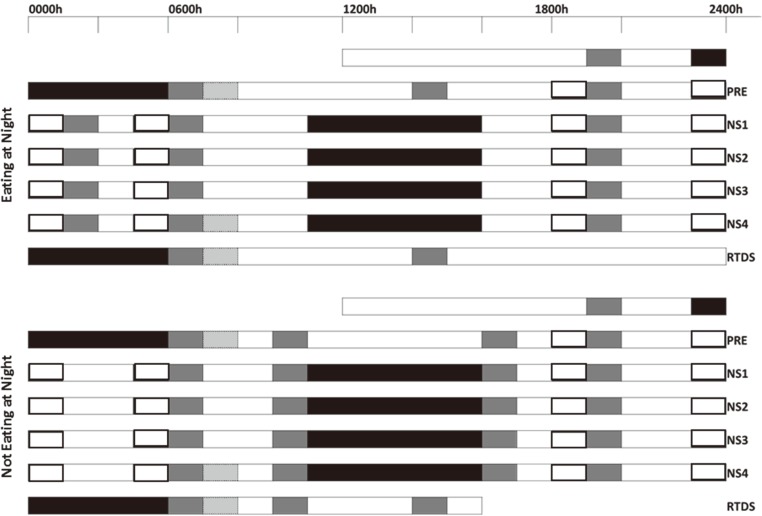
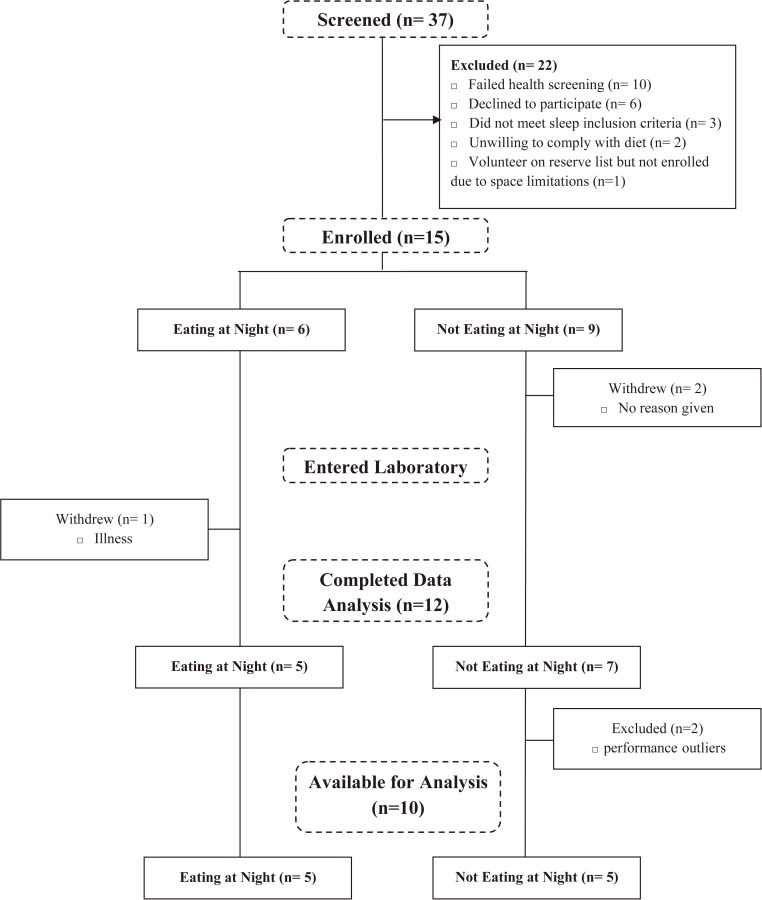
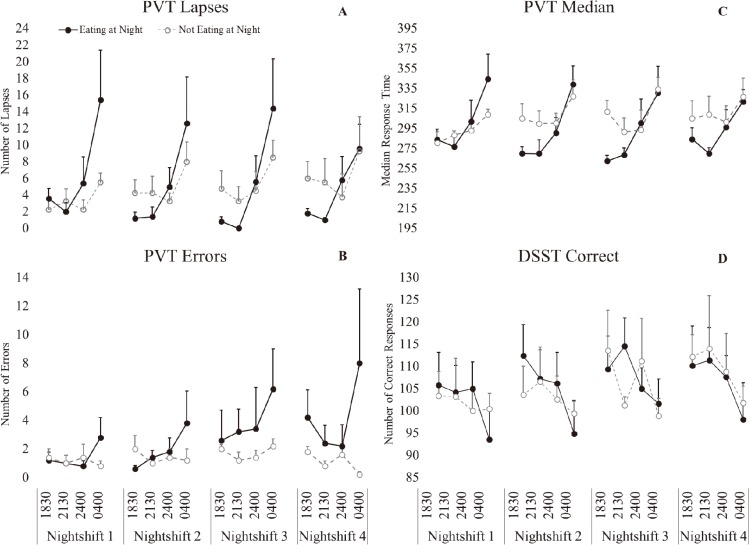
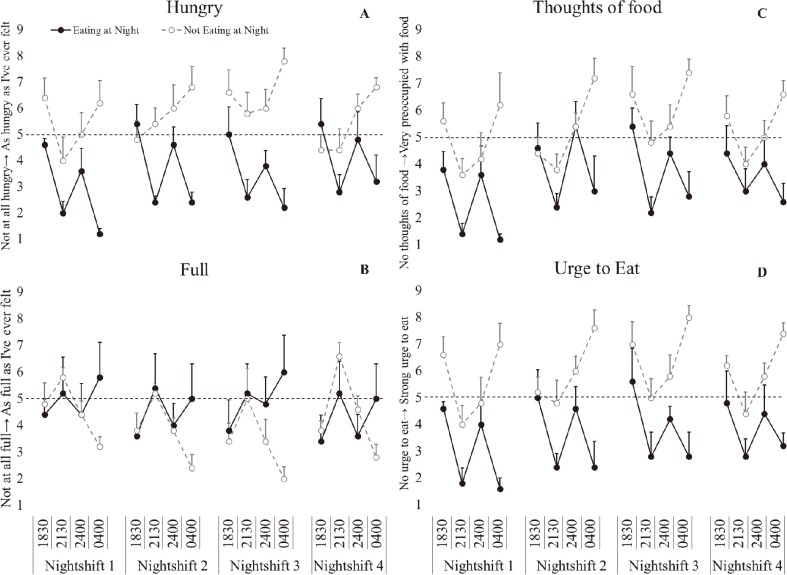
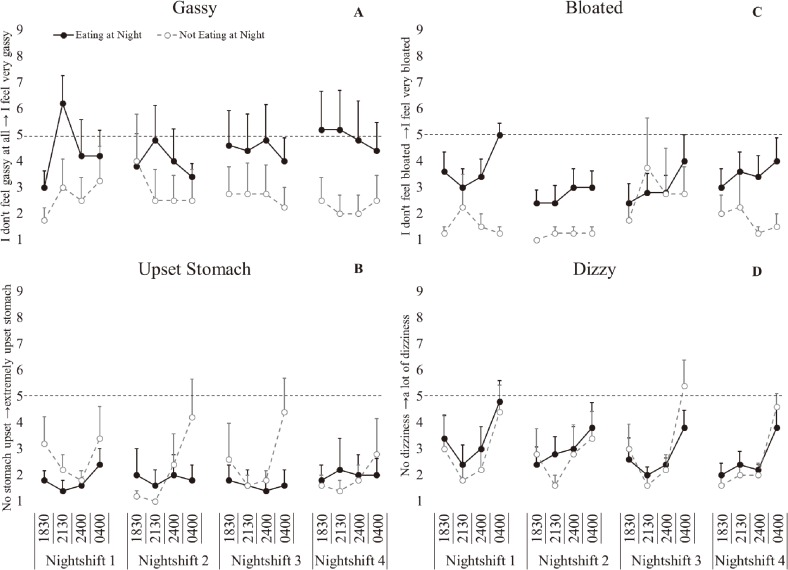
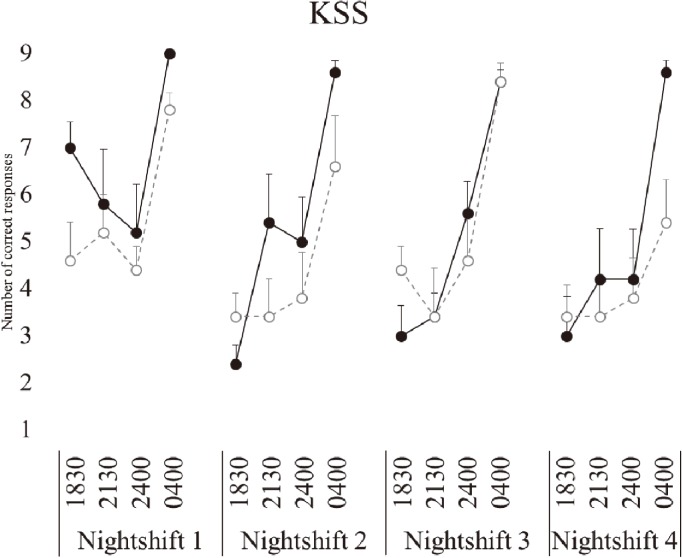
This study examined the impact of eating during simulated night shift on performance and subjective complaints. Subjects were randomized to eating at night (n=5; 23.2 ± 5.5 y) or not eating at night (n=5; 26.2 ± 6.4 y). All participants were given one sleep opportunity of 8 h (22:00 h-06:00 h) before transitioning to the night shift protocol. During the four days of simulated night shift participants were awake from 16:00 h-10:00 h with a daytime sleep of 6 h (10:00 h-16:00 h). In the simulated night shift protocol, meals were provided at ≈0700 h, 1900 h and 0130 h (eating at night); or ≈0700 h, 0930 h, 1410 h and 1900 h (not eating at night). Subjects completed sleepiness, hunger and gastric complaint scales, a Digit Symbol Substitution Task and a 10-min Psychomotor Vigilance Task. Increased sleepiness and performance impairment was evident in both conditions at 0400 h (p<0.05). Performance impairment at 0400 h was exacerbated when eating at night. Not eating at night was associated with elevated hunger and a small but significant elevation in stomach upset across the night (p<0.026). Eating at night was associated with elevated bloating on night one, which decreased across the protocol. Restricting food intake may limit performance impairments at night. Dietary recommendations to improve night-shift performance must also consider worker comfort.
Keywords: Circadian misalignment; Hunger; Performance; Psychomotor vigilance; Shift-work; Sleep loss; Sleepiness; Timed eating.
Figures
References
-
- Australian Bureau of Statistics (2010) Working Time Arrangements, Australia 2009: Summary of results. ABS cat.no. 6342.0 Canberra: ABS.
-
- Liira J, Verbeek J, Ruotsalainen J (2015) Pharmacological interventions for sleepiness and sleep disturbances caused by shift work. JAMA 313, 961–2. - PubMed
-
- Borbély AA. (1982) A two process model of sleep regulation. Hum Neurobiol 1, 195–204. - PubMed
-
- Akerstedt T. (2003) Shift work and disturbed sleep/ wakefulness. Occup Med (Lond) 53, 89–94. - PubMed
MeSH terms
LinkOut - more resources
Full Text Sources
Other Literature Sources
Medical
