Review
. 2016 Apr;2(4):191-204.
doi: 10.1016/j.trecan.2016.03.002. Epub 2016 Apr 4.

RP-MDM2-p53 Pathway: Linking Ribosomal Biogenesis and Tumor Surveillance

Affiliations
Review

RP-MDM2-p53 Pathway: Linking Ribosomal Biogenesis and Tumor Surveillance

Yong Liu et al. Trends Cancer. 2016 Apr.

Abstract

Ribosomal biogenesis is tightly associated with cellular activities, such as growth, proliferation, and cell cycle progression. Perturbations in ribosomal biogenesis can initiate so-called nucleolar stress. The process through which ribosomal proteins (RPs) transduce nucleolar stress signals via MDM2 to p53 has been described as a crucial tumor-suppression mechanism. In this review we focus on recent progress pertaining to the function and mechanism of RPs in association with the MDM2-p53 tumor-suppression network, and the potential implications this surveillance network has for cancer development.

Keywords: MDM2; cancer; p53; ribosomal protein.


Figures

Figure 1
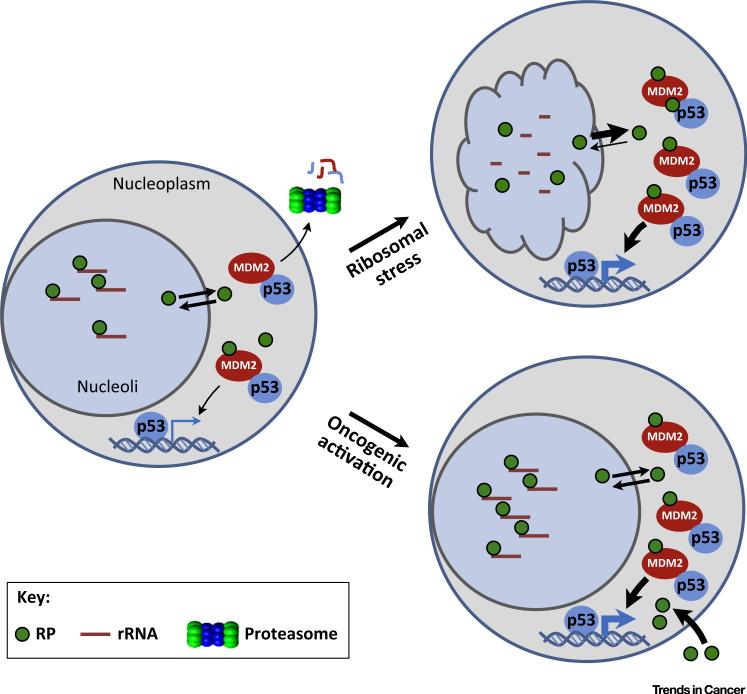
Figure 1. Dynamic Balance of Ribosome Biogenesis Regulates the RP–MDM2–p53 Pathway
Ribosome biogenesis is a highly dynamic cellular event that determines the shift of ribosomal proteins (RPs) between ribosome structural components or unassembled RP available for transmitting signals to p53. In response to ribosomal stressors such as chemical agents, serum starvation, or nutrient deprivation, RPs translocate from the nucleolus to the nucleoplasm where particular RPs, such as RPL5 and RPL11, bind to MDM2 to abrogate MDM2 E3 ligase activity and activate p53. Oncogenic stimulation leads to hyperactivation of RP expression and rRNA synthesis. The elevated de novo RP synthesis facilitates ribosome biogenesis in the nucleolus and simultaneously increases the nucleoplasmic concentration of free RPs which are available to bind to MDM2 and activate p53.
Figure 2
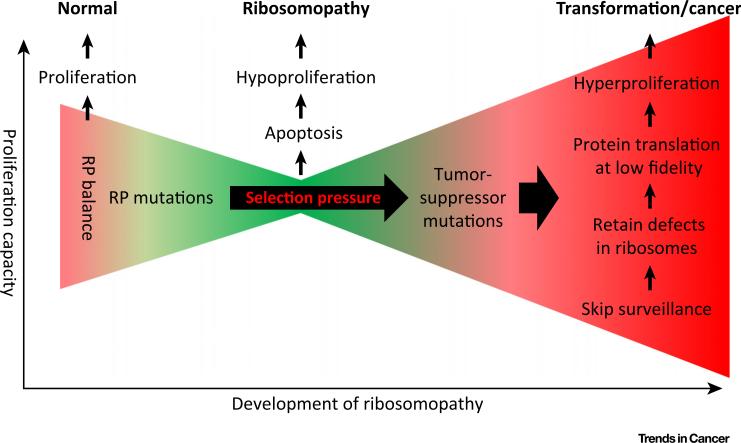
Figure 2. From Ribosomopathy to Cancer: A Model of Selective Mutation
In healthy cells, ribosome biogenesis is tightly regulated and exists in a homeostatic balance that is determined by the overall demand for protein synthesis. Ribosomopathies develop when mutations in genes involved in ribosome biogenesis lead to hypoproliferation resulting from p53-dependent or -independent cell cycle arrest and apoptosis. Clonal selection for cells harboring mutations in tumor-suppressor genes that enables bypass of normal surveillance mechanisms can result in a population with decreased capacity for high fidelity ribosome biogenesis. Continued enrichment of this functionally deficient population gives rise to additional mutations that enable cellular transformation to cancer. This model was adapted from Sulima et al. [62].

References

    1. Hanahan D, Weinberg RA. Hallmarks of cancer: the next generation. Cell. 2011;144:646–674. - PubMed
    1. Ruggero D. Translational control in cancer etiology. Cold Spring Harb. Perspect. Biol. 2013;5:a012336. - PMC - PubMed
    1. James A, et al. Nucleolar stress with and without p53. Nucleus. 2014;5:402–426. - PMC - PubMed
    1. Deisenroth C, Zhang Y. Ribosome biogenesis surveillance: probing the ribosomal protein–Mdm2-p53 pathway. Oncogene. 2010;29:4253–4260. - PubMed
    1. Zhang Y, Lu H. Signaling to p53: ribosomal proteins find their way. Cancer Cell. 2009;16:369–377. - PMC - PubMed

Publication types

Substances