


Inflammasome and autophagy regulation - a two-way street
- PMID: 28741645
- PMCID: PMC5588408
- DOI: 10.2119/molmed.2017.00077
Inflammasome and autophagy regulation - a two-way street
Abstract
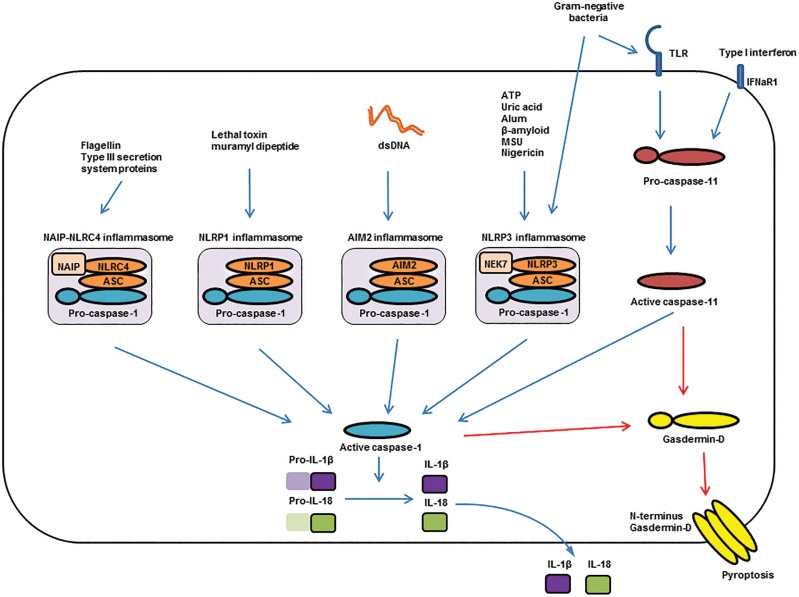
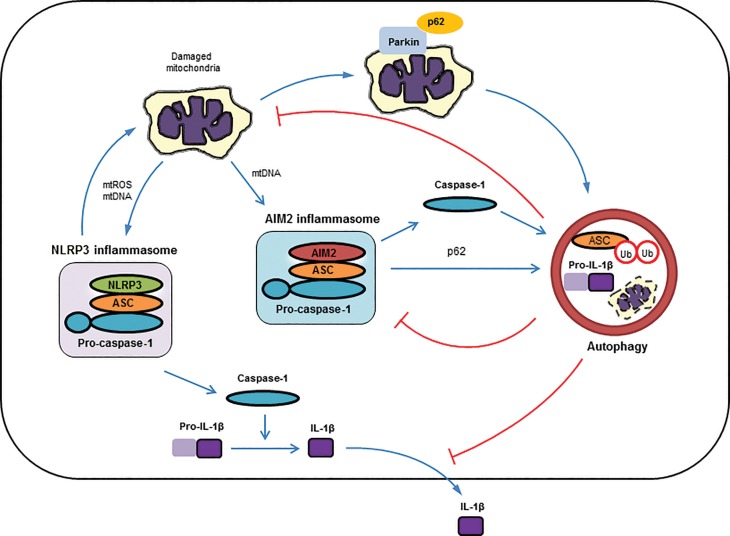
Inflammation plays a significant role in protecting hosts against pathogens. Inflammation induced by non-infectious, endogenous agents can be detrimental, and if excessive can result in organ and tissue damage. The inflammasome is a major innate immune pathway that can be activated via both exogenous pathogen-associated molecular patterns (PAMPs) and endogenous damage-associated molecular patterns (DAMPs). Inflammasome activation involves formation and oligomerization of a protein complex including a NOD-like receptor (NLR), an adaptor protein (ASC) and procaspase-1. This then allows cleavage and activation of caspase-1, followed by downstream cleavage and release of proinflammatory cytokines, IL-1β and IL-18, from innate immune cells. Hyperinflammation caused by unrestrained inflammasome activation is linked with multiple inflammatory diseases, including inflammatory bowel disease, Alzheimer's disease and multiple sclerosis. So there is an understandable rush to understand mechanisms that regulate such potent inflammatory pathways. Autophagy has now been identified as a main regulator of inflammasomes. Autophagy is a vital intracellular process involved in cellular homeostasis, recycling and removal of damaged organelles (e.g. mitochondria) and intracellular pathogens. Autophagy is regulated by proteins that are important in endosomal/phagosomal pathways, as well as by specific autophagy proteins coded for by autophagy-related genes. Cytosolic components are surrounded and contained by a double-membraned vesicle, which then fuses with lysosomes to enable degradation of the contents. Autophagic removal of intracellular DAMPs, inflammasome components or cytokines can reduce inflammasome activation. Similarly, inflammasomes can regulate the autophagic process, allowing for a two-way, mutual regulation of inflammation that may hold the key for treatment of multiple diseases.
Keywords: DAMPs; beclin-1; caspase-1; caspase-11; mitophagy.
Figures
References
-
- Broz P, Dixit VM. Inflammasomes: mechanism of assembly, regulation and signalling. Nat. Rev. Immunol. 2016;16:407–20. - PubMed
Publication types
MeSH terms
Substances
Grants and funding
LinkOut - more resources
Full Text Sources
Other Literature Sources
Miscellaneous
