


Caregiving burden and depression in paid caregivers of hospitalized patients: a pilot study in China
- PMID: 28743249
- PMCID: PMC5526275
- DOI: 10.1186/s12889-017-4563-6
Caregiving burden and depression in paid caregivers of hospitalized patients: a pilot study in China
Erratum in
-
Erratum to: BMC Public Health, Vol. 18.BMC Public Health. 2017 Sep 22;17(1):736. doi: 10.1186/s12889-017-4709-6. BMC Public Health. 2017. PMID: 28938882 Free PMC article. No abstract available.
Abstract
Background: Caregiving burden and depression in family caregivers have been investigated, but little is known about how they affect paid caregivers. The aim of this study was to investigate caregiving burden and depression in paid caregivers of hospitalized patients.
Methods: A cross-sectional survey study was conducted in a tertiary referral hospital (Chengdu, China) that enrolled 108 paid caregivers who worked in the inpatient department. The Caregiver Burden Inventory (CBI) and the Center for Epidemiologic Studies Depression (CES-D) scale were incorporated into a self-developed questionnaire to gather demographic information on the following four aspects: general, work, income, and family.
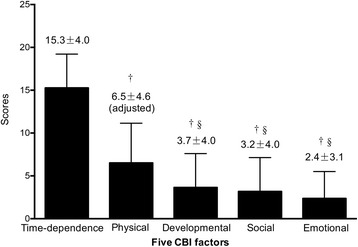
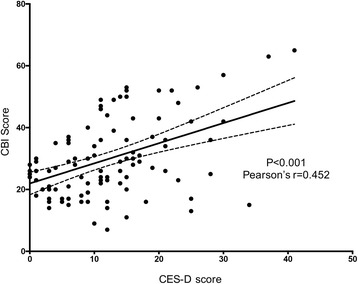
Results: The mean total CBI score was 29.7 ± 12.5. The time-dependence burden had the highest score of 15.3 ± 4.0, which was followed by the physical burden score of 6.5 ± 4.6, developmental burden score of 3.7 ± 4.0, social burden score of 3.2 ± 4.0, and emotional burden score of 2.4 ± 3.1. Multiple linear regression analysis showed that a higher CBI was associated with a longer time as a paid caregiver [β=7.041, 95% Confidence Interval (CI):1.935 to 12.974, p = 0.009], lower income satisfaction (β= - 6.573, 95% CI: -11.248 to -3.020, p = 0.001), and higher frequency of meeting with their relatives (β=7.125, 95% CI: 2.019 to 12.456, p = 0.006). The mean CES-D score was 11.9 ± 8.7, and significant depression was found in 28 (25.9%) paid caregivers according to the CES-D score ≥ 16 cut-off. There was a moderate positive correlation between the CBI and CES-D scores (Pearson's r = 0.452, p < 0.001).
Conclusions: A high caregiving burden was commonly observed in paid caregivers of hospitalized patients in China, as was a high prevalence of depression symptoms. Several associated factors were identified that could be areas for future interventions.
Keywords: Caregiver burden inventory; China; Depression; Paid caregiver.
Conflict of interest statement
Ethics approval and consent to participate
The current study was an observational study that was approved by the ethics committee of the West China Hospital of Sichuan University. Written informed consent was obtained from each study participant.
Consent for publication
Not applicable.
Competing interests
The authors declare that they have no competing interests.
Publisher’s Note
Springer Nature remains neutral with regard to jurisdictional claims in published maps and institutional affiliations.
Figures
References
-
- Polivka L. The ethics and politics of caregiving. The Gerontologist. 2005;45(4):557–561. doi: 10.1093/geront/45.4.557. - DOI
MeSH terms
LinkOut - more resources
Full Text Sources
Other Literature Sources
Medical
