


Child and parent perspectives on healthier side dishes and beverages in restaurant kids' meals: results from a national survey in the United States
- PMID: 28743250
- PMCID: PMC5526243
- DOI: 10.1186/s12889-017-4610-3
Child and parent perspectives on healthier side dishes and beverages in restaurant kids' meals: results from a national survey in the United States
Erratum in
-
Erratum to: BMC Public Health, Vol. 18.BMC Public Health. 2017 Sep 22;17(1):736. doi: 10.1186/s12889-017-4709-6. BMC Public Health. 2017. PMID: 28938882 Free PMC article. No abstract available.
Abstract
Background: Children frequently consume foods from restaurants; considering the quick-service sector alone, 1/3 of children eat food from these restaurants on a given day, and among these consumers, 1/3 of their daily calories come from fast food. Restaurant foods and beverages are second only to grocery store foods and beverages in their contribution to total energy intake of U.S. 4- to 11-year-olds. Shifting their restaurant consumption in healthier directions could have a positive impact on child health. In 2014 this study examined self-reported child receptivity and parent awareness of child receptivity to ordering a fruit or vegetable side dish instead of French fries; and milk, water, or flavored water instead of soda/pop with a kids' meal when eating out. Child receptivity to side dishes was compared between 2010 and 2014.
Methods: An online survey was administered by Nielsen via their Harris Poll Online to a national panel of 711 parents and their 8- to 12-year-old child, as part of a larger study. Frequencies, logistic regressions, t-tests, chi-square tests, and percent agreement were used to evaluate child likelihood of ordering certain side dishes; receptivity to healthier side dish and beverage alternatives; changes in receptivity to healthier sides across years; and parent awareness.
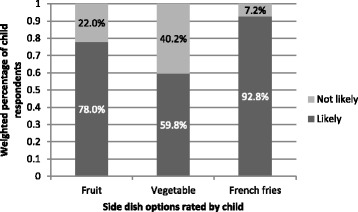
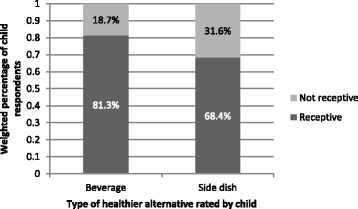
Results: A majority of children said they were likely to order a meal with a vegetable (60%), fruit (78%), or French fry (93%) side dish. They were receptive to receiving a fruit or vegetable (FV) side dish instead of French fries (68%); or milk, water, or flavored water instead of soda (81%) with their restaurant kids' meal. Liking/taste was the most common reason for children's feelings. Child receptivity to a FV side dish instead of French fries was high in both years and significantly higher in 2014 (t = -2.12, p = 0.034). The majority of parent and child reports of child receptivity were concordant (85%).
Conclusions: These national survey results indicate that children are receptive to FV side dishes and healthier beverage options with their restaurant meals. Their receptivity has remained high in the recent past, and parents are aware of child receptivity. An opportunity exists for restaurants to leverage child receptivity to healthier sides and beverages by providing and promoting healthy options.
Keywords: Beverages; Children; Fruits/vegetables; Kids’ meals; Nutrition; Parents; Restaurant menus; Restaurants; Side dishes.
Conflict of interest statement
Ethics approval and consent to participate
This study was approved by the Tufts University Institutional Review Board. Adult participants consented to participate and granted permission for their child to participate.
Consent for publication
Not applicable.
Competing interests
The authors declare that they have no competing interests.
Publisher’s Note
Springer Nature remains neutral with regard to jurisdictional claims in published maps and institutional affiliations.
Figures
References
-
- Vikraman S, Fryar CD, Ogden CL. Caloric intake from fast food among children and adolescents in the United States, 2011-2012. NCHS Data Brief. 2015;213:1–8. - PubMed
-
- USDHHS, 2015–2020 Dietary Guidelines for Americans. US Government Printing Office Washington, DC: 2015.
MeSH terms
LinkOut - more resources
Full Text Sources
Other Literature Sources
Miscellaneous
