


The Saliva Exposome for Monitoring of Individuals' Health Trajectories
- PMID: 28743678
- PMCID: PMC5801473
- DOI: 10.1289/EHP1011
The Saliva Exposome for Monitoring of Individuals' Health Trajectories
Abstract
Background: There is increasing evidence that environmental, rather than genetic, factors are the major causes of most chronic diseases. By measuring entire classes of chemicals in archived biospecimens, exposome-wide association studies (EWAS) are being conducted to investigate associations between a myriad of exposures received during life and chronic diseases.
Objectives: Because the intraindividual variability in biomarker levels, arising from changes in environmental exposures from conception onwards, leads to attenuation of exposure-disease associations, we posit that saliva can be collected repeatedly in longitudinal studies to reduce exposure-measurement errors in EWAS.
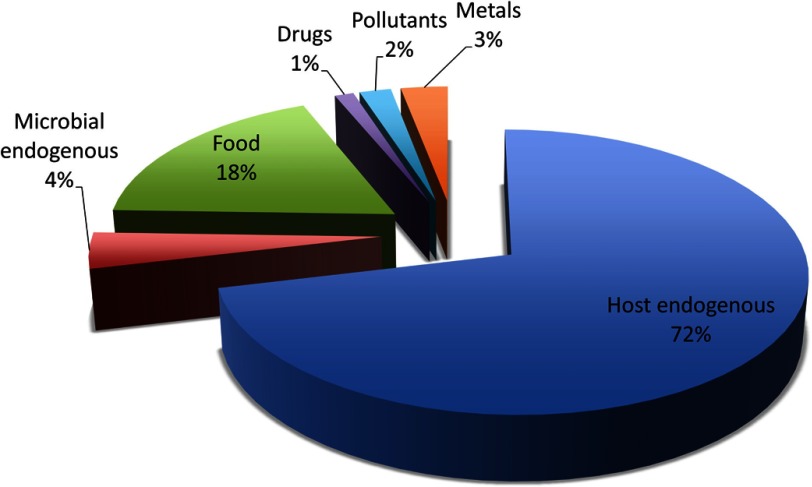
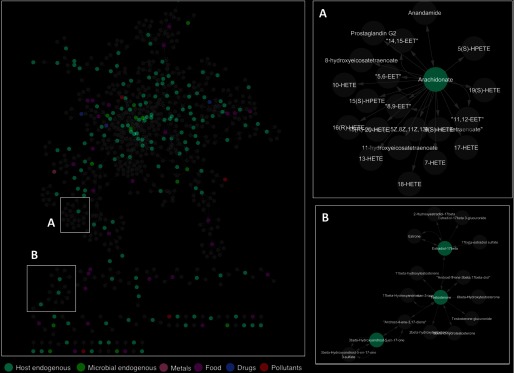
Methods: From the literature and an open-source saliva-metabolome database, we obtained concentrations of 1,233 chemicals that had been detected in saliva. We connected salivary metabolites with human metabolic pathways and PubMed Medical Subject Heading (MeSH) terms, and performed pathway enrichment and pathway topology analyses.
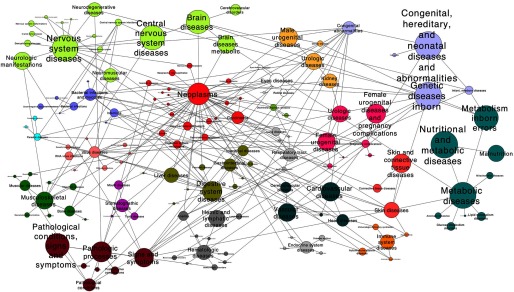
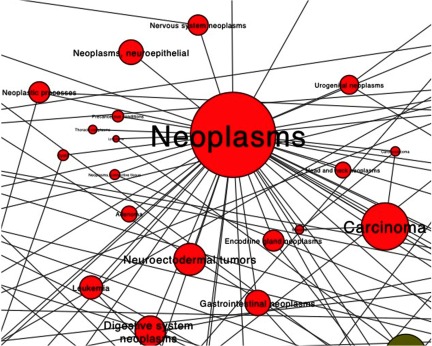
Results: One hundred ninety-six salivary metabolites were mapped into 49 metabolic pathways and connected with human metabolic diseases, central nervous system diseases, and neoplasms. We found that the saliva exposome represents at least 14 metabolic pathways, including amino acid metabolism, TCA cycle, gluconeogenesis, glutathione metabolism, pantothenate and CoA biosynthesis, and butanoate metabolism.
Conclusions: Saliva contains molecular information worthy of interrogation via EWAS. The simplicity of specimen collection suggests that saliva offers a practical alternative to blood for measurements that can be used to characterize individual exposomes. https://doi.org/10.1289/EHP1011.
Figures
References
-
- Alvi SN, Al Dgither S, Hammami MM. 2013. Development and validation of LC-MS/MS method for determination of testosterone level in human saliva using lovastatin as internal standard. J Bioequiv Availab 5:228–232.
-
- Bentley MC, Abrar M, Kelk M, Cook J, Phillip K. 1999. Validation of an assay for the determination of cotinine and 3-hydroxycotinine in human saliva using automated solid-phase extraction and liquid-chromatography with tandem mass spectrometric detection. J Chromatogr B Biomed Sci Appl 723:185–194, 10.1016/S0378-4347(98)00494-0. - DOI - PubMed
Publication types
MeSH terms
Grants and funding
LinkOut - more resources
Full Text Sources
Other Literature Sources
Medical