


Synergistic effects of cognitive impairment on physical disability in all-cause mortality among men aged 80 years and over: Results from longitudinal older veterans study
- PMID: 28746360
- PMCID: PMC5528830
- DOI: 10.1371/journal.pone.0181741
Synergistic effects of cognitive impairment on physical disability in all-cause mortality among men aged 80 years and over: Results from longitudinal older veterans study
Abstract
Objective: We evaluated effects of the interrelationship between physical disability and cognitive impairment on long-term mortality of men aged 80 years and older living in a retirement community in Taiwan.
Methods: This prospective cohort study enrolled older men aged 80 and older living in a Veterans Care Home. Those with confirmed diagnosis of dementia were excluded. All participants received comprehensive geriatric assessment, including sociodemographic data, Charlson's Comorbidity Index (CCI), geriatric syndromes, activities of daily living (ADL) using the Barthel index and cognitive function using the Mini-Mental State Examination (MMSE). Subjects were categorized into normal cognitive function, mild cognitive deterioration, and moderate-to-severe cognitive impairment and were further stratified by physical disability status. Kaplan-Meier log-rank test was used for survival analysis. After adjusting for sociodemographic characteristics and geriatric syndromes, Cox proportional hazards model was constructed to examine associations between cognitive function, disability and increased mortality risk.
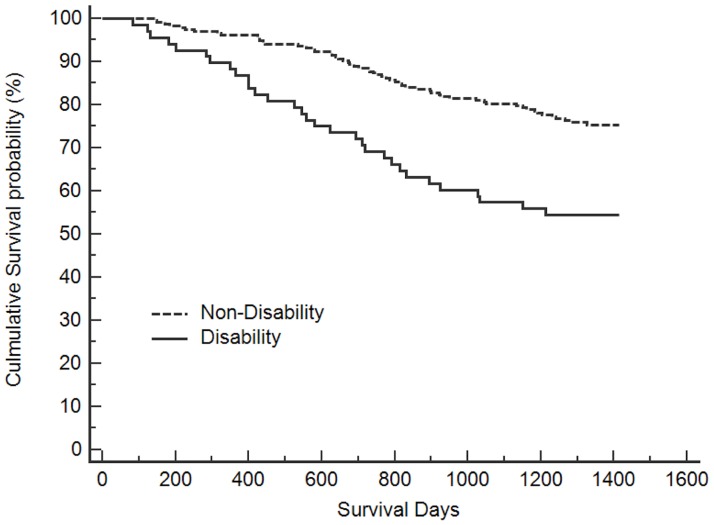
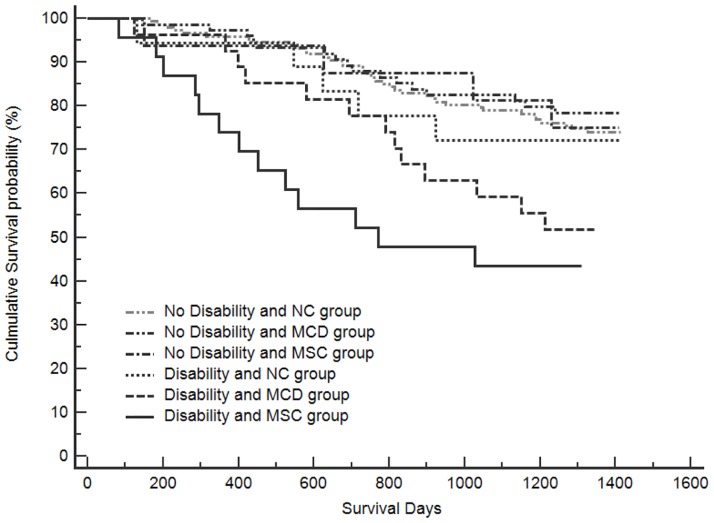
Results: Among 305 male subjects aged 85.1 ± 4.1 years, 89 subjects died during follow-up (mean follow-up: 1.87 ± 0.90 years). Kaplan-Meier unadjusted analysis showed reduced survival probability associated with moderate-to-severe cognitive status and physical disability. Mortality risk increased significantly only for physically disabled subjects with simultaneous mild cognitive deterioration (adjusted HR 1.951, 95% CI 1.036-3.673, p = 0.038) or moderate-to-severe cognitive impairment (aHR 2.722, 95% CI 1.430-5.181, p = 0.002) after adjusting for age, BMI, education levels, smoking status, polypharmacy, visual and hearing impairment, urinary incontinence, fall history, depressive symptoms and CCI. Mortality risk was not increased among physically independent subjects with or without cognitive impairment, and physically disabled subjects with intact cognition.
Conclusions: Physical disability is a major risk factor for all-cause mortality among men aged 80 years and older, and risk increased synergistically when cognitive impairment was present. Cognitive impairment alone without physical disability did not increase mortality risk in this population.
Conflict of interest statement
Figures

References
-
- Hofman A, Rocca WA, Brayne C, Breteler MM, Clarke M, Cooper B, et al. The prevalence of dementia in Europe: a collaborative study of 1980–1990 findings. Int J Epidemiol. 1991. September;20(3):736–48. - PubMed
-
- Rait G, Fletcher A, Smeeth L, Brayne C, Stirling S, Nunes M, et al. Prevalence of cognitive impairment: results from the MRC trial of assessment and management of older people in the community. Age Ageing. 2005. May;34(3):242–8. doi: 10.1093/ageing/afi039 - DOI - PubMed
-
- Ganguli M, Seaberg E, Belle S, Fischer L, Kuller LH. Cognitive impairment and the use of health services in an elderly rural population: theMoVIES project. Monongahela Valley Independent Elders Survey. J Am Geriatr Soc. 1993. October;41(10):1065–70. - PubMed
-
- Binder EF, Robins LN. Cognitive impairment and length of hospital stay in older persons. J Am Geriatr Soc. 1990. July;38(7):759–66. - PubMed
-
- Alzheimer’s Association. Characteristics, Costs and Health Service Use for Medicare Beneficiaries with a Dementia Diagnosis: Report 1: Medicare Current Beneficiary Survey. Chicago: Alzheimer’s Association; 2009.
MeSH terms
LinkOut - more resources
Full Text Sources
Other Literature Sources
Medical
