


Therapeutic Effects of Topical Tranexamic Acid in Comparison with Hydroquinone in Treatment of Women with Melasma
- PMID: 28748406
- PMCID: PMC5574746
- DOI: 10.1007/s13555-017-0195-0
Therapeutic Effects of Topical Tranexamic Acid in Comparison with Hydroquinone in Treatment of Women with Melasma
Abstract
Introduction: Few studies have focused on therapeutic as well as side effects of tranexamic acid (TXA) as a topical drug compared to other topical drugs in treating melasma. The present study aimed to assess and compare the beneficial therapeutic effects and also side effects of local TXA in comparison with hydroquinone in treating women with melasma.
Methods: This randomized double-blinded clinical trial was performed on 60 women who suffered from melasma and were referred to the skin disorders clinic at the Rasoul-e-Akram hospital in Tehran in 2015. The patients were then randomly assigned via computerized randomization to two groups: group A received TXA%5 (topically twice a day for 12 weeks in the location of the melasma) and group B (received hydroquinone 2% with the same treatment order). Prior to intervention and at 12 weeks after intervention, the intensity and extension of melasma were assessed based on the Melasma Area and Severity Index (MASI) scoring method.
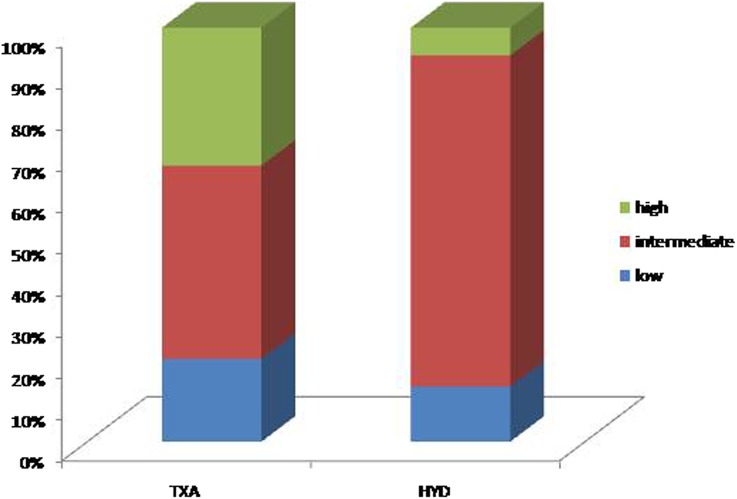
Results: The mean MASI score in both treatment groups decreased considerably after completion of treatment and was not significant between the two groups. No side effects were detected in group A, but 10% of those in group B complained of drug-related side effects including erythema and skin irritation (p = 0.131). Regarding the level of patient satisfaction, the patients in group A had a significantly higher level of satisfaction level of 33.3% compared with 6.7% in group B (p = 0.015) (Fig. 9). Multivariate linear regression modeling with the presence of age, history of systemic disorder, drug history, and family history of melasma demonstrated no difference in the mean MASI between the two groups.
Conclusion: Topical use of TXA significantly reduced both melanin level and MASI score. Given its high efficiency and low drug side effects, this regimen results in high patient satisfaction compared with topical hydroquinone. IRCT code: IRCT2016040627220N2.
Keywords: Hydroquinone; Melasma; Tranexamic acid; Women.
Figures
References
-
- Alakloby OM. Pattern of skin diseases in Eastern Saudi Arabia. Saudi Med J. 2005;26:1607–1610. - PubMed
-
- Halder RM, Grimes PE, McLaurin CI, Kress MA, Kenney JA., Jr Incidence of common dermatoses in a predominantly black dermatologic practice. Cutis. 1983;32(388):390. - PubMed
-
- Perez M, Luke J, Rossi A. Melasma in Latin Americans. J Drugs Dermatol. 2011;10:517–523. - PubMed
Associated data
LinkOut - more resources
Full Text Sources
Other Literature Sources
Medical
