Novel adenoviruses detected in British mustelids, including a unique Aviadenovirus in the tissues of pine martens (Martes martes)
- PMID: 28749327
- PMCID: PMC5817191
- DOI: 10.1099/jmm.0.000546
Novel adenoviruses detected in British mustelids, including a unique Aviadenovirus in the tissues of pine martens (Martes martes)
Abstract
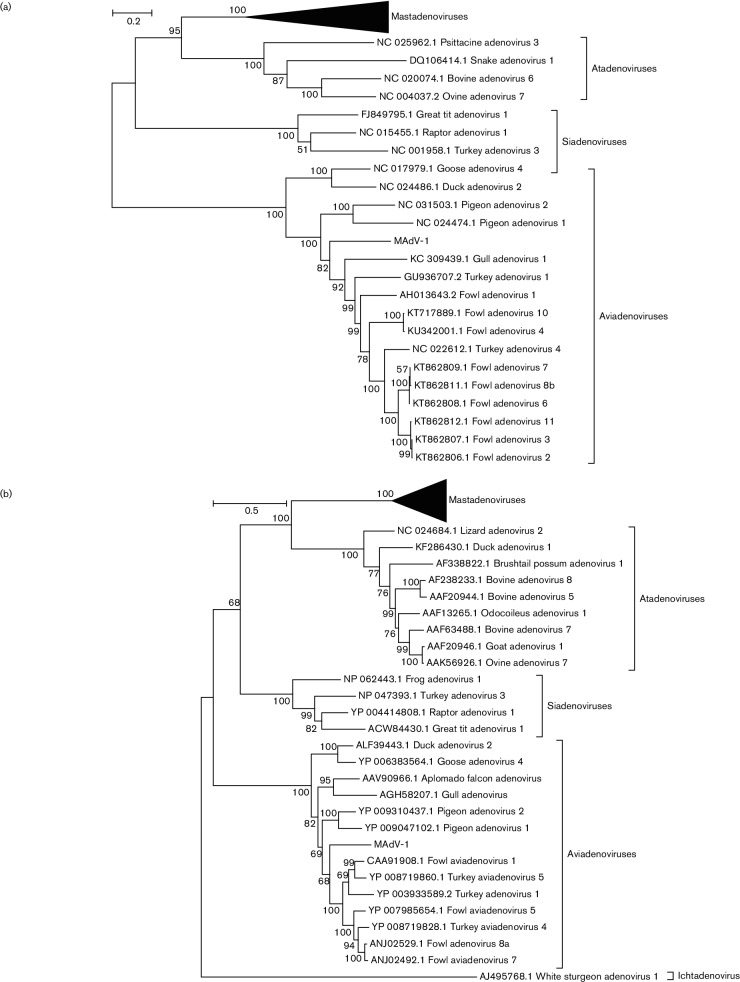
Several adenoviruses are known to cause severe disease in veterinary species. Recent evidence suggests that canine adenovirus type 1 (CAV-1) persists in the tissues of healthy red foxes (Vulpes vulpes), which may be a source of infection for susceptible species. It was hypothesized that mustelids native to the UK, including pine martens (Martes martes) and Eurasian otters (Lutra lutra), may also be persistently infected with adenoviruses. Based on high-throughput sequencing and additional Sanger sequencing, a novel Aviadenovirus, tentatively named marten adenovirus type 1 (MAdV-1), was detected in pine marten tissues. The detection of an Aviadenovirus in mammalian tissue has not been reported previously. Two mastadenoviruses, tentatively designated marten adenovirus type 2 (MAdV-2) and lutrine adenovirus type 1 (LAdV-1), were also detected in tissues of pine martens and Eurasian otters, respectively. Apparently healthy free-ranging animals may be infected with uncharacterized adenoviruses with possible implications for translocation of wildlife.
Keywords: adenovirus; cross-species transmission; high-throughput sequencing; otter; pine marten.
Conflict of interest statement
The authors declare that there are no conflicts of interest.
Figures
References
LinkOut - more resources
Full Text Sources
Other Literature Sources