


The role of the tissue factor and its inhibitor in the development of subclinical atherosclerosis in people living with HIV
- PMID: 28749986
- PMCID: PMC5531520
- DOI: 10.1371/journal.pone.0181533
The role of the tissue factor and its inhibitor in the development of subclinical atherosclerosis in people living with HIV
Abstract
Introduction: HIV infection is associated with an increased risk of cardiovascular disease in connection with atherosclerosis and thromboembolic complications. The pathogenesis of atherosclerosis is still unclear in this group of patients. Studies on pathogenesis of atherosclerosis in the general population emphasize the role of the extrinsic pathway of blood coagulation, particularly the tissue factor (TF) and tissue factor pathway inhibitor (TFPI). The effect of persistent activation of the immune system on enhanced expression of TF on the surface of monocytes in subjects infected with HIV is known to be correlated with the level of HIV RNA in blood serum.
Study aim: The aim of this study was to evaluate the concentration of TF and its inhibitor TFPI in blood plasma, the impact of traditional and non-traditional cardiovascular risk factors on their concentration and the impact of both markers of haemostasis on the severity of subclinical atherosclerosis as assessed by the intima-media measurement of the carotid artery in HIV infected patients.
Materials: The study included 121 HIV-infected people with known clinical, immunological and virological status. The control group consisted of 42 healthy individuals, selected in terms of age and sex.
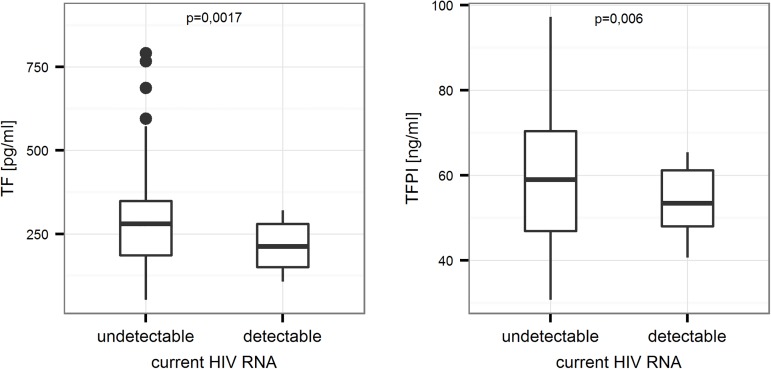
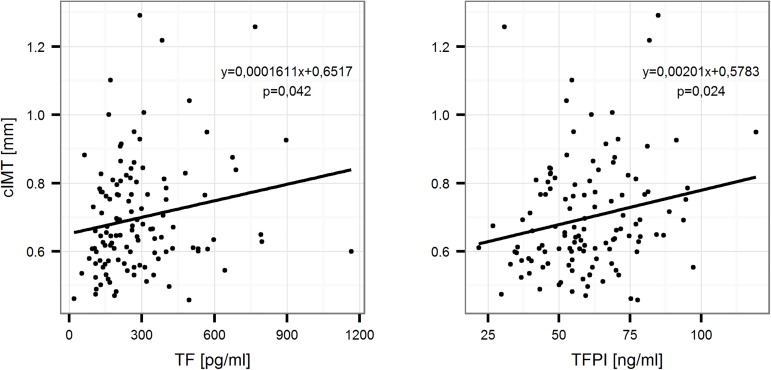
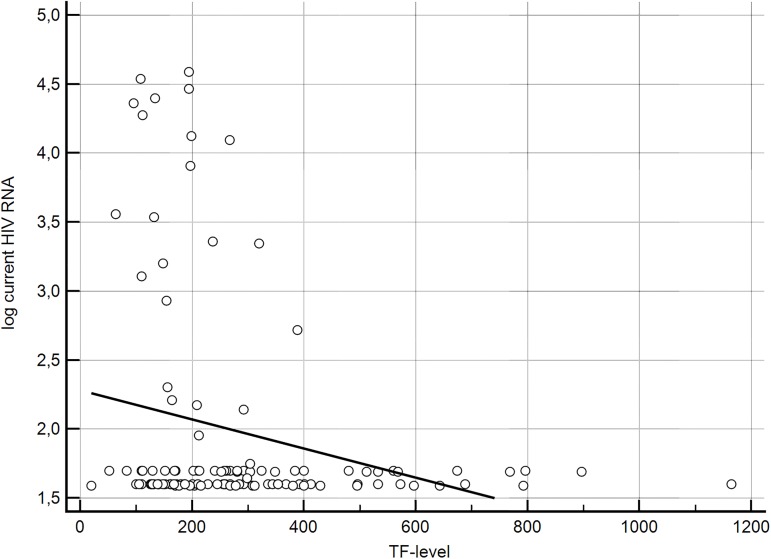
Results and conclusions: Higher concentrations of TF occurred in HIV-infected patients with a low current plasma HIV RNA level, nadir CD4+ T-cell count and longer duration of cumulative antiretroviral treatment. In multivariate analysis, it was the length of cumulative NRTI treatment that impacted on the concentration of TF. The determinants of cardiovascular disease (CVD) risk factors and inflammatory markers did not show any effect on the concentrations of TF. The TFPI level in HIV-infected patients was significantly higher than in the control group and was negatively correlated with the current level of HIV RNA and nadir CD4+ T-cell count, being higher in patients subjected to antiretroviral treatment. It was shown that the higher the cardiovascular risk and the higher the levels of total cholesterol, low-density lipoprotein cholesterol (LDL) and non-high-density lipoprotein cholesterol (non-HDL), the higher the concentrations of TFPI observed. The levels of TF and TFPI were positively correlated with carotid intima media thickness (cIMT); in the multivariate analysis, TF, non-HDL cholesterol and lifetime smoking (pack-years) independently affected the growth of cIMT. A similar effect on cIMT was demonstrated by TFPI.
Conflict of interest statement
Figures
References
-
- Deeks SG, Tracy R, Douek DC. Systemic effects of inflammation on health during chronic HIV infection. Immunity. 2013;39(4):633–645. doi: 10.1016/j.immuni.2013.10.001 - DOI - PMC - PubMed
-
- Funderburg NT, Mayne E, Sieg SF, Asaad R, Jiang W, Kalinowska M, et al. Increased tissue factor expression on circulating monocytes in chronic HIV infection: relationship to in vivo coagulation and immune activation. Blood. 2010;115:161–167. doi: 10.1182/blood-2009-03-210179 - DOI - PMC - PubMed
-
- Steffel J, Lűscher TF, Tanner FC. Tissue Factor in Cardiovascular Disease: Molecular Mechanisms and Clinical Implifications. Circulation. 2006;113: 722–731. doi: 10.1161/CIRCULATIONAHA.105.567297 - DOI - PubMed
-
- Kotschy M, Kotschy D, Witkiewicz W: The role of tissue factor and tissue factor pathway inhibitor in blood coagulation and in thrombotic complications. Kardiol. Pol. 2010; 68:1158–1162. - PubMed
-
- Falati S, Liu Q, Gross P, Merrill-Skoloff G, Chou J, Vandendries E, et al. Accumulation of tissue factor into developing thrombi in vivo is dependent upon microparticle P-selectin glycoprotein ligand 1 and platelet P-selectin. J Exp Med. 2003;197(11):1585–1598. doi: 10.1084/jem.20021868 - DOI - PMC - PubMed
MeSH terms
Substances
LinkOut - more resources
Full Text Sources
Other Literature Sources
Medical
Research Materials
Miscellaneous
