


Maternal modifiers of the infant gut microbiota: metabolic consequences
- PMID: 28751453
- PMCID: PMC5568816
- DOI: 10.1530/JOE-17-0303
Maternal modifiers of the infant gut microbiota: metabolic consequences
Abstract
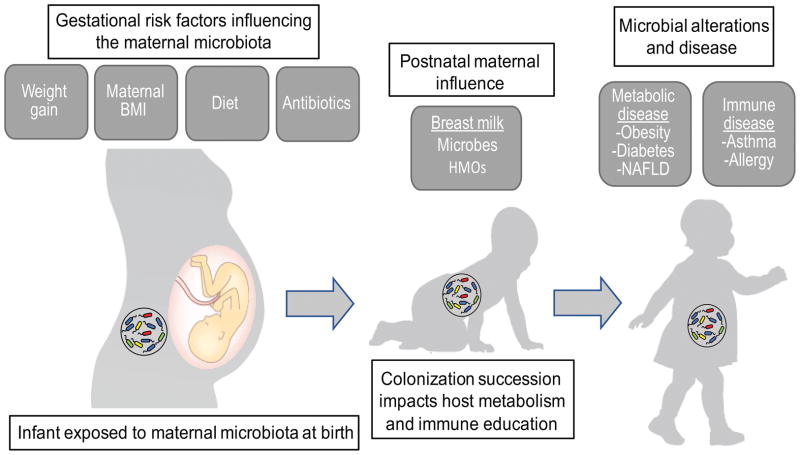
Transmission of metabolic diseases from mother to child is multifactorial and includes genetic, epigenetic and environmental influences. Evidence in rodents, humans and non-human primates support the scientific premise that exposure to maternal obesity or high-fat diet during pregnancy creates a long-lasting metabolic signature on the infant innate immune system and the juvenile microbiota, which predisposes the offspring to obesity and metabolic diseases. In neonates, gastrointestinal microbes introduced through the mother are noted for their ability to serve as direct inducers/regulators of the infant immune system. Neonates have a limited capacity to initiate an immune response. Thus, disruption of microbial colonization during the early neonatal period results in disrupted postnatal immune responses that highlight the neonatal period as a critical developmental window. Although the mechanisms are poorly understood, increasing evidence suggests that maternal obesity or poor diet influences the development and modulation of the infant liver and other end organs through direct communication via the portal system, metabolite production, alterations in gut barrier integrity and the hematopoietic immune cell axis. This review will focus on how maternal obesity and dietary intake influence the composition of the infant gut microbiota and how an imbalance or maladaptation in the microbiota, including changes in early pioneering microbes, might contribute to the programming of offspring metabolism with special emphasis on mechanisms that promote chronic inflammation in the liver. Comprehension of these pathways and mechanisms will elucidate our understanding of developmental programming and may expand the avenue of opportunities for novel therapeutics.
Keywords: NAFLD; metabolism; neonatal; obesity; pregnancy.
© 2017 Society for Endocrinology.
Conflict of interest statement
The authors declare that there is no conflict of interest that could be perceived as prejudicing the impartiality of this review.
Figures
References
-
- Agopian VG, Kaldas FM, Hong JC, Whittaker M, Holt C, Rana A, Zarrinpar A, Petrowsky H, Farmer D, Yersiz H, et al. Liver transplantation for nonalcoholic steatohepatitis: the new epidemic. Annals of Surgery. 2012;256:624–633. - PubMed
-
- Ajslev TA, Andersen CS, Gamborg M, Sorensen TI, Jess T. Childhood overweight after establishment of the gut microbiota: the role of delivery mode, pre-pregnancy weight and early administration of antibiotics. International Journal of Obesity. 2011;35:522–529. - PubMed
Publication types
MeSH terms
Grants and funding
LinkOut - more resources
Full Text Sources
Other Literature Sources
Medical
