


Effect of pumping pressure on onset of lactation after caesarean section: A randomized controlled study
- PMID: 28752645
- PMCID: PMC6866149
- DOI: 10.1111/mcn.12486
Effect of pumping pressure on onset of lactation after caesarean section: A randomized controlled study
Abstract
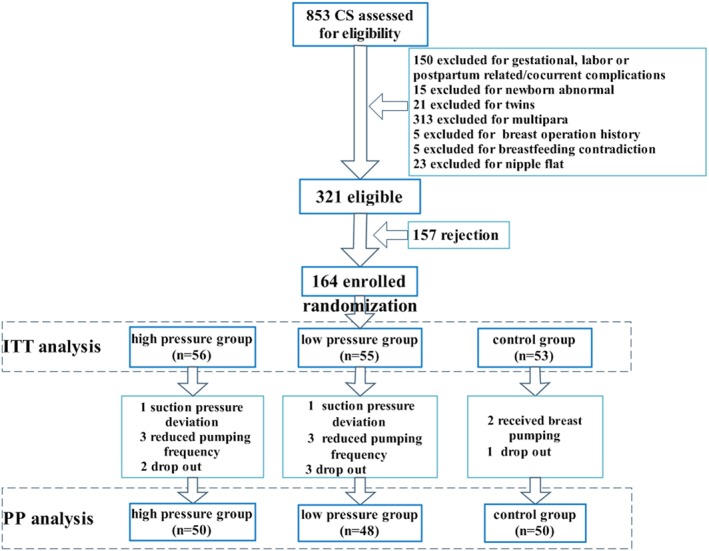
Caesarean section is associated with weaker newborn suction pressure. This nonblinded, randomized trial explored the effect of suction pressures generating by a breast pump on mothers' onset of lactation and milk supply after caesarean section. A high pressure group (-150 mmHg), a low pressure group (-100 mmHg), and a control group (none) were generated under computer random assignment with concealed allocation in 2 tertiary hospitals. The breast pumping began within 2 hr after caesarean operation (6 times a day and 30 min per time) until onset of lactation. The primary outcomes were the timing of onset of lactation, milk supply, and mother's satisfaction in lactation, using both intention-to-treat and per-protocol analyses. The secondary endpoints were the pumping-related pain, nipple injury, and maternal fatigue. All 164 women randomized were included in analysis. The breast pumping at -150 mmHg optimally advanced the timing of the onset of lactation and increased daytime milk supply. The pumping also appeared to boost mothers' confidence in lactation. The results in the per-protocol population (n = 148) were consistent with those of intention-to-treat population (n = 164). However, the pumping aggravated maternal nipple pain and fatigue, though there was no statistical significance. The findings suggest that a higher pumping pressure within the range of normal vaginally born infant suction could promote onset of lactation and milk supply among mothers giving birth by caesarean section. The pumping could also enhance mothers' confidence in breastfeeding.
Keywords: breastfeeding; breastfeeding confidence; breastfeeding promotion; breastfeeding support; caesarean delivery; randomised controlled trial.
© 2017 John Wiley & Sons Ltd.
Conflict of interest statement
The authors declare that they have no conflict of interests.
Figures

References
-
- Blyth, R. , Creedy, D. K. , Dennis, C. L. , Moyle, W. , Pratt, J. , & De Vries, S. M. (2002). Effect of maternal confidence on breastfeeding duration: An application of breastfeeding self‐efficacy theory. Birth, 29, 278–284. - PubMed
-
- Bogg, L. , Huang, K. , Long, Q. , Shen, Y. , & Hemminki, E. (2010). Dramatic increase of cesarean deliveries in the midst of health reforms in rural China. Social Science & Medicine, 70, 1544–1549. - PubMed
-
- Bruna, F. A. , de Di Nasso, E. G. , Soaje, M. , Deis, R. P. , & Caron, R. W. (2010). Participation of opioid peptides in sucking‐induced oxytocin and prolactin secretions in lactating goats. Reproduction in Domestic Animals, 45, 796–802. - PubMed
-
- Chalder, T. , Berelowitz, G. , Pawlikowska, T. , Watts, L. , Wessely, S. , Wright, D. , & Wallace, E. P. (1993). Development of a fatigue scale. Journal of Psychosomatic Research, 37, 147–153. - PubMed
Publication types
MeSH terms
LinkOut - more resources
Full Text Sources
Other Literature Sources
Medical
