


Safety, Efficacy, and Mechanistic Studies Regarding Citrus aurantium (Bitter Orange) Extract and p-Synephrine
- PMID: 28752649
- PMCID: PMC5655712
- DOI: 10.1002/ptr.5879
Safety, Efficacy, and Mechanistic Studies Regarding Citrus aurantium (Bitter Orange) Extract and p-Synephrine
Abstract
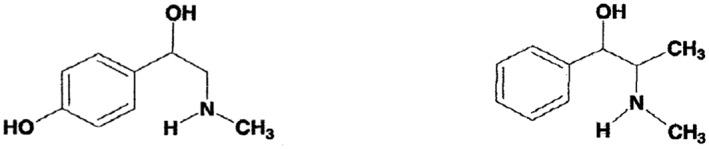
Citrus aurantium L. (bitter orange) extracts that contain p-synephrine as the primary protoalkaloid are widely used for weight loss/weight management, sports performance, appetite control, energy, and mental focus and cognition. Questions have been raised about the safety of p-synephrine because it has some structural similarity to ephedrine. This review focuses on current human, animal, in vitro, and mechanistic studies that address the safety, efficacy, and mechanisms of action of bitter orange extracts and p-synephrine. Numerous studies have been conducted with respect to p-synephrine and bitter orange extract because ephedra and ephedrine were banned from use in dietary supplements in 2004. Approximately 30 human studies indicate that p-synephrine and bitter orange extracts do not result in cardiovascular effects and do not act as stimulants at commonly used doses. Mechanistic studies suggest that p-synephrine exerts its effects through multiple actions, which are discussed. Because p-synephrine exhibits greater adrenergic receptor binding in rodents than humans, data from animals cannot be directly extrapolated to humans. This review, as well as several other assessments published in recent years, has concluded that bitter orange extract and p-synephrine are safe for use in dietary supplements and foods at the commonly used doses. Copyright © 2017 The Authors Phytotherapy Research Published by John Wiley & Sons Ltd.
Keywords: Citrus aurantium; bitter orange extract; cardiovascular effects; efficacy; mechanisms; p-synephrine; receptor binding.
Copyright © 2017 The Authors Phytotherapy Research Published by John Wiley & Sons Ltd.
Figures
References
-
- An G, Mukker JK, Derendorf H, Frye RF. 2015. Enzyme‐ and transporter‐mediated beverage‐drug interactions: an update on fruit juices. J Clin Pharmacol 55: 1313–1331. - PubMed
-
- Anon . 2010. Dangerous supplements. What you don't know about these 12 ingredients could hurt you. Consumer Reports. Sept. 16–20. - PubMed
-
- Arbo MD, Schmitt GC, Limberger MF, et al. 2009. Subchronic toxicity of Citrus aurantium L (Rutaceae) extract and p‐synephrine in mice. Regul Toxicol Pharmacol 54: 114–117. - PubMed
-
- Bakhiya N, Ziegenhagen R, Hirsch‐Ernst KI, et al. 2017. Phytochemical compounds in sports medicine: synephrine and hydroxycitric acid (HCA) as examples for evaluation of possible health risks. Mol Mutr Food Res. https://doi.org/10.1002/mnfr.201601020. - DOI - PubMed
Publication types
MeSH terms
Substances
LinkOut - more resources
Full Text Sources
Other Literature Sources
