


Applicability of Metal Nanoparticles in the Detection and Monitoring of Hepatitis B Virus Infection
- PMID: 28753992
- PMCID: PMC5537685
- DOI: 10.3390/v9070193
Applicability of Metal Nanoparticles in the Detection and Monitoring of Hepatitis B Virus Infection
Abstract
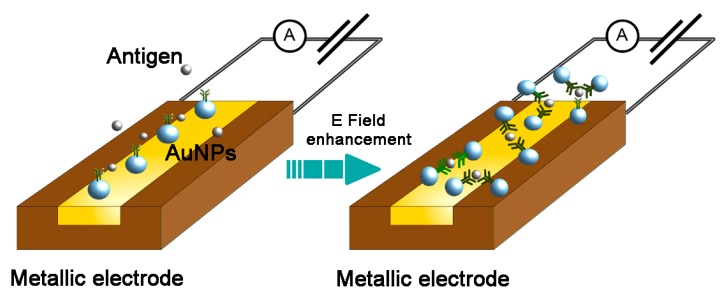
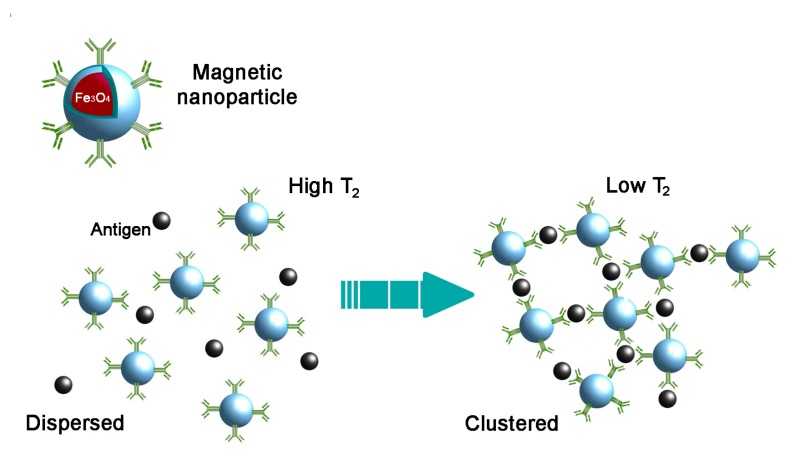
Chronic infection with the hepatitis B virus (HBV) can lead to liver failure and can cause liver cirrhosis and hepatocellular carcinoma (HCC). Reliable means for detecting and monitoring HBV infection are essential to identify patients in need of therapy and to prevent HBV transmission. Nanomaterials with defined electrical, optical, and mechanical properties have been developed to detect and quantify viral antigens. In this review, we discuss the challenges in applying nanoparticles to HBV antigen detection and in realizing the bio-analytical potential of such nanoparticles. We discuss recent developments in generating detection platforms based on gold and iron oxide nanoparticles. Such platforms increase biological material detection efficiency by the targeted capture and concentration of HBV antigens, but the unique properties of nanoparticles can also be exploited for direct, sensitive, and specific antigen detection. We discuss several studies that show that nanomaterial-based platforms enable ultrasensitive HBV antigen detection.
Keywords: biosensor; gold nanoparticles; hepatitis B; magnetic nanoparticles; virus.
Conflict of interest statement
The authors declare no conflict of interest.
Figures
References
-
- Yu W., Goddard C., Clearfield E., Mills C., Xiao T., Guo H., Morrey J.D., Motter N.E., Zhao K., Block T.M., et al. Design, synthesis, and biological evaluation of triazolo-pyrimidine derivatives as novel inhibitors of hepatitis B virus surface antigen (HBsAg) secretion. J. Med. Chem. 2011;54:5660–5670. doi: 10.1021/jm200696v. - DOI - PMC - PubMed
Publication types
MeSH terms
Substances
LinkOut - more resources
Full Text Sources
Other Literature Sources
Medical
