


Tonic Signals: Why Do Lymphocytes Bother?
- PMID: 28754596
- PMCID: PMC5669999
- DOI: 10.1016/j.it.2017.06.010
Tonic Signals: Why Do Lymphocytes Bother?
Abstract
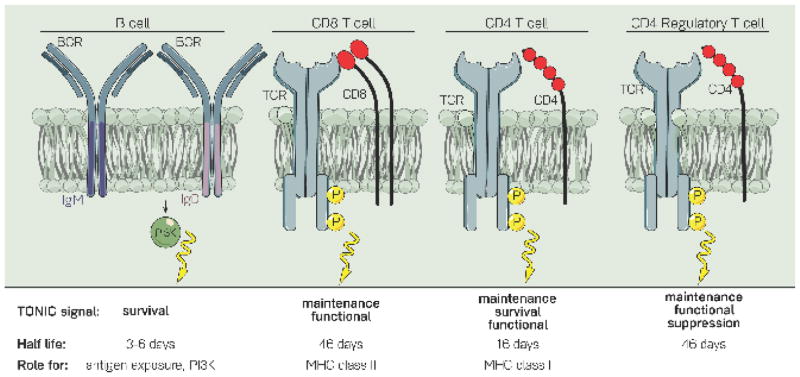
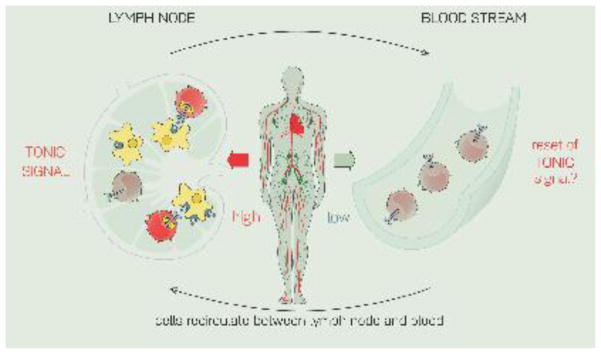
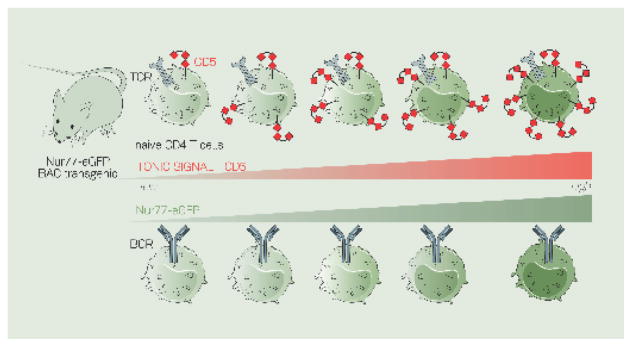
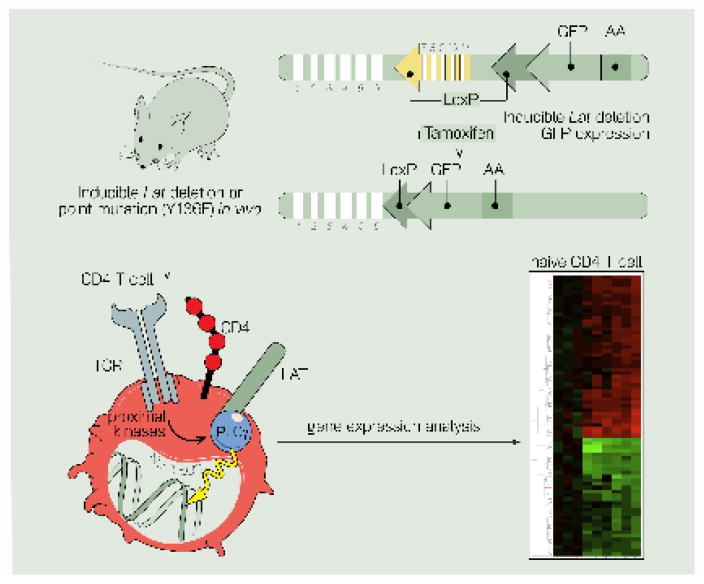
Since the 1990s it has been known that B and T lymphocytes exhibit low-level, constitutive signaling in the basal state (tonic signaling). These lymphocytes display a range of affinity for self, which in turn generates a range of tonic signaling. Surprisingly, what signaling pathways are active in the basal state and the functional relevance of the observed tonic signaling heterogeneity remain open questions today. Here we summarize what is known about the mechanistic and functional details of tonic signaling. We highlight recent advances that have increased our understanding of how the amount of tonic signal impacts immune function, describing novel tools that have moved the field forward and toward a molecular understanding of tonic signaling.
Keywords: B lymphocyte; T lymphocyte; tonic signaling.
Copyright © 2017 Elsevier Ltd. All rights reserved.
Figures
References
-
- Kurosaki T. Regulation of BCR signaling. Molecular Immunology. 2011;48:1287–1291. - PubMed
-
- Kane LP, et al. Signal transduction by the TCR for antigen. Current Opinion in Immunology. 2000;12:242–249. - PubMed
-
- Myers DR, Roose JP. Kinase and Phosphatase Effector Pathways in T cells. In: Ratcliffe Michael., editor. Encyclopedia of Immunobiology. III. 2016. pp. 25–37.
-
- van Oers NS, et al. ZAP-70 is constitutively associated with tyrosine-phosphorylated TCR zeta in murine thymocytes and lymph node T cells. Immunity. 1994;1:675–685. - PubMed
Publication types
MeSH terms
Substances
Grants and funding
LinkOut - more resources
Full Text Sources
Other Literature Sources
