


Developing a Fitbit-supported lifestyle physical activity intervention for depressed alcohol dependent women
- PMID: 28755778
- PMCID: PMC5624522
- DOI: 10.1016/j.jsat.2017.07.006
Developing a Fitbit-supported lifestyle physical activity intervention for depressed alcohol dependent women
Abstract
Purpose: Women in alcohol treatment are more likely to relapse when in unpleasant, negative emotional states. Given the demonstrated benefits of exercise for decreasing depression, negative affect, and urges to drink, helping women engage in a lifestyle physical activity (LPA) intervention in early recovery may provide them a tool they can utilize "in the moment" in order to cope with negative emotional states and alcohol craving when relapse risk is highest. New digital fitness technologies (e.g., Fitbit activity monitor with web and mobile applications) may facilitate increases in physical activity (PA) through goal setting and self-monitoring.
Method: We piloted a 12-week LPA+Fitbit intervention focused on strategically using bouts of PA to cope with affect and alcohol cravings to prevent relapse in 20 depressed women (mean age=39.5years) in alcohol treatment.
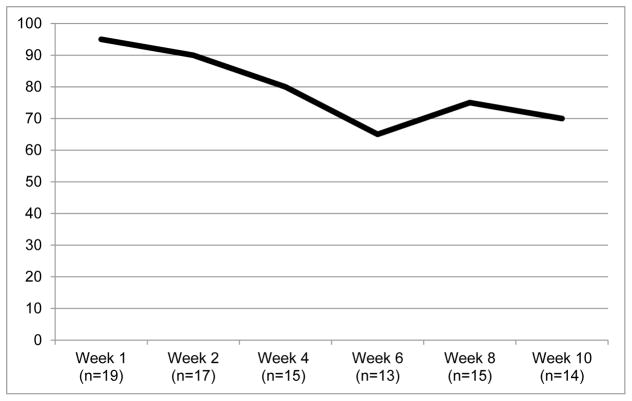
Results: Participants wore their Fitbit on 73% of days during the intervention period. An average of 9174 steps/day were taken on the days the Fitbit was worn. Participants completed 4.7 of the 6 scheduled phone PA counseling sessions (78%). Among women who completed the intervention (n=15), 44% remained abstinent throughout the entire course of treatment. On average, women were abstinent on 95% of days during the 12-week intervention. Participants reported an increase in using PA to cope with either negative affect or urges to drink from baseline to end of treatment (p<0.05). Further, participants reported high satisfaction with the LPA+Fitbit intervention and with the Fitbit tracker.
Conclusions: Further research is needed to evaluate the LPA+Fitbit intervention in a more rigorous randomized controlled trial. If the LPA+Fitbit intervention proves to be helpful during early recovery, this simple, low-cost and easily transported intervention can provide a much-needed alternate coping strategy to help reduce relapse risk among women in alcohol treatment.
Keywords: Alcohol use disorders; Coping; Physical activity; Relapse prevention; Women.
Copyright © 2017 Elsevier Inc. All rights reserved.
Figures

References
-
- Abrantes AM, Matsko S, Wolfe J, Brown SA. Physical activity and alcohol and drug use disorders. In: Ekkekakis P, editor. Handbook on physical activity and mental health. New York: Routledge; 2013. pp. 465–477. Book Section.
-
- Adam Noah J, Spierer DK, Gu J, Bronner S. Comparison of steps and energy expenditure assessment in adults of Fitbit Tracker and Ultra to the Actical and indirect calorimetry. J Med Eng Technol. 2013;37(7):456–462. Journal Article. http://doi.org/10.3109/03091902.2013.831135. - DOI - PubMed
-
- Anton RF, O’Malley SS, Ciraulo DA, Cisler RA, Couper D, Donovan DM … COMBINE Study Research Group. Combined pharmacotherapies and behavioral interventions for alcohol dependence: the COMBINE study: a randomized controlled trial. JAMA: The Journal of the American Medical Association. 2006;295(17):2003–2017. http://doi.org/10.1001/jama.295.17.2003. - DOI - PubMed
-
- Attkisson CC, Zwick R. The client satisfaction questionnaire. Psychometric properties and correlations with service utilization and psychotherapy outcome. Eval Program Plann. 1982;5(3):233–237. - PubMed
-
- Bandura A. Social cognitive theory of self-regulation. Organizational Behavior and Human Decision Processes. 1991;50(2):248–287. http://doi.org/10.1016/0749-5978(91)90022-L. - DOI
Publication types
MeSH terms
Grants and funding
LinkOut - more resources
Full Text Sources
Other Literature Sources
Medical
Miscellaneous
