Review
. 2017 Mar;4(1):13-37.
doi: 10.2217/mmt-2016-0022. Epub 2017 Mar 1.

Skin cancer screening: recommendations for data-driven screening guidelines and a review of the US Preventive Services Task Force controversy

Mariah M Johnson  1   1 Sancy A Leachman  1   1 Lisa G Aspinwall  2   2 Lee D Cranmer  3   3 Clara Curiel-Lewandrowski  4   4 Vernon K Sondak  5   5 Clara E Stemwedel  6   6 Susan M Swetter  7   7 John Vetto  6   6 Tawnya Bowles  8   8 Robert P Dellavalle  9   9 Larisa J Geskin  10   10 Douglas Grossman  2   2 Kenneth F Grossmann  2   2 Jason E Hawkes  2   2 Joanne M Jeter  11   11 Caroline C Kim  12   12 John M Kirkwood  13   13 Aaron R Mangold  14   14 Frank Meyskens  15   15 Michael E Ming  16   16 Kelly C Nelson  17   17 Michael Piepkorn  3   3 Brian P Pollack  18   18 June K Robinson  19   19 Arthur J Sober  12   12 Shannon Trotter  11   11 Suraj S Venna  20   20 Sanjiv Agarwala  21   21 Rhoda Alani  22   22 Bruce Averbook  23   23 Anna Bar  6   6 Mirna Becevic  24   24 Neil Box  9   9 William E Carson 3rd  11   11 Pamela B Cassidy  6   6 Suephy C Chen  18   18 Emily Y Chu  16   16 Darrel L Ellis  25   25 Laura K Ferris  13   13 David E Fisher  26   26 Kari Kendra  11   11 David H Lawson  27   27 Philip D Leming  28   28 Kim A Margolin  29   29 Svetomir Markovic  30   30 Mary C Martini  19   19 Debbie Miller  6   6 Debjani Sahni  22   22 William H Sharfman  31   31 Jennifer Stein  32   32 Alexander J Stratigos  33   33 Ahmad Tarhini  13   13 Matthew H Taylor  6   6 Oliver J Wisco  34   34 Michael K Wong  35   35
Affiliations
Review

Skin cancer screening: recommendations for data-driven screening guidelines and a review of the US Preventive Services Task Force controversy

Mariah M Johnson et al. Melanoma Manag. 2017 Mar.

Abstract

Melanoma is usually apparent on the skin and readily detected by trained medical providers using a routine total body skin examination, yet this malignancy is responsible for the majority of skin cancer-related deaths. Currently, there is no national consensus on skin cancer screening in the USA, but dermatologists and primary care providers are routinely confronted with making the decision about when to recommend total body skin examinations and at what interval. The objectives of this paper are: to propose rational, risk-based, data-driven guidelines commensurate with the US Preventive Services Task Force screening guidelines for other disorders; to compare our proposed guidelines to recommendations made by other national and international organizations; and to review the US Preventive Services Task Force's 2016 Draft Recommendation Statement on skin cancer screening.

Keywords: USPSTF; early detection; guidelines; keratinocyte carcinoma; melanoma; melanoma odds ratio; melanoma relative risk; melanoma risk factors; screening; skin cancer.


Conflict of interest statement

Financial & competing interests disclosure The authors have no relevant affiliations or financial involvement with any organization or entity with a financial interest in or financial conflict with the subject matter or materials discussed in the manuscript. This includes employment, consultancies, honoraria, stock ownership or options, expert testimony, grants or patents received or pending, or royalties. No writing assistance was utilized in the production of this manuscript.

Figures
<b>Figure 1.</b>
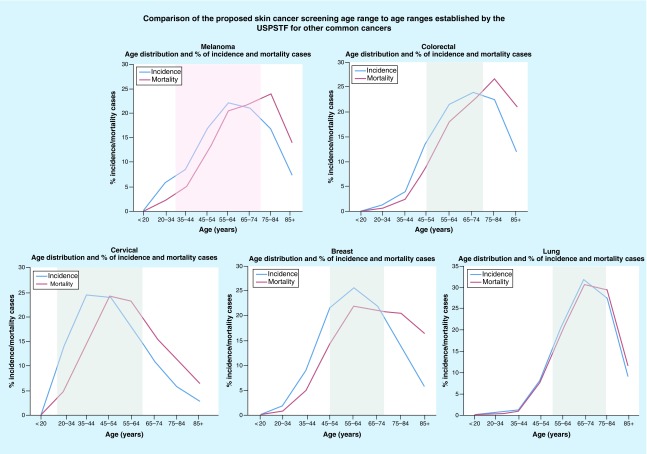
Figure 1.. Surveillance, Epidemiology and End Results derived data, 2008–2012; comparison of the percentage of incidence and percentage mortality cases based on age.
Data include all races and both sexes [26,27].
<b>Figure 2.</b>
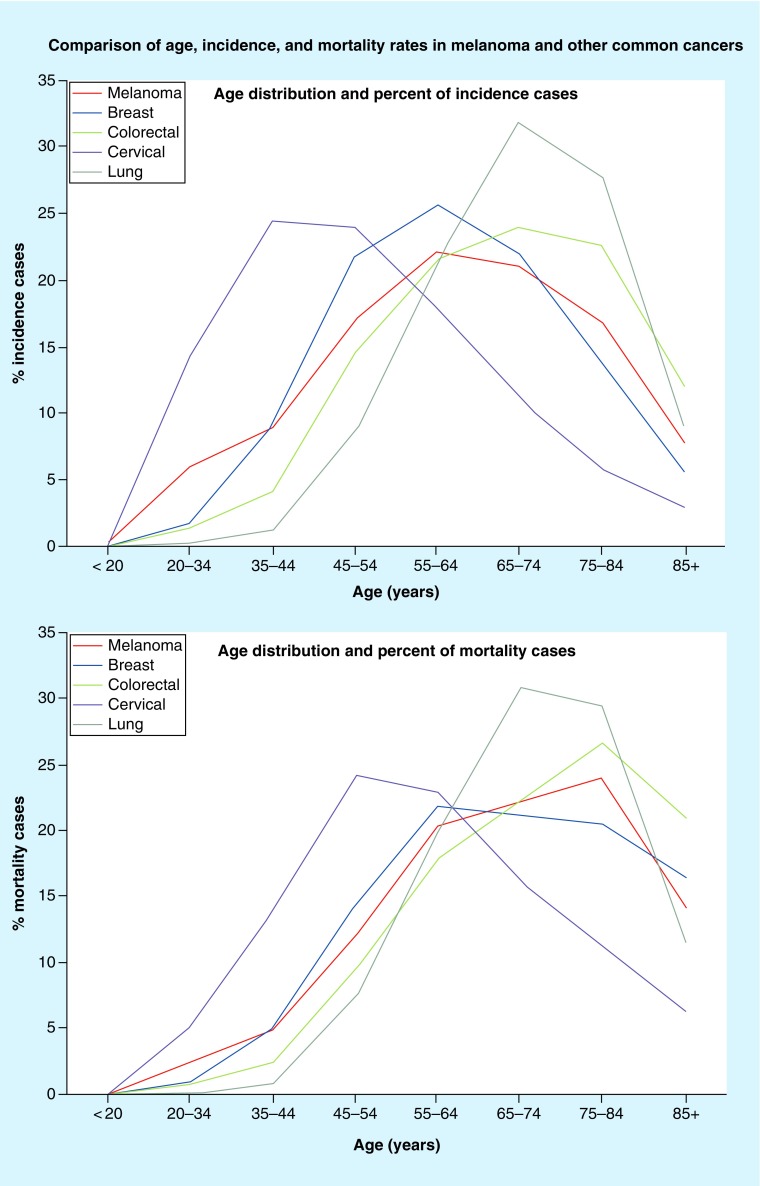
Figure 2.. Surveillance, Epidemiology and End Results derived data, 2008–2012; comparison of the percent of incidence and percent mortality cases based on age.
Data include all races and both sexes [26,27]. USPSTF screening guidelines for the above cancers include: melanoma – grade I; breast cancer – grade B; colorectal cancer – grade A; cervical cancer – grade A; lung cancer – grade B. Areas shaded in gray indicate the target screening age group based on USPSTF guidelines. Area shaded in pink indicates our proposed skin cancer screening age group. USPSTF: US Preventive Sevices Task Force.
<b>Figure 3.</b>
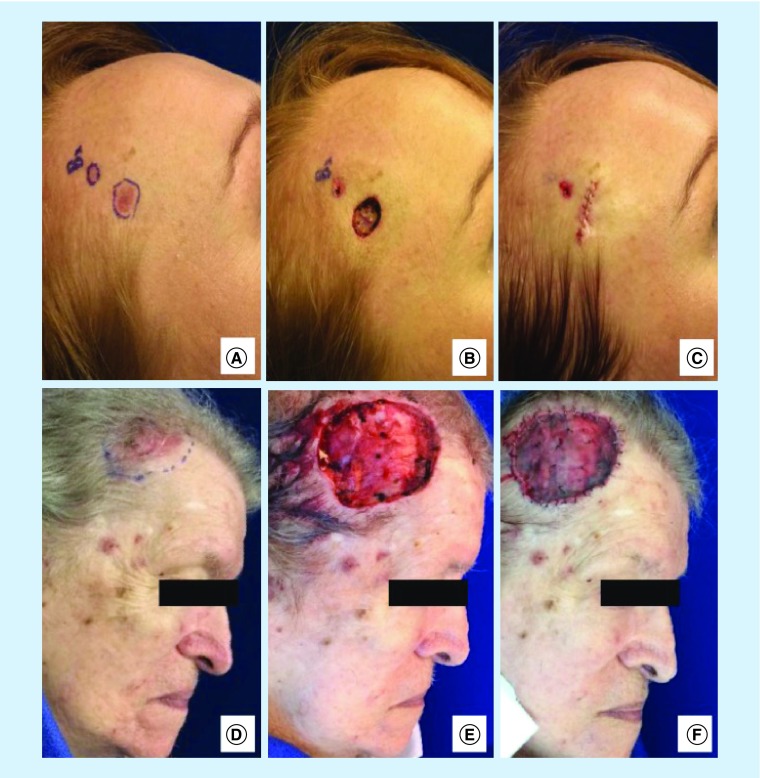
Figure 3.. Comparison of small and large basal cell carcinomas.
Larger basal cell carcinomas (BCCs) are often associated with higher morbidity due to more complicated surgical procedures. (A) Patient 1 with nodular BCC prior to Mohs micrographic surgery (MMS). (B) Final defect after one stage MMS. (C) Defect repaired with complex linear layered closure. (D) Patient 2 with nodular BCC in a similar location to Patient 1, prior to MMS. (E) Final defect after three stages of MMS. (F) Defect repaired with a split thickness skin graft.
<b>Figure 4.</b>
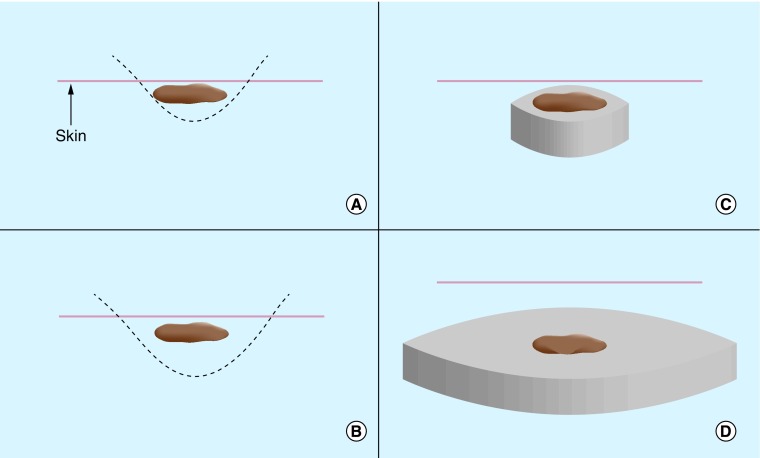
Figure 4.. The differences in biopsy type impact morbidity and scarring.
(A) Shave biopsies are the most superficial, with the fastest healing time, but run the risk of transecting the base of the tumor. The term ‘shave biopsy’ has variable meanings depending on the practitioner and can range from a superficial incisional biopsy to a complete excisional biopsy of a thin lesion. Shaves are appropriate for biopsying thin keratinocyte carcinomas but should not be utilized for biopsying suspicious pigmented lesions. The defect heals via secondary intention. (B) The saucerization (i.e., deep shave or scoop) biopsy is similar to a shave biopsy but is wider and deeper (involving reticular dermis). Saucerizations may be used for biopsying suspicious pigmented lesions. The defect heals via secondary intention. (C) The punch biopsy allows sampling of all skin layers and may be used for biopsying suspicious pigmented lesions or keratinocyte carcinomas. The defect is closed with sutures. (D) The fusiform/elliptical excision is the largest type of biopsy and requires placement of sutures, leaving the largest scar.

References

    1. American Cancer Society. Cancer Facts & Figures 2016. https://cancer.org/research/cancerfactsstatistics/cancerfactsfigures2016/
    2. •• Reports 2016 melanoma statistics and the American Cancer Society skin cancer screening recommendations.

    1. National Cancer Institute Surveillance, Epidemiology, and End Results Program. SEER Stat Fact Sheets: Melanoma of the Skin. http://seer.cancer.gov/statfacts/html/melan.html
    1. Losina E, Walensky RP, Geller A, et al. Visual screening for malignant melanoma: a cost–effectiveness analysis. Arch. Dermatol. 2007;143(1):21–28. - PMC - PubMed
    1. American Academy of Dermatology. SPOTme® Skin Cancer Screenings. https://aad.org/public/spot-skin-cancer/programs/screenings
    1. Curiel-Lewandrowski C, Kim CC, Swetter SM, et al. Survival is not the only valuable end point in melanoma screening. J. Invest. Dermatol. 2012;132(5):1332–1337. - PMC - PubMed

LinkOut - more resources