Review
. 2017:2017:5646348.
doi: 10.1155/2017/5646348. Epub 2017 Jul 3.

Neurocardiology: Cardiovascular Changes and Specific Brain Region Infarcts

Affiliations
Review

Neurocardiology: Cardiovascular Changes and Specific Brain Region Infarcts

Rongjun Zou et al. Biomed Res Int. 2017.

Abstract

There are complex and dynamic reflex control networks between the heart and the brain, including cardiac and intrathoracic ganglia, spinal cord, brainstem, and central nucleus. Recent literature based on animal model and clinical trials indicates a close link between cardiac function and nervous systems. It is noteworthy that the autonomic nervous-based therapeutics has shown great potential in the management of atrial fibrillation, ventricular arrhythmia, and myocardial remodeling. However, the potential mechanisms of postoperative brain injury and cardiovascular changes, particularly heart rate variability and the presence of arrhythmias, are not understood. In this chapter, we will describe mechanisms of brain damage undergoing cardiac surgery and focus on the interaction between cardiovascular changes and damage to specific brain regions.


Figures
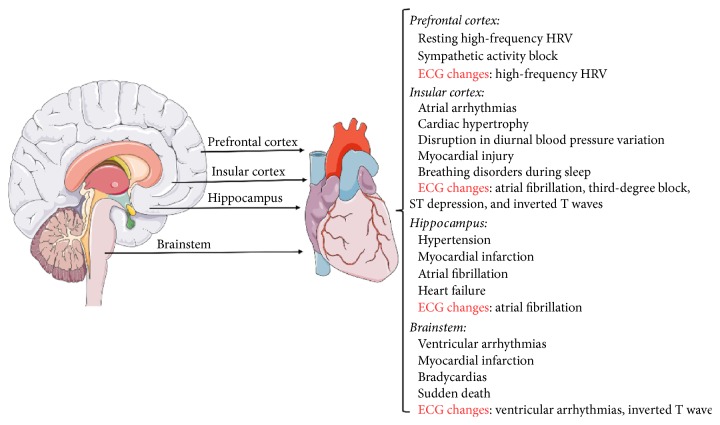
Figure 1
Figure 1
This figure shows that central and peripheral mechanism of the heart and brain interaction includes the clinical symptoms and ECG changes, but the effect of stellate ganglion or vagus and sympathetic nerves is not shown in this figure for an illustration. Of note, insular cortex, prefrontal cortex, hippocampus, and brainstem play an important role in interplay between the nervous system and the cardiovascular system.

References

    1. Scolletta S., Taccone F. S., Donadello K. Brain injury after surgery. Minerva Anestesiol. 2015;81(6):662–677. - PubMed
    1. Jiang W., Kuchibhatla M., Clary G. L., Cuffe M. S., Christopher E. J., Alexander J. D., et al. Relationship between depressive symptoms and long-term mortality in patients with heart failure. American Heart Journal. 2007;154(1):102–108. doi: 10.1016/j.ahj.2007.03.043. - DOI - PubMed
    1. Hovens I. B., van Leeuwen B. L., Mariani M. A., Kraneveld A. D., Schoemaker R. G. Postoperative cognitive dysfunction and neuroinflammation; Cardiac surgery and abdominal surgery are not the same. Brain, Behavior, and Immunity. 2016;54:178–193. doi: 10.1016/j.bbi.2016.02.003. - DOI - PubMed
    1. Barber P. A., Hach S., Tippett L. J., Ross L., Merry A. F., Milsom P. Cerebral ischemic lesions on diffusion-weighted imaging are associated with neurocognitive decline after cardiac surgery. Stroke. 2008;39(5):1427–1433. doi: 10.1161/STROKEAHA.107.502989. - DOI - PubMed
    1. Ay I., Nasser R., Simon B., Ay H. Transcutaneous cervical vagus nerve stimulation ameliorates acute ischemic injury in rats. Brain Stimulation. 2016;9(2):166–173. doi: 10.1016/j.brs.2015.11.008. - DOI - PMC - PubMed
