


Complement Gene Expression Correlates with Superior Frontal Cortical Thickness in Humans
- PMID: 28758643
- PMCID: PMC5770755
- DOI: 10.1038/npp.2017.164
Complement Gene Expression Correlates with Superior Frontal Cortical Thickness in Humans
Abstract
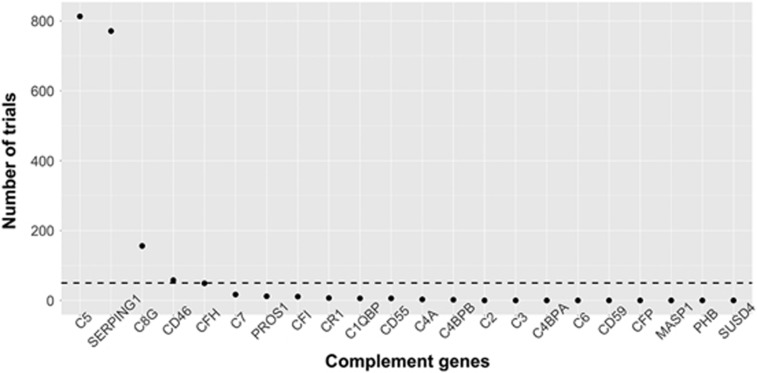
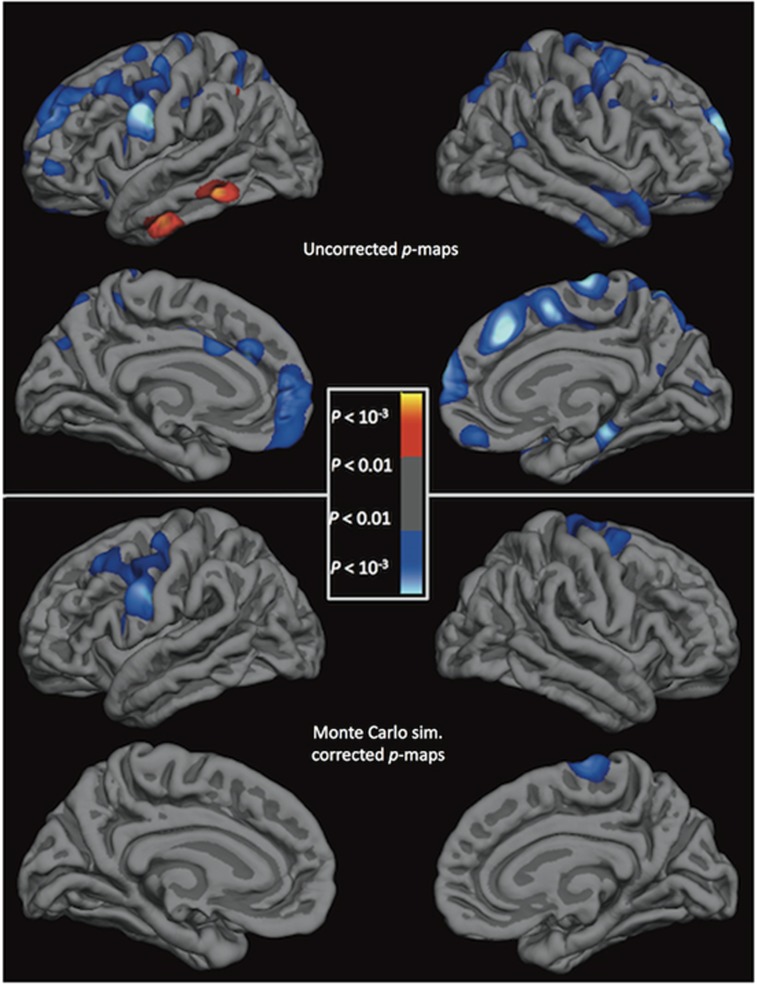
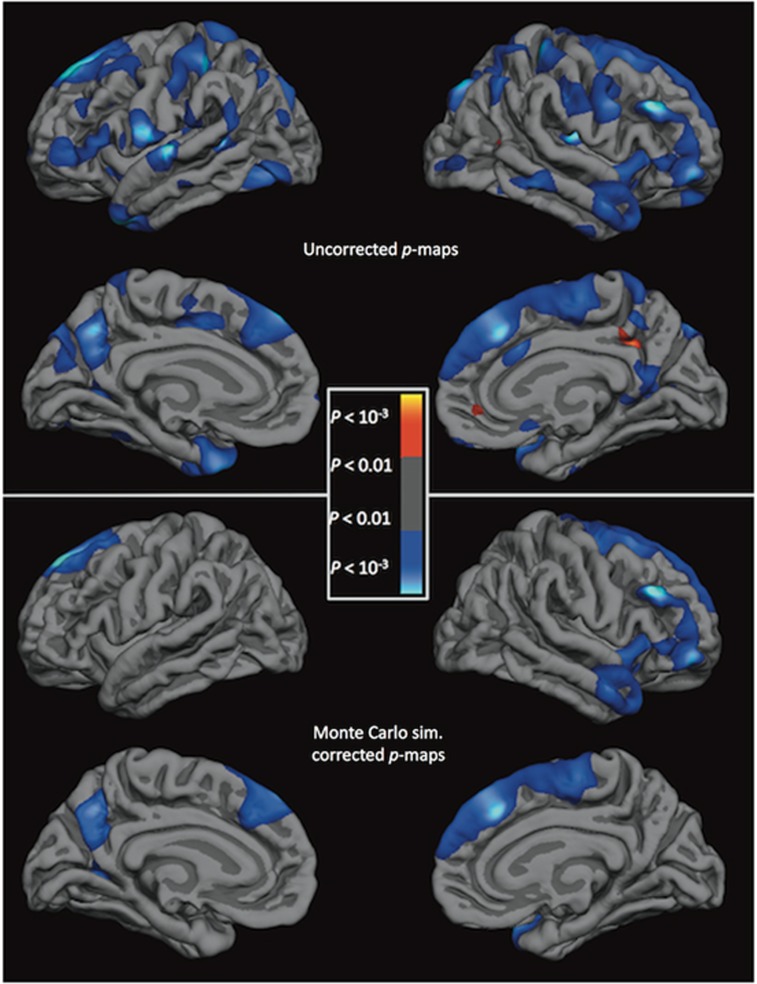
Recent work suggests that genes encoding complement proteins that are active in the innate immune system may confer risk for schizophrenia by disrupting typical synaptic pruning in late adolescence. Alterations in the complement pathway may contribute to aberrant cortical thinning in schizophrenia prodromes and reduced prefrontal cortical thickness in chronic schizophrenia patients; however, this theory needs to be translated to humans. We conducted a series of analyses in a sample of adult Swedish twins enriched for schizophrenia (N=129) to assess the plausibility of a relationship between complement gene expression and cortical thickness that could go awry in the etiology of schizophrenia. First, we identified that peripheral mRNA expression levels of two complement genes (C5, SERPING1) made unique contributions to the variance in superior frontal cortical thickness among all participants. Vertex-wise maps of the association between gene expression levels and thickness across the cortex suggested that this relationship was especially strong with SERPING1 in the superior frontal region, consistent with the pattern of disruption in cortical thickness observed in schizophrenia. Additional analyses identified that these genes are expressed in the human superior frontal cortex, that heritable genetic factors influence SERPING1 gene expression levels, and that these associations are observed regardless of case status. These findings provide initial evidence linking the complement system with cortical thinning in humans, a process potentially involved in the pathogenesis of schizophrenia.
Figures
References
-
- Alfons A (2016). Robust methods for high-dimensional data. CRAN Repos at https://cran.r-project.org/web/packages/robustHD/robustHD.pdf.
-
- Barton K (2016). Package ‘MuMIn.’ CRAN Repos at https://cran.r-project.org/web/packages/MuMIn/MuMIn.pdf.
-
- Bennett MR (2011). Schizophrenia: susceptibility genes, dendritic-spine pathology and gray matter loss. Prog Neurobiol 95: 275–300. - PubMed
-
- Bourgeois J, Goldman-Rakic PS (1994). Synaptogenesis in the prefrontal cortex of rhesus monkeys. - PubMed
Publication types
MeSH terms
Substances
Grants and funding
LinkOut - more resources
Full Text Sources
Other Literature Sources
Miscellaneous
