


A role for the tfs3 ICE-encoded type IV secretion system in pro-inflammatory signalling by the Helicobacter pylori Ser/Thr kinase, CtkA
- PMID: 28759055
- PMCID: PMC5536186
- DOI: 10.1371/journal.pone.0182144
A role for the tfs3 ICE-encoded type IV secretion system in pro-inflammatory signalling by the Helicobacter pylori Ser/Thr kinase, CtkA
Abstract
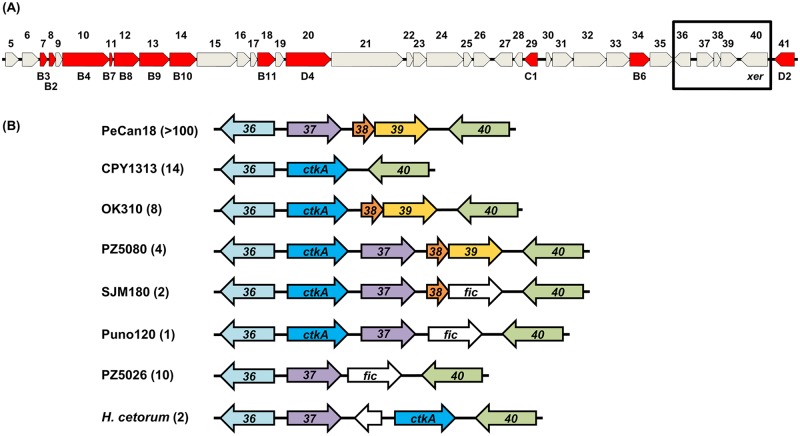
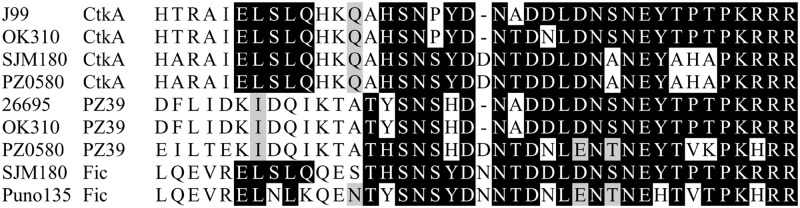
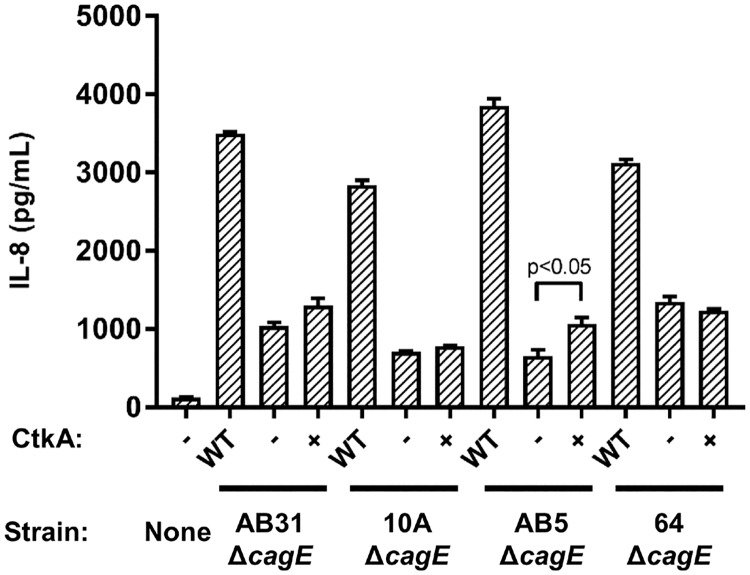
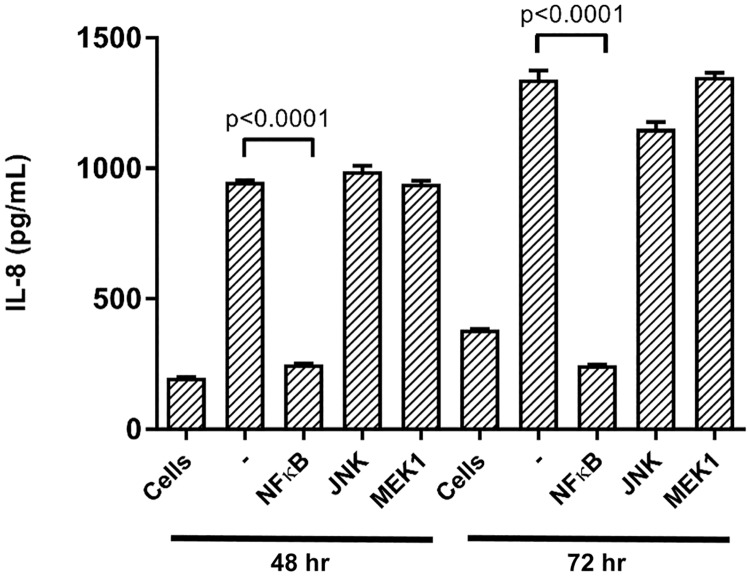
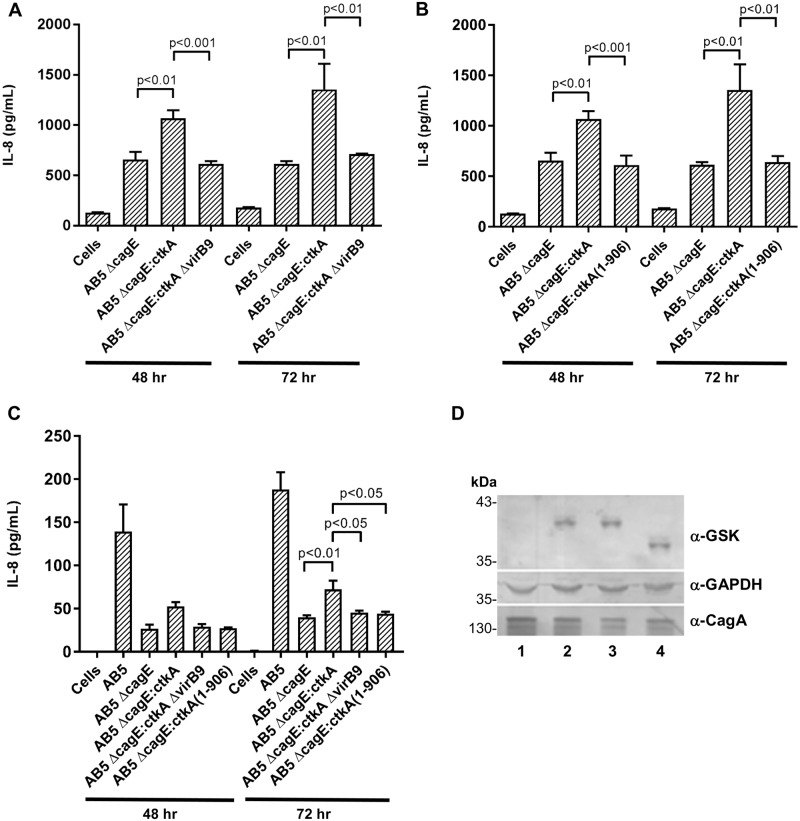
Two distinct type IV secretion systems (T4SSs) can be identified in certain Helicobacter pylori strains, encoded on mobile genetic elements termed tfs3 and tfs4. Although their function remains unknown, both have been implicated in clinical outcomes of H. pylori infection. Here we provide evidence that the Tfs3 T4SS is required for activity of the pro-inflammatory Ser/Thr kinase protein, CtkA, in a gastric epithelial cell infection model. Previously, purified recombinant CtkA protein has been shown to upregulate NF-kappaB signalling and induce TNF-alpha and IL-8 cytokine secretion from cultured macrophages suggesting that it may potentiate the H. pylori-mediated inflammatory response. In this study, we show that CtkA expressed from its native host, H. pylori has a similar capacity for stimulation of a pro-inflammatory response from gastric epithelial cells. CtkA interaction was found to be dependent upon a complement of tfs3 T4SS genes, but independent of the T4SSs encoded by either tfs4 or the cag pathogenicity island. Moreover, the availability of CtkA for host cell interaction was shown to be conditional upon the carboxyl-terminus of CtkA, encoding a putative conserved secretion signal common to other variably encoded Tfs3 proteins. Collectively, our observations indicate a role for the Tfs3 T4SS in CtkA-mediated pro-inflammatory signalling by H. pylori and identify CtkA as a likely Tfs3 T4SS secretion substrate.
Conflict of interest statement
Figures
References
-
- Blaser MJ, Atherton JC. Helicobacter pylori persistence: biology and disease. J Clin Invest. 2004; 113(3): 321–33. doi: 10.1172/JCI20925 - DOI - PMC - PubMed
-
- Blaser MJ, Perez-Perez GI, Kleanthous H, Cover TL, Peek RM, Chyou PH, et al. Infection with Helicobacter pylori strains possessing cagA is associated with an increased risk of developing adenocarcinoma of the stomach. Cancer Res. 1995; 55(10): 2111–5. - PubMed
-
- Houghton J, Wang TC. Helicobacter pylori and gastric cancer: a new paradigm for inflammation-associated epithelial cancers. Gastroenterology. 2005; 128(6): 1567–78. S0016508505004634. - PubMed
-
- Bridge DR, Merrell DS. Polymorphism in the Helicobacter pylori CagA and VacA toxins and disease. Gut Microbes. 2013; 4(2): 101–17. doi: 10.4161/gmic.23797 - DOI - PMC - PubMed
MeSH terms
Substances
Grants and funding
LinkOut - more resources
Full Text Sources
Other Literature Sources
