


Prevalence and predictors of hypovitaminosis D among the elderly in subtropical region
- PMID: 28759618
- PMCID: PMC5536299
- DOI: 10.1371/journal.pone.0181063
Prevalence and predictors of hypovitaminosis D among the elderly in subtropical region
Abstract
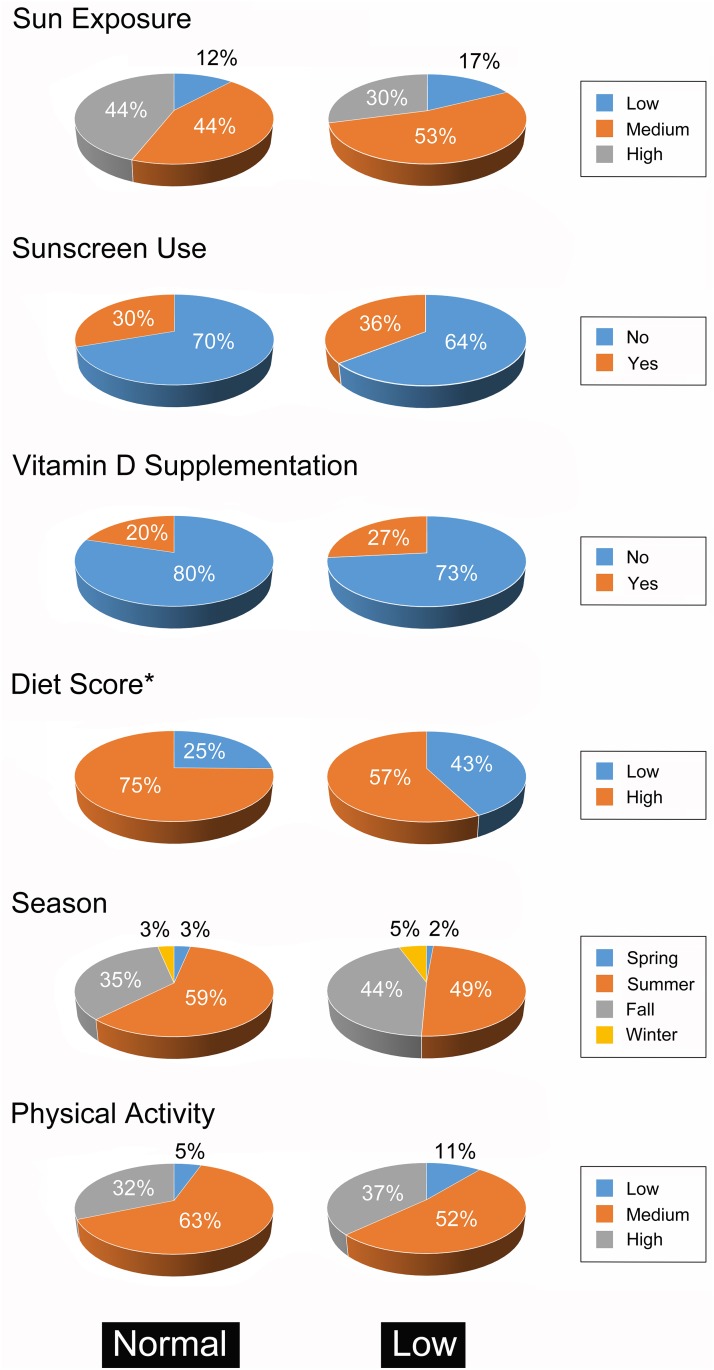
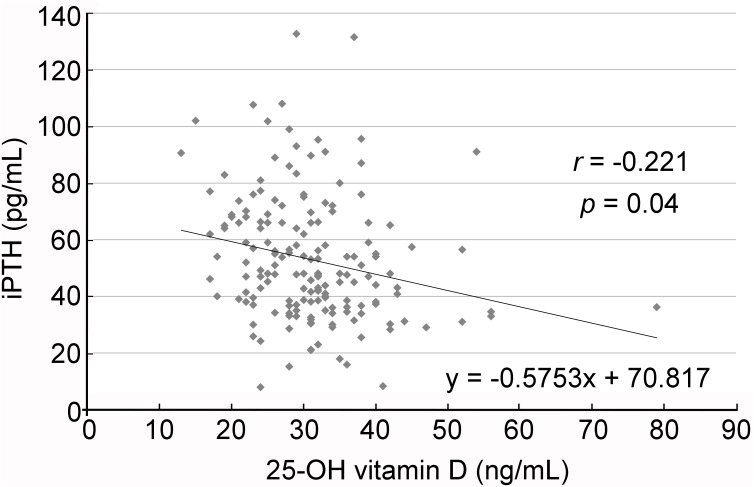
The prevalence of low vitamin D status in the elderly population of subtropical area and the potential risk/protective factors have not been addressed. This cross-sectional questionnaire-based study, which collected demographic/anthropometric data and information on diet habit and sun exposure, recruited 170 subjects with mean age 70.9±5.6 in rural areas of southern Taiwan. Serum 25-OH vitamin D, calcium, and intact parathyroid hormone were also measured. Using cut-off level of 30 ng/mL, subjects were divided into low (n = 95) and normal (n = 75) serum vitamin D groups. The results demonstrated a low vitamin D status in 30.6% of men and 57.7% of women. Dietary vitamin D intake was another factor associated with vitamin D status (p = 0.02). Logistic regression identified inadequate intake of vitamin D-rich food as the only risk factor for low vitamin D status in men (OR = 4.55, p = 0.01), whereas inadequate sun exposure was the only predictable risk with dose-response relationship in women (low vs. high sun exposure, OR = 6.84, p = 0.018; moderate vs. high sun exposure, OR = 6.67, p = 0.005). In conclusion, low vitamin D status was common in the elderly of subtropical rural areas. Low sun exposure and inadequate dietary vitamin D consumption were associated with a low vitamin D status in females and males, respectively.
Conflict of interest statement
Figures
References
-
- Holick MF. Vitamin D deficiency. The New England journal of medicine. 2007;357(3):266–81. Epub 2007/07/20. doi: 10.1056/NEJMra070553 . - DOI - PubMed
-
- Bischoff-Ferrari HA, Giovannucci E, Willett WC, Dietrich T, Dawson-Hughes B. Estimation of optimal serum concentrations of 25-hydroxyvitamin D for multiple health outcomes. The American journal of clinical nutrition. 2006;84(1):18–28. . - PubMed
-
- DeLuca HF. Overview of general physiologic features and functions of vitamin D. The American journal of clinical nutrition. 2004;80(6 Suppl):1689S–96S. . - PubMed
-
- Penna G, Roncari A, Amuchastegui S, Daniel KC, Berti E, Colonna M, et al. Expression of the inhibitory receptor ILT3 on dendritic cells is dispensable for induction of CD4+Foxp3+ regulatory T cells by 1,25-dihydroxyvitamin D3. Blood. 2005;106(10):3490–7. doi: 10.1182/blood-2005-05-2044 . - DOI - PubMed
-
- Pfeifer M, Begerow B, Minne HW, Nachtigall D, Hansen C. Effects of a short-term vitamin D(3) and calcium supplementation on blood pressure and parathyroid hormone levels in elderly women. The Journal of clinical endocrinology and metabolism. 2001;86(4):1633–7. doi: 10.1210/jcem.86.4.7393 . - DOI - PubMed
MeSH terms
LinkOut - more resources
Full Text Sources
Other Literature Sources
Medical
